Why the Trump administration is targeting the Calibri font in anti-woke push

Add Axios as your preferred source to
see more of our stories on Google.
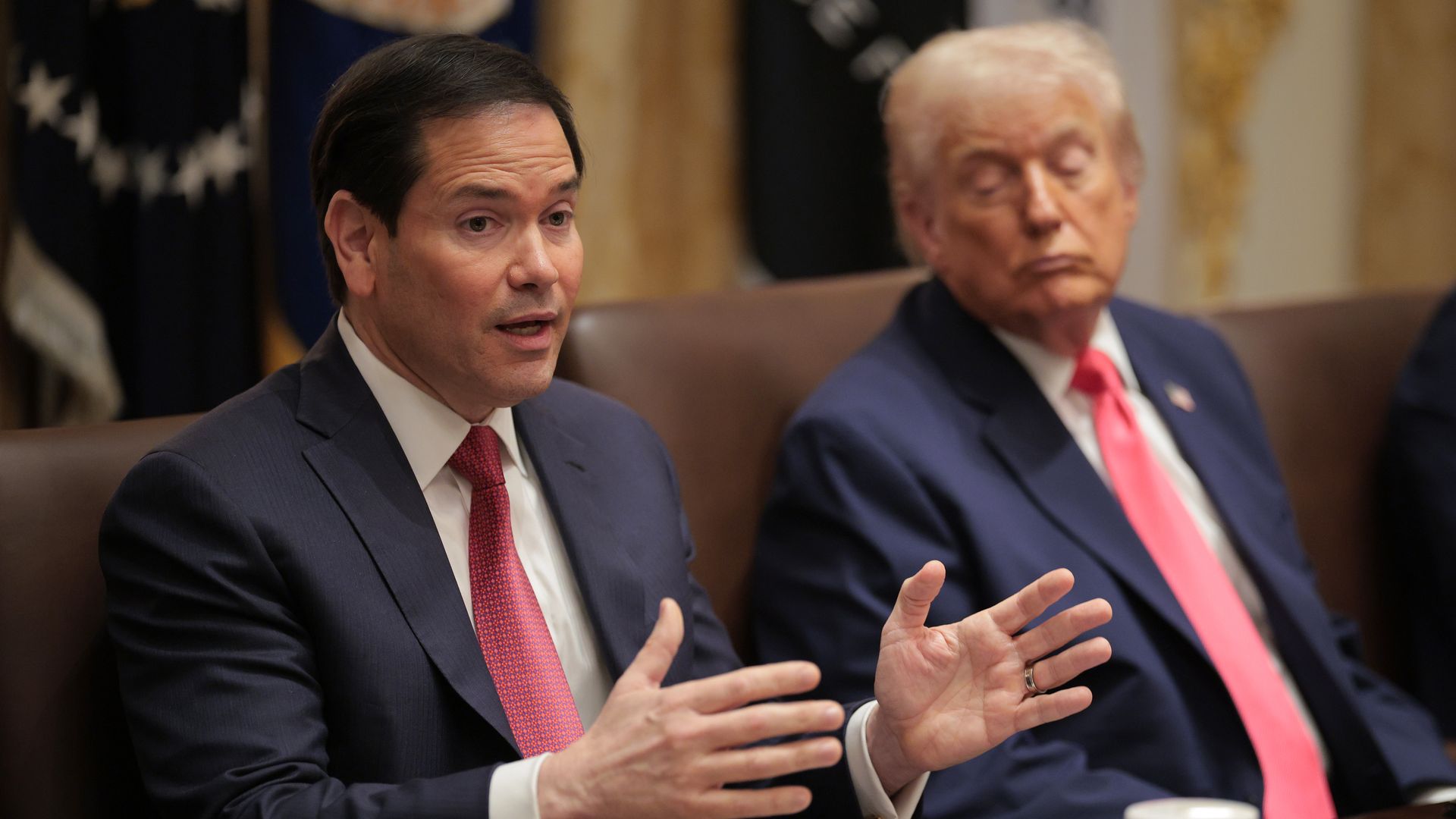
U.S. Secretary of State Marco Rubio and President Trump. Photo: Chip Somodevilla/Getty Images
The font Calibri has joined Harvard, the Smithsonian and corporate America on the Trump administration's list of targets in its war against diversity, equity and inclusion.
The big picture: Secretary of State Marco Rubio called the use of the font in official department paperwork a "wasteful" example of DEI, continuing the administration's attempts to quell inclusion efforts anywhere it has influence.
Driving the news: Rubio on Tuesday reversed the State Department's official use of Calibri, which had been implemented through a 2023 Biden-era directive.
- Starting Wednesday, the department is using Times New Roman 14-point font for official papers, a State Department spokesperson told Axios.
- The Department also said that Times New Roman is more professional, and that its implementation aligns with Trump's "One Voice for America's Foreign Relations" directive.
What they're saying: Maria Town, president and CEO of the American Association of People with Disabilities, said the change was movement away from progress.
- "Ending the State Department's use of accessible, sans-serif fonts like Calibri is more than a shift in design preferences—it is a direct step backward for millions of people with low vision who rely on digital accessibility features to read vital information," she said.
- "At a time when families across the country are struggling to afford the basic necessities of life, eliminating accessibility features should be the very last thing our government is concerned with."
Catch up quick: "Although switching to Calibri was not among the department's most illegal, immoral, radical or wasteful instances of DEI it was nonetheless cosmetic," Rubio said in a cable sent to department employees, the AP reported.
- "Switching to Calibri achieved nothing except the degradation of the department's correspondence."
Flashback: Former Secretary of State Antony Blinken had ordered the change to Calibri based on a recommendation of his department's diversity and inclusion office.
- Rubio has since disbanded that office.
- The use of Calibri was meant to aid readers with disabilities, such as dyslexia, as well as those using screen readers and other assistive technologies.
- The department did not respond to Axios' request for comment on Calibri's greater accessibility to those with those disabilities.
Between the lines: The move also reflects the way that the Trump administration has more broadly shunned Americans with disabilities.
- The administration in October quietly ended support for a program that helped poor people access federal disability benefits and prevented homelessness.
- In January, Trump reversed a 2021 Biden order that prioritized, among other things, making the federal workplace more accessible for employees.
- That's in addition to Medicaid changes outlined by Trump's "big, beautiful bill" increasing barriers to enrollment for people with disabilities.
Context: Times New Roman was the department's official typeface for nearly 20 years until the 2023 order.
- Prior to 2004, the State Department used Courier New.
What the law says about fonts, accessibility
Zoom out: The Section 508 Amendment to the Rehabilitation Act of 1973 requires federal agencies to make "electronic and information technology" accessible to people with disabilities.
- Section 508 deems "serif" fonts like Times New Roman less accessible and "sans serif" fonts like Calibri more accessible.
- Serif fonts "have decorative edges" that make them less readable, the digital accessibility firm ADA Site Compliance notes.
Zoom in: "For people with good vision, a typeface with serifs is slightly easier and faster to read than one without serifs," according to the government's official Section 508 website.
- "Typically, for people with low vision, the serifs significantly degrade legibility. The importance of using a sans serif typeface is especially important for digital content since it is typically read on-screen and not in hardcopy print."
By the numbers: About 2.2 billion people worldwide experience vision disorders, according to the World Health Organization.
The Americans with Disabilities Act and Architectural Barriers Act do require sans-serif fonts in a few places, including public accommodations, commercial facilities and new government facilities.
- The Department of Justice and the Department of Transportation issue these standards.
- The departments did not immediately respond to Axios' requests for comment.
Editor's note: This story has been updated with additional responses.
