New energy analysis boss plans data center info harvest

Add Axios as your preferred source to
see more of our stories on Google.
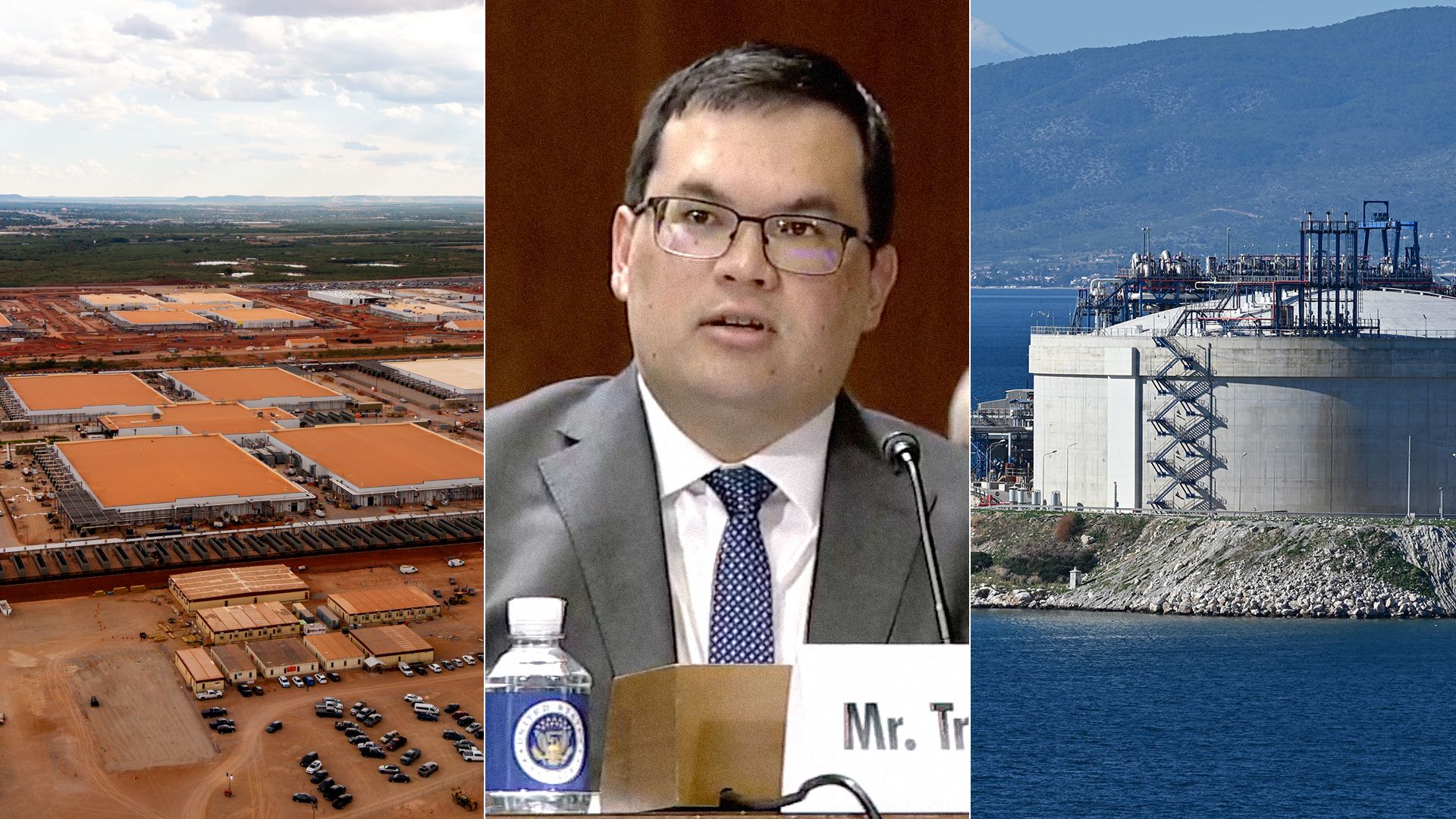
Screenshot: Senate Committee on Energy and Natural Resources. Photos: Kyle Grillot/Bloomberg and Nicolas Koutsokostas/NurPhoto via Getty Images
The new head of the U.S. government's market-moving energy stats and analysis arm has revealed plans to formally track data centers as the AI boom deepens.
Why it matters: Policymakers, investors, activists and everyone in between are struggling to understand what, exactly, is happening with this growing source of energy demand.
- Energy Information Administration boss Tristan Abbey's comments Thursday came in his first interview since his Senate confirmation in September.
Driving the news: "We'll be launching a number of surveys on data centers," he said onstage at the Center for Strategic and International Studies.
- "D.C. is consumed by data center talk, and it's important for EIA to be relevant, and to be collecting data where we can to support policymakers as they understand and grapple with the issues that are raised by data centers," he said.
Yes, but: He didn't provide further details, so stay tuned.
State of play: Abbey's interview with ClearView Energy Partners' Kevin Book was newsy in ways that could reverberate beyond wonk circles.
- He previewed shifts at an agency that produces reports rippling through trading floors, boardrooms, academic research, media and beyond.
- Overall, Abbey called the agency that has lost staff under President Trump "well resourced," but also said that "having the ability to have new people in the future would be good."
A few nuggets...
Product cuts: Abbey signaled he'll pare some offerings, noting EIA has many overlapping data products.
- He cited the separate weekly natural gas storage report, storage dashboard, and a separate weekly gas report.
- "There is quite a bit of redundancy, and I think we're going to be targeting that very aggressively in the coming months," he said.
Houston, here we come (maybe): EIA is weighing an office there, Abbey said, noting the D.C. agency has grown "insular."
- "I think having people out in the field, with a field mindset, a forward-deployed mindset, being able to visit with refineries, go out to oil and gas fields, go out to data centers in Texas, would be an extremely good thing for the agency," he said.
- If that effort is successful, he hopes to build a wider "network of field sites."
Critical minerals: He teased a "suite of minerals-related surveys" covering vanadium, zirconium and graphite.
- "These are minerals that are often neglected in the critical minerals discussion, in favor of nickel and lithium, but they are as critical to the U.S. economy," he said.
Using AI: Abbey said AI is "central to the future of EIA," but that new practices are needed.
- EIA's structure doesn't enable use of AI to analyze pre-published data, but this will change soon, he said.
Revamping outlooks: Look for changes in EIA's closely watched, U.S.-focused annual energy outlook to 2050, he said, floating a bifurcation of medium- and long-term projections.
- He also wants to better integrate EIA's global markets analysis into its wider offerings.
Sign up here for Axios' Future of Energy newsletter.
