What to know about Frank Bradley, the admiral scrutinized over Caribbean boat strikes

Add Axios as your preferred source to
see more of our stories on Google.
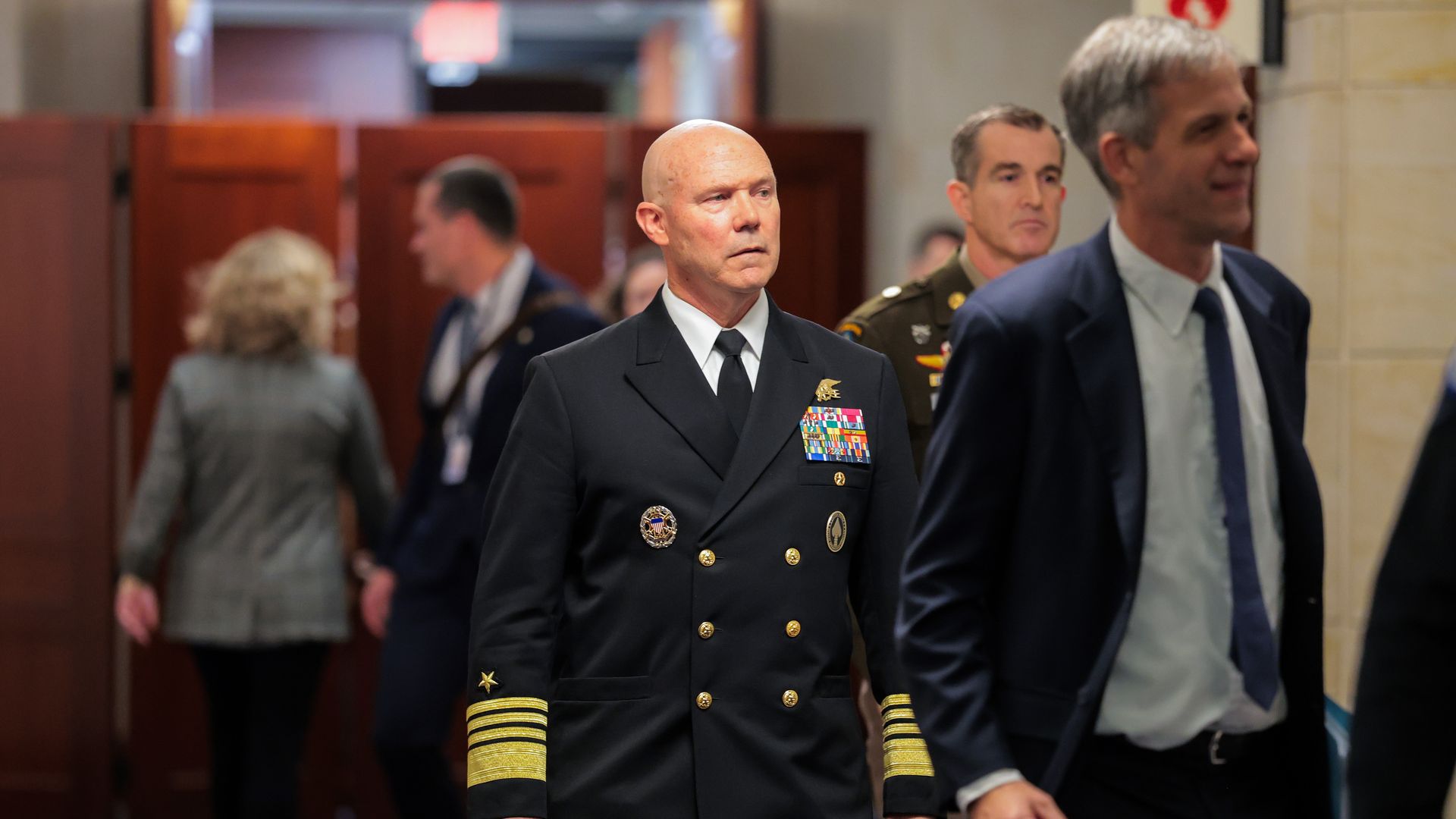
Navy Adm. Frank Bradley walks to a hold room before attending a classified meeting with lawmakers on Capitol Hill on Dec. 4. Photo: Anna Moneymaker/Getty Images
Adm. Frank "Mitch" Bradley, an accomplished U.S. Navy SEAL officer, is at the center of congressional questions over a follow-up strike the White House says he ordered on an alleged drug-running boat in September.
The big picture: After months of strikes and dozens of killings, lawmaker questions over the Trump administration's militarized pressure campaign on Venezuela are still piling up. And as Defense Secretary Pete Hegseth faces an avalanche of criticism, lawmakers have signaled they're not done digging.
- Multiple outlets reported that survivors of the first strike were attempting to salvage the drugs and may have been in communication with others, which the Wall Street Journal reported Bradley was set to tell congressional leaders Thursday in a briefing.
Context: Bradley has logged decades of service and received top praise from those who served alongside him. The White House and Hegseth have repeatedly defended Bradley amid blowback over the strike.
Read on for more about Adm. Bradley.
Who is Adm. Frank "Mitch" Bradley?
Bradley is currently the commander of United States Special Operations Command after being promoted from leadership of Joint Special Operations Command earlier this year.
- He graduated from the U.S. Naval Academy in 1991 before beginning his career as a SEAL.
- His official military biography says he has "commanded at all levels of special operations, including Joint Special Operations Command, Special Operations Command Central, and Naval Special Warfare Development Group."
- Bradley's bio also says he was one of the first to deploy to Afghanistan after the 9/11 terrorist attacks.
Flashback: During his July Senate confirmation hearing, he described Special Operations as the "ultimate team sport, where to win is to live, and to lose often means someone you care for does not."
- In a ceremony handing over command of Special Operations Command to Bradley in October, he said troops must be empowered "with knowledge" and imbued "with the grittiest form of abilities for the hardest mission."
How did Bradley get pulled into the controversy over the boat strikes?
The Washington Post report that sparked mass controversy over the strike on survivors named Bradley as the commander overseeing the attack.
- The Post reported his order to launch a second attack complied with a verbal directive from Hegseth to kill everyone on board — but the administration has denied the defense secretary gave such an order.
Friction point: The initial report prompted lawmakers to pledge vigorous oversight on the strike that, if substantiated, some said could have violated the laws governing armed conflict.
Zoom in: Days after the initial report, White House Press Secretary Karoline Leavitt told reporters that Hegseth had authorized Bradley to conduct the kinetic strike and that he was the one who ensured "the boat was destroyed and the threat to the United States of America was eliminated."
- In response to a question asking her to confirm that an order for a second strike came from Bradley, Leavitt said Bradley was "well within his authority to do so."
What has the administration said about Bradley?
Hegseth described Bradley as "an American hero" and "a true professional" who "has my 100% support."
- In Tuesday's Cabinet meeting, Hegseth reaffirmed the administration's stance that Bradley had "complete authority" to make the call for a follow-up strike.
- Hegseth also said he personally saw no survivors.
Yes, but: Trump previously said he wouldn't have wanted a second strike, telling reporters "[t]he first strike was very lethal."
- Asked Wednesday if Bradley, Hegseth or others should be punished if it is found survivors were clinging onto the boat, Trump replied, "I think you're going to find that this is war — that these people were killing our people by the millions, actually."
How have lawmakers reacted?
Rep. Jim Himes (D-Conn.), the ranking member on the House Permanent Select Committee on Intelligence, told reporters Thursday that the admiral confirmed there was not an order to "kill them all" during the briefing.
- But he called for the video of the follow-up strike to be released, which he called "one of the most troubling things I've seen in my time in public service."
- However, Himes emphasized that Bradley has "a storied career, and he has my respect and he should have the respect of all of us."
Zoom out: Sen. Jack Reed (D-RI), the ranking member of the Senate Armed Services Committee, said that Thursday's briefing "confirmed my worst fears about the nature of the Trump Administration's military activities" and "will be the only beginning of our investigation."
- He added that the Department of Defense has "no choice" but to release the complete footage of the strike.
The other side: But House Intelligence Committee Chairman Rep. Rick Crawford (R-Ark.) said in a statement he has "no doubt ... about the highly professional manner in which the Department of War conducted, and is conducting the operations our nation has called them to do."
- He added, "I am deeply concerned by the public statements made by others that seek to ignore the realities of targeting terrorists to score political points."
Go deeper: Hegseth says U.S. has "only just begun" sinking alleged drug vessels
Editor's note: This story has been updated with comment from Rep. Rick Crawford.
