Harbinger, with big backers, chases narrow EV lane

Add Axios as your preferred source to
see more of our stories on Google.
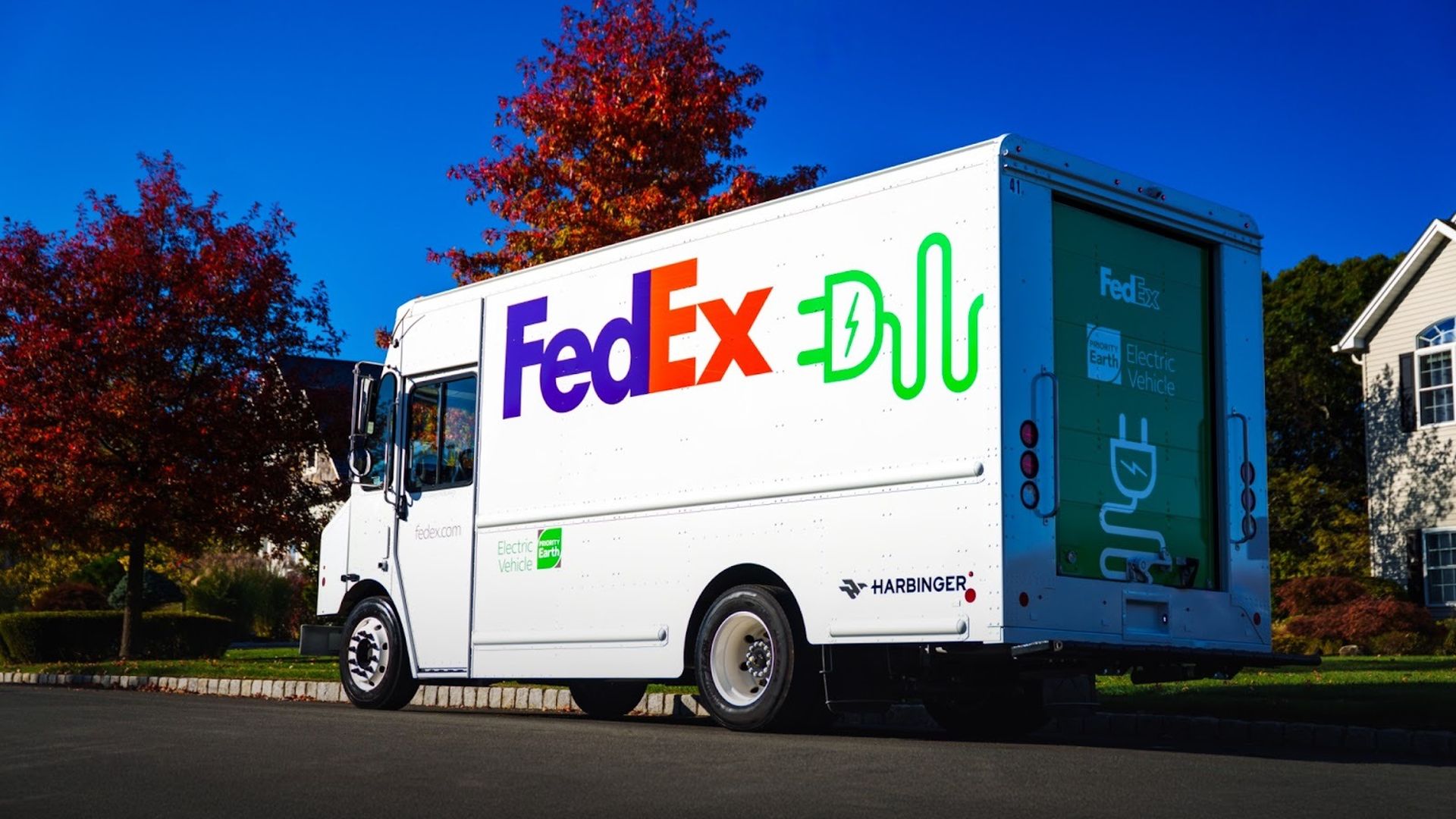
Harbinger's electric chassis underpins commercial trucks like FedEx's pickup-and-delivery truck. Photo: Courtesy of Harbinger
The list of failed electric vehicle startups is lengthy, and the founders of Harbinger Motors have the scars to prove it, which helps explain the company's laser focus on one particular slice of the commercial truck market.
Why it matters: Business fleet owners are getting crushed by higher costs on everything from tariffs to fuel and labor. Reducing operating costs is essential in order to protect margins.
- Replacing medium-duty diesel trucks with more efficient electric ones can bring annual savings of $6,000 to $10,000 per truck, Harbinger says.
The big picture: FedEx aims to replace its entire pickup-and-delivery (PUD) fleet with electric vehicles by 2040.
- It has already deployed EVs from Brightdrop, Mercedes-Benz, BlueArc and Workhorse into its U.S. operations.
- Early analysis shows a cost savings of as much as 30% compared to their combustion-engine counterparts, according to FedEx's 2025 Corporate Responsibility Report.
- "Any vehicle that holds up to our rigorous on-road testing and offers state-of-the-art safety features with lower total cost of ownership is win-win for drivers and for our business," Paul Melander, FedEx's senior vice president of safety and transportation, said in a statement.
Catch up quick: FedEx, which has ordered 53 Harbinger trucks, was among the lead investors in the startup's recent $160 million Series C fundraising round.
- Capricorn's Technology Impact Fund, an early Tesla investor, and RV giant Thor Industries also led the round, and many existing investors participated as well.
- To date, Harbinger has raised $358 million.
Between the lines: Harbinger's leadership team, led by co-founders John Harris and Phillip Weicker, has experience from across the EV landscape, including failed or struggling companies Faraday Future, Canoo and CODA Automotive.
- Instead of aiming to be the next Tesla, they're satisfied trying to electrify the $20 billion medium-truck market, where only Freightliner and Ford compete today.
- "You can't build a $100 billion company in this market, and we're OK with that," Harris, the CEO, tells Axios.
The intrigue: Harbinger's product isn't even a truck. It's a rolling electric chassis — essentially an aluminum frame with four wheels, a battery and an electric or hybrid drive train.
- Known as a stripped chassis, it comes in three lengths, and businesses can fit whatever body style they want on top of it — even a Class A motor home.
- It's decidedly unsexy, and that's the point.
How it works: Harbinger assembles small, 35-kWh battery modules into three different-sized packs, which offer 140, 180 or 220 miles of driving range — plenty for a medium-duty truck, which travels an average of 60 miles per day.
Zoom in: Unlike most car companies, Harbinger makes most of its components in-house, which allows the company to keep costs low, says Harris.
- About 55% of Harbinger's vehicle content is made in the U.S. — "unprecedented," Harris says, in the medium truck industry, which was just hit with 25% tariffs on imports.
- Battery cells are currently imported from Japan, but by the middle of next year, Harbinger will be sourcing batteries from a new Panasonic factory in Kansas, which will bump its domestic content to 75%, Harris says.
The bottom line: "The road is littered with bodies" of failed EV ventures, Harris acknowledges.
- But by fixating on a simple, relatively low-cost product, Harbinger has a better-than-average shot at success, he argues.
