This newly-tested military laser called DragonFire absolutely obliterates drones

Add Axios as your preferred source to
see more of our stories on Google.
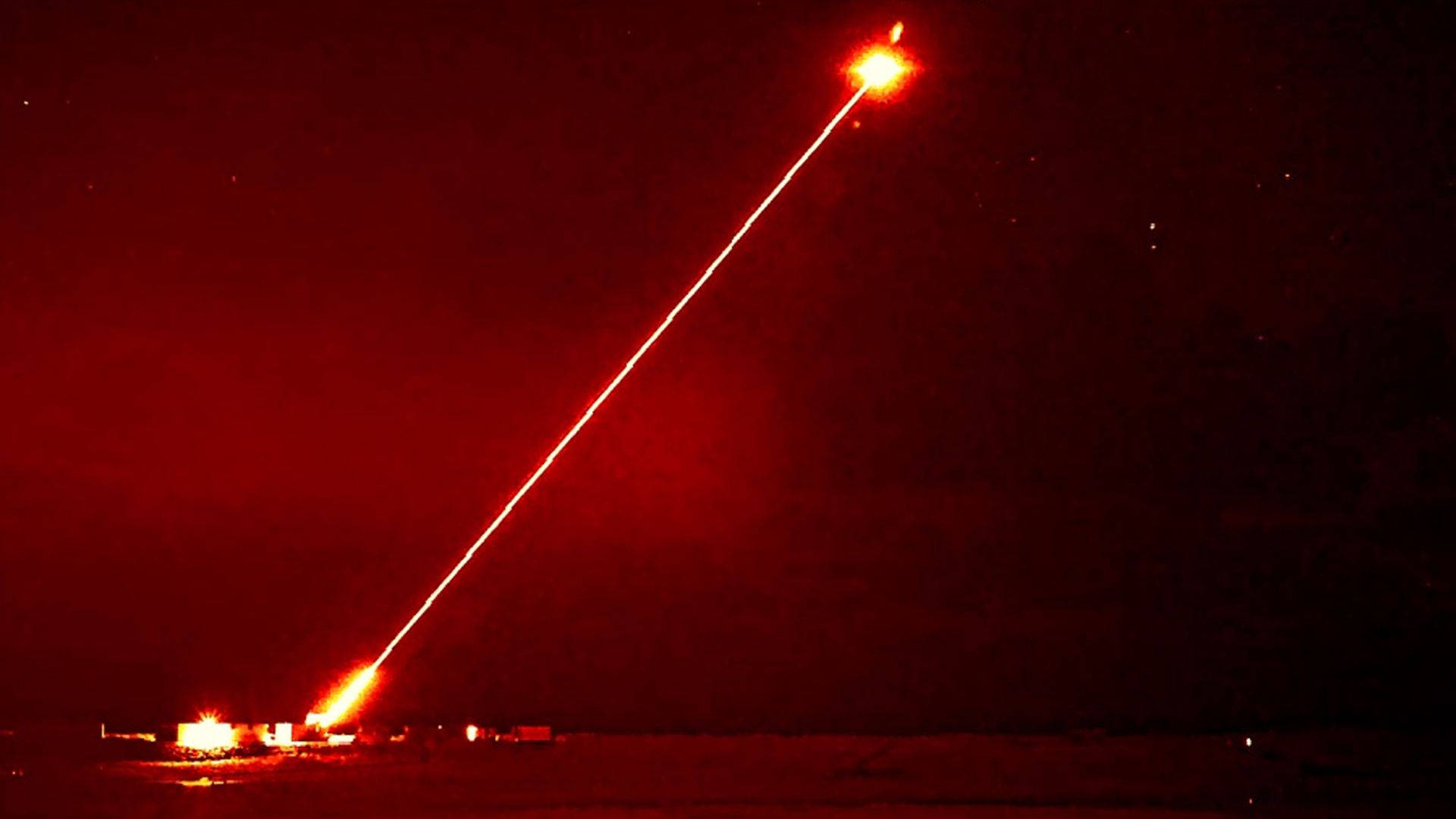
An image of the DragonFire laser in action. Photo: U.K. Ministry of Defence
The U.K. Ministry of Defence recently tested the DragonFire laser weapon at a facility in Scotland, destroying high-speed drones with its targeted energy technology.
Why it matters: Militaries have been working on directed energy for years, but it hasn't been widely adopted.
- The science fiction-like weapons can fight off unmanned aircraft and missiles, and it comes at a time when overhead threats are already moving across the Red Sea.
- Countries such as Germany and China have deployed or developed laser air defenses. Israel and Ukraine have already used them in war.
Driving the news: The recent DragonFire laser test in the UK saw the weapon shoot down drones flying 650 kilometers per hour (about 404 mph) — twice the speed of an F1 racecar.
- The tests were done at the MOD Hebrides, which is a Ministry of Defence site in the Outer Hebrides, Scotland.
- The Ministry of Defence also announced it awarded the European defense company MBDA a £316 million ($413 million) contract to put the DragonFire weapon on the Royal Navy's Type 45 guided-missile destroyer ship.
In many ways, the DragonFire weapon resembles the firearms seen in a video game. But they're becoming much more real.
Here's what to know about the DragonFire laser.
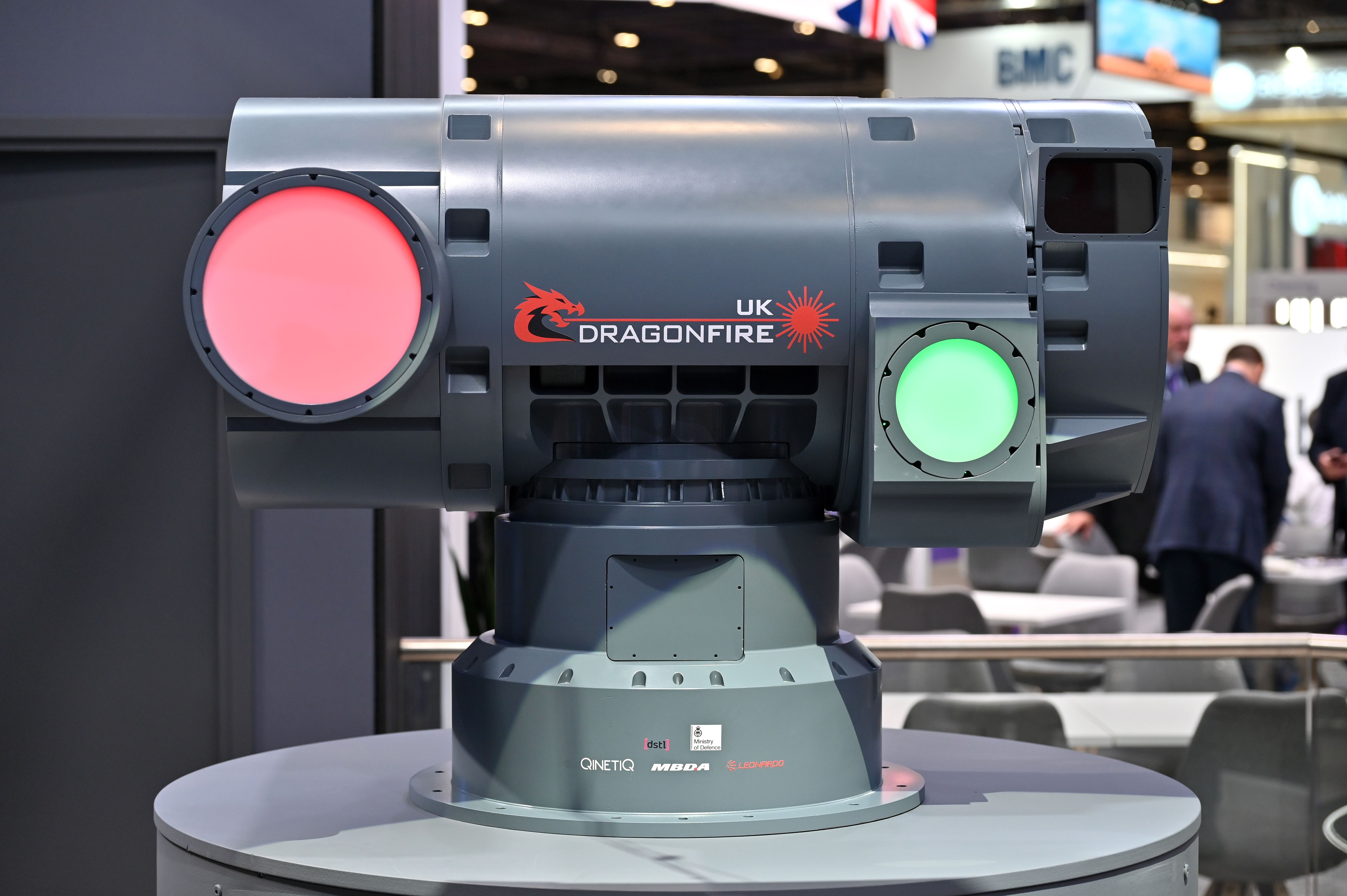
What is the DragonFire laser weapon?
The advanced future military laser is the first high-powered weapon of its kind for a European nation, and it represents one of the most advanced energy programs among NATO nations, per the U.K.
- U.K. defense officials say the weapon gives the military "greater accuracy while reducing the reliance on high-cost ammunition."
- DragonFire was successfully tested for the first time in January 2024.
The DragonFire "can engage targets at the speed of light," the Defence Ministry says.
- Moreover, it uses "an intense beam of light to cut through the target," per the MoD.
- This can cause structural failure or impactful results if warheads are targeted.
By the numbers: UK officials said each shot costs about £10 and can hit "a £1 coin from a kilometre away."
- "It is a more cost-effective method in comparison to traditional missile systems, which cost upwards of hundreds of thousands of pounds per shot," officials said in a release.
The rise of drone-destroying lasers
Targeted-energy lasers have become a popular choice in recent years for defense officials worried about drones.
- They're typically cheaper than common air defenses and can do more than low-tech weapons, the New York Times reports.
- They often use concentrated electromagnetic energy, rather than kinetic energy, to battle enemy forces. The U.S. has been researching these types of weapons since the '60s.
The DragonFire is far from the only drone-crippling weapon to exist.
- Epirus' Leonidas was delivered to the U.S. Army in 2023.
- Israel has spent more than $500 million to develop its Iron Beam laser to swat away enemy mortars, rockets and drones.
- In December 2024, the MoD attached a high-energy laser to the top of the Wolfhound armored vehicle, striking drones with an infrared light.
- In July 2025, Russia reportedly tested the new Posokh laser air defense system against drone targets.

The future of directed-energy weapons
The United States hasn't gone all-in on the sci-fi-style weapons technology. The U.S. Navy's leaders want it, the industry has built it, but many warships aren't outfitted with it, Axios' Colin Demarest reported.
- These weapons are typically pricy given they rely on special materials like germanium and gallium.
What's next: The Pentagon spent $1 billion annually to develop these weapons, with dozens of projects already underway, according to an Emerging Technologies Institute study.
- Many of these weapons have been traced to the Navy, Army and the Air Force.
- Lockheed Martin has suggested potential trials for its High-Energy Laser with Integrated Optical-dazzler and Surveillance (HELIOS) weapon.
Go deeper: U.S. Navy "should be embarrassed" by lack of lasers, says admiral
