5 scenarios that could play out next with the Epstein files

Add Axios as your preferred source to
see more of our stories on Google.
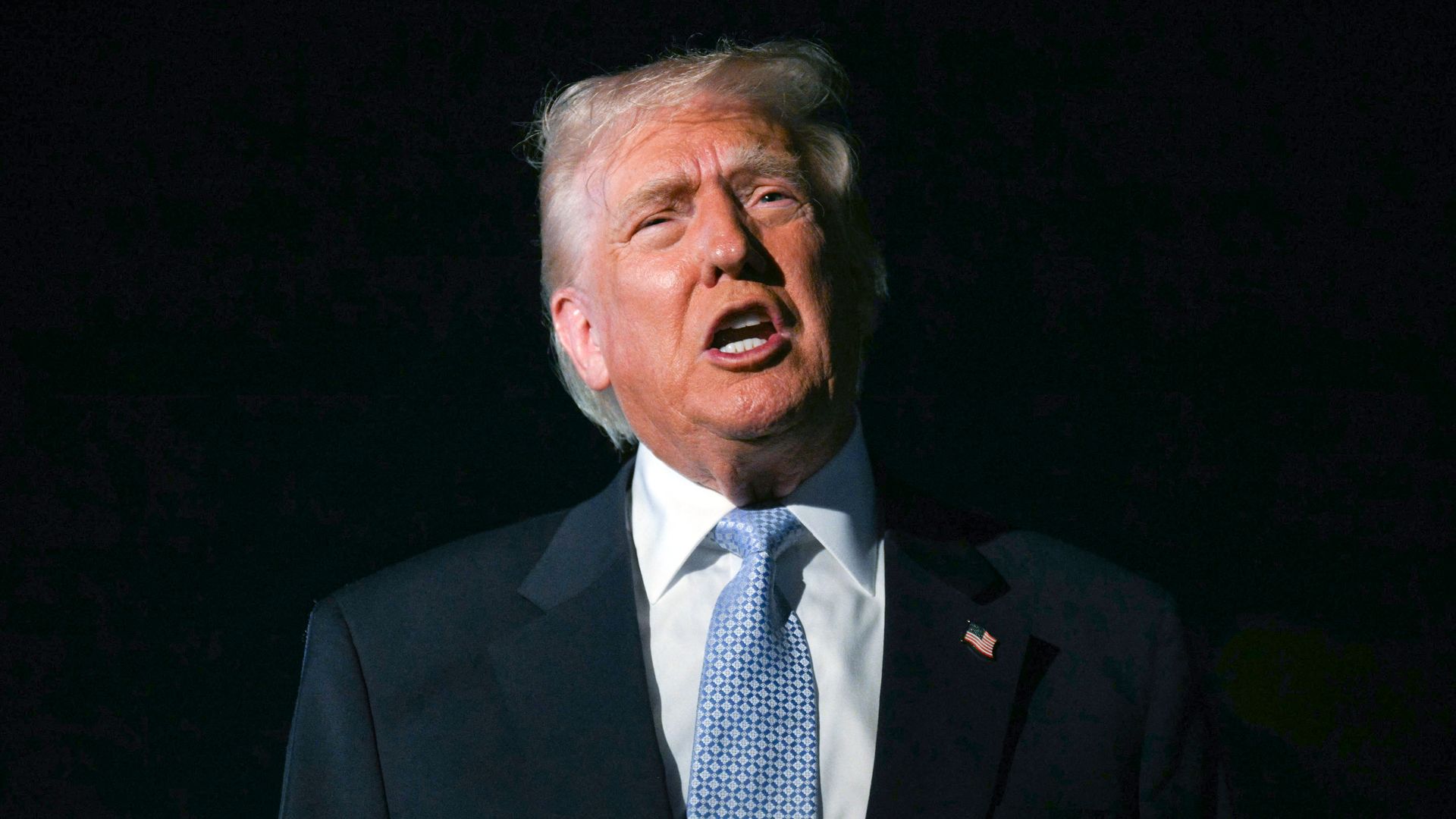
President Donald Trump speaks with reporters in West Palm Beach, Florida, on Nov. 16, 2025. Photo: Jim Watson/AFP via Getty Images
It's now up to the Department of Justice to release the Jeffrey Epstein files after President Trump signed Congress' transparency bill into law Wednesday night.
The big picture: Though the Epstein Files Transparency Act compels the DOJ to share all the files related to the Epstein probe, the law contains loopholes that might delay or change how the files look.
State of play: The Epstein transparency bill blazed through the House, Senate and Oval Office at breakneck speed this week.
- The law says the DOJ now has 30 days to share the files.
- When announcing the bill's signing Wednesday night, Trump didn't say when the Justice Department would start sharing files with Congress.
- However, how those files look, what's in them and how many there are remain to be seen.
Here are five scenarios that could play out next with the files.
Scenario 1: DOJ releases all the Epstein files
The DOJ is now compelled by law to release all files pertaining to the federal probe into Epstein, a convicted sex offender, and his co-conspirator Ghislaine Maxwell.
- However, legal experts say it's unlikely the department will release all the files since the law includes loopholes that give the DOJ cover to delay or withhold information based on "active investigations" and "national security."
- Last week, Trump urged the DOJ to launch an investigation into Epstein's ties to former President Bill Clinton, officials at JPMorgan Chase and others.
- Attorney General Pam Bondi later confirmed the DOJ's investigation, saying the department would investigate Epstein's ties to Clinton, as well as other high-profile figures such as economist Larry Summers, who resigned from OpenAI's board Wednesday.
What they're saying: Bondi said Wednesday that the DOJ will "continue to follow the law with maximum transparency."
Scenario 2: DOJ releases some, but not all, files
The DOJ has the ability under the Epstein law to withhold documents, including classified information related to "national defense or foreign policy," according to the law.
- The attorney general's office can also withhold records that include victims' names, medical files and identifying information, as well as any child sex abuse materials, and images of death, abuse or injury.
- The files, at the very minimum, must be shared in "a searchable and downloadable format," per the law.
Scenario 3: DOJ shares Epstein files, but many are redacted
The Justice Department can also release the documents with redactions, which include any items that feature:
- Classified information.
- Any information that "would jeopardize an active federal investigation or prosecution."
- Victims names, medical files and identifying information.
But the Justice Department must send Congress a report that lists all categories of records released and withheld, as well as any redactions made and the legal reasons for doing so, per the law.
- The DOJ is also compelled to share a list of "all government officials and politically exposed persons named or referenced in the released materials," according to the law.
- These reports and lists must be shared within 15 days following the sharing of the files, the law says.
Scenario 4: Epstein files are released ... eventually
The language of the law gives the DOJ 30 days to provide the files. However, there's specific language that says any withholdings must be "narrowly tailored and temporary."
- This means that the DOJ could withhold documents over their investigations, but only for a certain amount of time.
- "They would have to jeopardize the investigation, and they can only be temporary," Rep. Thomas Massie's (R-Ky.) told CNN on Wednesday.
Scenario 5: DOJ doesn't release anything, breaks the law
The DOJ could theoretically skip releasing the files altogether. But Rep. Ro Khanna (D-Calif.) said that would be a crime.
- "Now, it is a criminal offense for any career official at the Justice Department or the FBI not to release these files," he told CNN on Wednesday. "It's a contempt of Congress. So it's no longer 'Oh, we just don't feel like doing it.' Now, you're violating federal law. And that's something very serious."
President Trump has had the power to release all the Epstein files since he took office as he oversees the DOJ. This is why the DOJ shared thousands of documents related to the probe already.
- In February, the DOJ released more than 100 pages of documents. And in July, the DOJ and FBI concluded in a memo that Epstein did not keep a client list.
- The DOJ and FBI also released raw and "enhanced" versions of a video of Epstein's prison cell from the night he died.
- Trump said Wednesday night on Truth Social that the DOJ had "already turned over close to fifty thousand pages of documents to Congress."
More from Axios:
- Why the Epstein files won't be released as soon as the law is passed
- Here are all the "Epstein files" that have been released — and which haven't
- 6 quick questions to help you understand the Epstein probe
- What are the Epstein files? All you need to know
- What we know about Trump's relationship with Epstein
