Tyson reports beef woes, says consumers are flocking to chicken

Add Axios as your preferred source to
see more of our stories on Google.
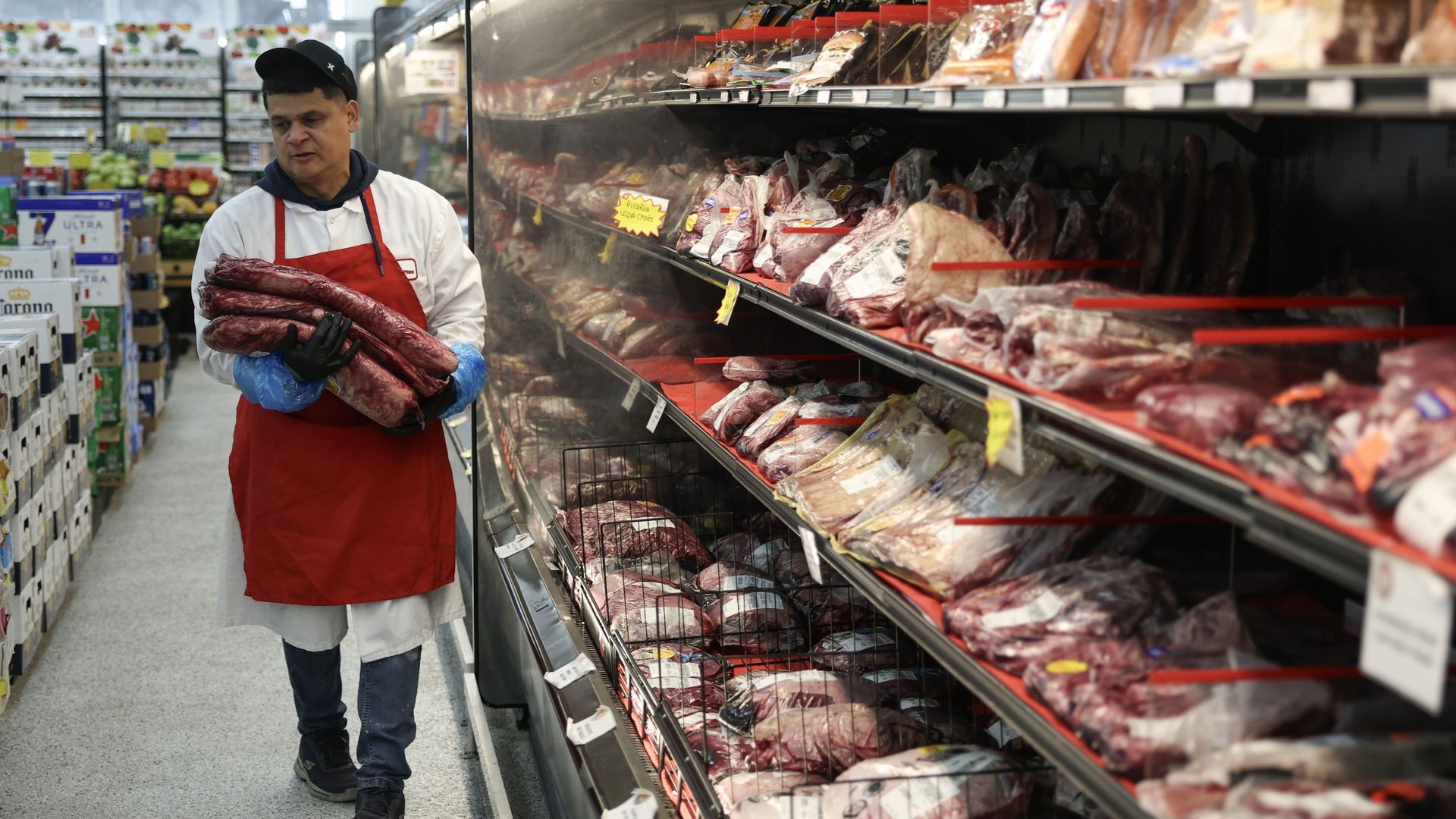
Photo: Joe Raedle/Getty Images
Soaring beef prices took a bite out of Tyson Foods in its most recent quarter, but penny-pinching consumers flocked to chicken, offsetting red ink from red meat.
Why it matters: The meatpacking industry is taking heat from President Trump over the surging price of beef, which experts attribute to a record global shortage of cattle.
Driving the news: Tyson on Monday projected an adjusted operating loss of $400 million to $600 million on beef in its 2026 fiscal year.
- Beef is facing a crisis due to several factors, including drought.
- "The beef segment remains our only soft spot," Tyson CEO Donnie King said Monday on an earnings call. "Cattle supplies are at record lows."
By the numbers: Tyson posted adjusted operating income of $457 million on chicken in its most recent quarter, up 28% from a year earlier.
- The beef segment, however, recorded a loss of $94 million, worse than the $71 million loss from a year earlier.
Between the lines: Like many businesses, Tyson's growth is being driven by higher-income shoppers, chief growth officer Kristina Lambert told investors. Others are stretching their budgets by swapping non-food spending for proteins.
- "We are really excited about the opportunity for consumers with our chicken being a preferred choice for value," Lambert said.
- With volatility in cattle prices expected to remain next quarter, poultry is the most affordable protein on the market, King said, adding, "consumers are favoring that."
Context: The earnings report came days after President Trump said he would order the Justice Department to investigate the meatpacking industry for alleged collusion and price fixing.
- Trump, in a Truth Social post, alleged meatpacking companies were artificially increasing prices, adding that ranchers who bred and kept the cattle were being unfairly blamed instead.
The bottom line: The price of ground beef is up 13% year over year, per the latest government data, Axios' Ben Berkowitz reported.
