Main Street investors are "skipping the dip"

Add Axios as your preferred source to
see more of our stories on Google.
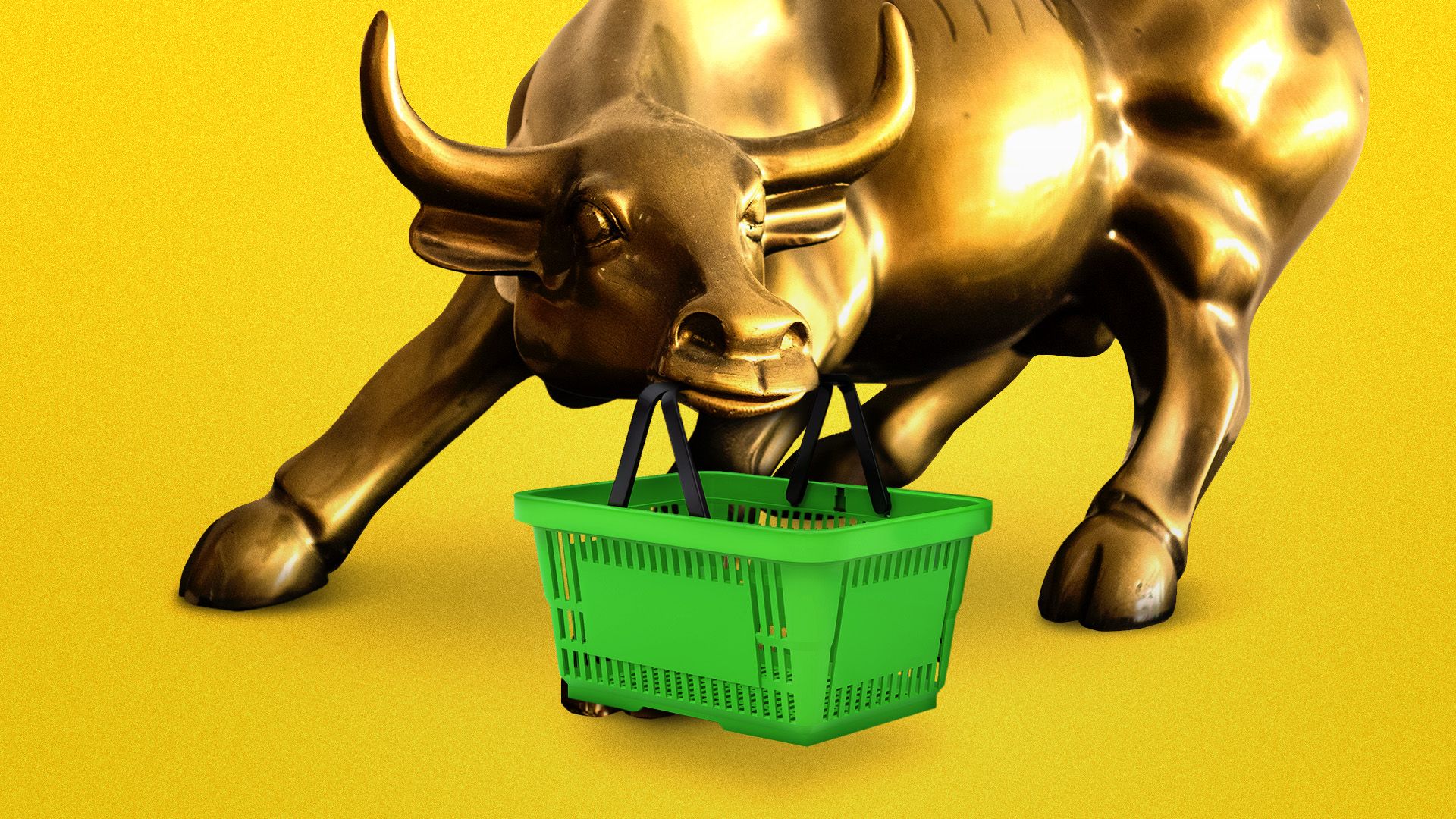
Illustration: Tiffany Herring/Axios
Retail investors have been ferocious dip buyers this year, but that behavior appears to be shifting, as the group did not plough into tech stocks as usual during their most recent selloff.
Why it matters: Retail makes up a quarter of stock trading volume. If these investors stop buying dips, that could make selloffs longer and larger.
What they're saying: Retail is "skipping the dip," according to a note from JPMorgan analyzing trading activity from novice investors.
- Not only did these investors scale back ETF purchases, they also turned net sellers in single stocks, though it was driven in part by profit-taking off the back of Palantir's earnings, the analysts note. The Magnificant 7 still accounted for the entirety of single-stock buying by retail investors.
State of play: Wall Street institutions have been forced to stay invested because of retail investors in some instances.
- Several money managers tell Axios they are hoping for a pullback in the market to get back in, after having failed to do so when retail investors successfully took advantage of the "Liberation Day" selloff in April.
Reality check: The lack of dip buying may be more about how far stocks have already run up.
- "When you're at these types of valuations that we're at, if we see anything less than, you know, excellent, people get nervous," Jim Caron, portfolio solutions chief investment officer at Morgan Stanley, tells Axios.
Zoom out: Meta, Uber, Palantir and Qualcomm all beat their Wall Street earnings expectations, but shares of each fell in the aftermath.
- Meta was the one exception to the skip the dip trend. Its selloff eventually resulted in net retail dip-buying, though the stock remains under pressure.
- Still, all of those stocks had been up double digits year to date before their earnings, suggesting that the hesitation to buy the dip right now reflects valuation concerns, rather than a shift in conviction.
The bottom line: Retail dip-buying has powered much of 2025's bull market. Any pause may hint Main Street finally sides with Wall Street on valuations.
