Hospitals sound alarm on new drug rebate program

Add Axios as your preferred source to
see more of our stories on Google.
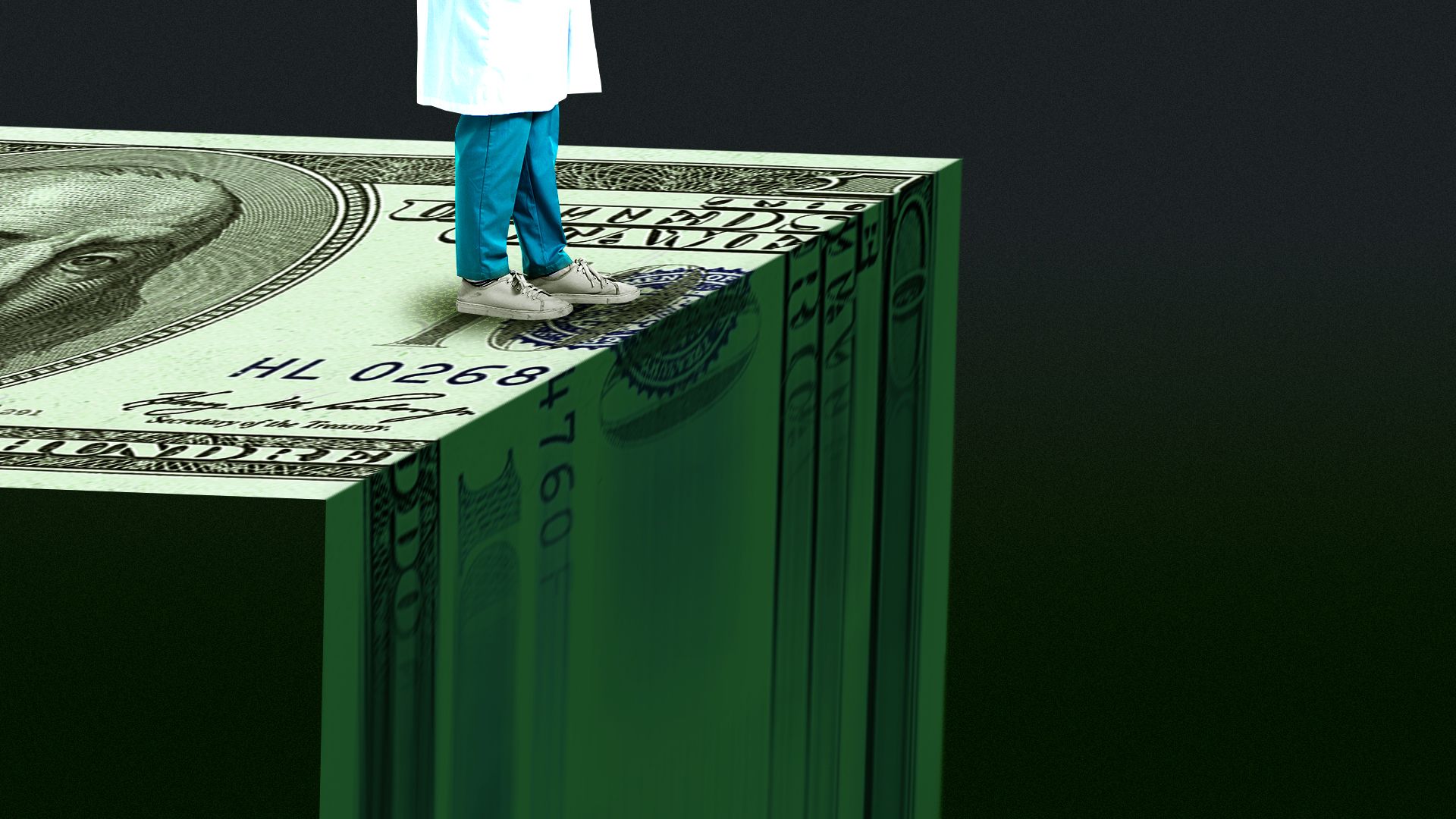
Illustration: Annelise Capossela/Axios
Nonprofit hospitals and health clinics are alarmed about a change that's coming to federal drug purchasing discounts next year.
- They'll have to pay up front and then get rebates — rather than direct price cuts — in a pilot with eight pharmaceutical companies.
Why it matters: The new system, greenlit by the Trump administration, is a win for drugmakers, and it could be a big hassle for providers.
- Under the test, which starts in January, providers will pay full price for drugs they currently get at a steep discount.
- They'll get reimbursed the difference after the drugmaker determines they qualify for the lower price under the 340B program, which allows nonprofit safety net providers to access lower-cost outpatient drugs.
What they're saying: "Many hospitals are concerned about cash flow around this," Maureen Testoni, CEO of the provider trade group 340B Health, said on a recent call with reporters.
- Providers will have to hire new staff to submit data to get the rebates, or at least shift employee responsibilities around, she said.
- She noted that the change comes as providers prepare for cuts to Medicaid reimbursement and other likely changes that could reduce their Medicare payments.
Where it stands: The Health Resources and Services Administration last week approved 340B rebate programs for nine popular drugs, including Bristol Myers Squibb's blood thinner Eliquis and Janssen's Stelara and Xarelto.
- The pilot will run for at least one year to test whether rebates work for 340B discounts, Health and Human Services said in July when it first announced the idea. Only drugs that have been selected for Medicare price negotiations are eligible for the test.
- Once the pilot starts, providers will receive rebates from the drugmakers no more than 10 days after submitting the required data. Drugmakers have to provide "rationale and specific documentation" for denying rebate claims, HHS said.
PhRMA sees the rebate pilot as a step toward more transparency and accountability in the 340B program, senior director of public affairs Molly Jenkins said in a statement.
- The administration should go further and allow rebates across all 340B-covered outpatient drugs, Jenkins added.
- Several pharmaceutical companies have tried to implement their own rebate systems in recent years, arguing they guard against providers getting duplicate discounts or diverting 340B drugs to ineligible patients.
- Courts have so far blocked them from doing so without HHS approval.
Yes, but: The nonprofit health system Advocate Health says the savings from direct discounts allow it to invest $6 billion annually into free clinics, charity care and community-based programs.
- "A shift to a rebate model, as opposed to the current discount model, would undercut our ability to continue this level of care," the health system's leaders wrote in a comment letter to HHS earlier this year.
- The rebate model "is a clear case of the fox guarding the hen house," Jennifer DeCubellis, CEO of America's Essential Hospitals, said in a statement, adding that "drug manufacturers are the only winners" of the program.
Between the lines: Community health centers are particularly concerned.
- "For some health centers, it's like a death blow. They can't afford the upfront cost," said Amanda Pears Kelly, CEO of health center association Advocates for Community Health.
- Although the rebate system is a test, not a permanent change, the danger is that "some harm that might come from this won't be easily reversed," she added.
The other side: HHS maintains that the pilot is a limited, data-driven effort to improve 340B, press secretary Emily Hilliard told Axios via email.
- HHS is undertaking the project to "better understand the merits and shortcomings of the rebate model from the perspective of affected stakeholders," she wrote.
What to watch: Some providers argued in comment letters to the agency that it doesn't have the legal authority to implement the test.
- Congress, which is slowly weighing its own changes to the drug purchasing program, could also step in to halt the model.
- A bipartisan group of more than 160 lawmakers in House of Representatives sent HHS a letter in September urging the agency not to move forward with the rebate system.
