IBM CEO Arvind Krishna on AI policy

Add Axios as your preferred source to
see more of our stories on Google.
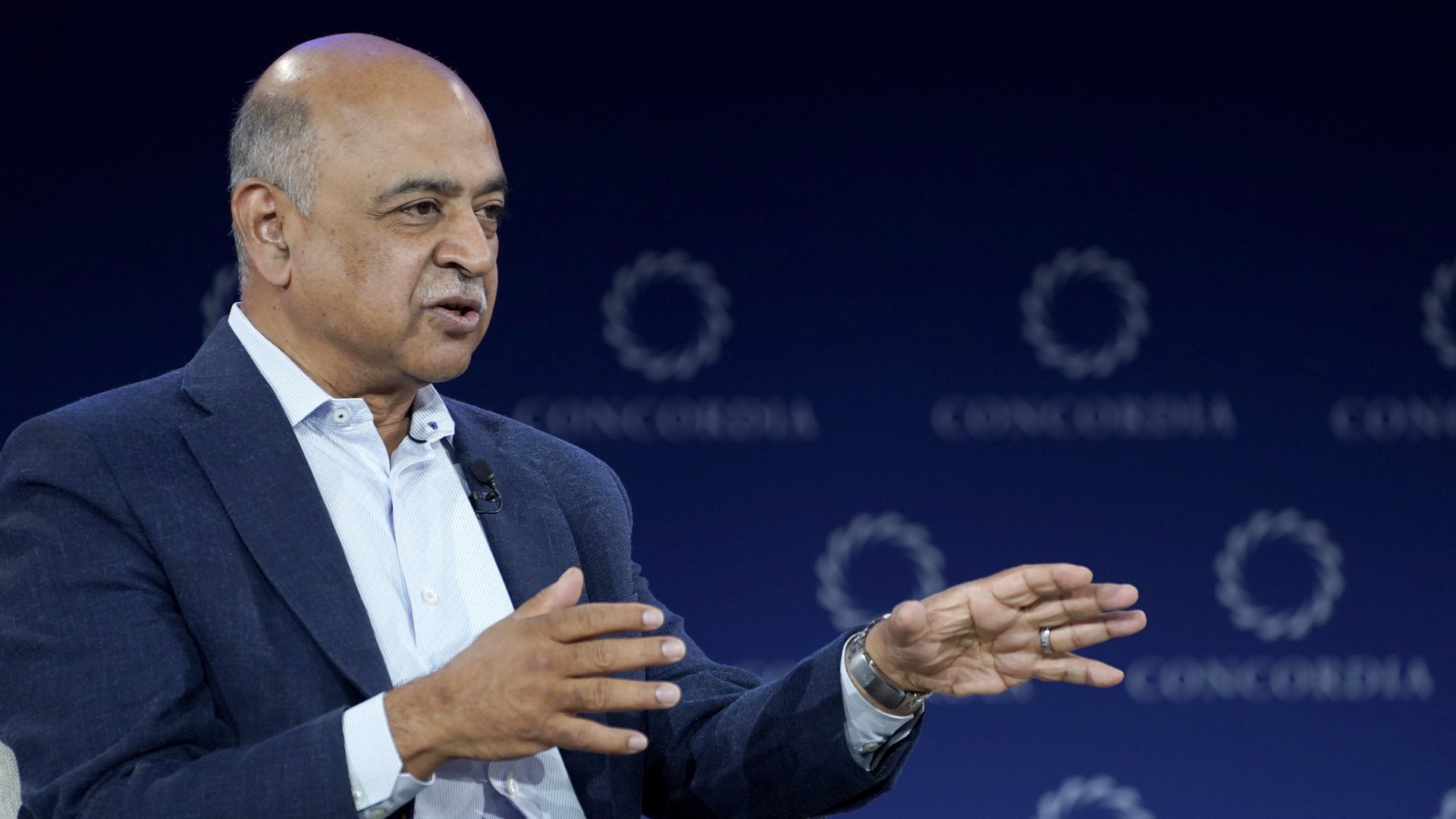
Arvind Krishna speaks during the 2025 Concordia Annual Summit. Photo: Riccardo Savi/Getty Images
Axios reporters sat down with IBM CEO Arvind Krishna this week in Washington and talked about everything from quantum computing to taking risks during economic upheaval.
Why it matters: Krishna has led a turnaround at the legacy tech giant as AI reshapes the industry — and he says he's confident the technology's impact on jobs and productivity at IBM will be a net positive.
Driving the news: IBM under Krishna has seen high stock prices, driven by strategic acquisitions and a focus on cloud, enterprise AI and quantum computing.
- Krishna also has a right-hand man in former Trump National Economic Council director Gary Cohn, IBM's vice chairman, who he has lengthy phone calls with almost daily.
- Krishna said he always wants Cohn in the room with him while making important decisions.
This interview has been edited and condensed for clarity.
What are your priorities for AI policy in this administration?
We have been advocates that there there ought to be federal legislation. So I'm actually sorry that it [Sen. Ted Cruz's effort to get a state-level AI bill moratorium passed] got stomped on.
What AI regulations should the federal government impose for AI?
There are so many protections already built in for consumers that if anybody tries to purposefully misuse AI, you can catch them on the current laws like mail fraud laws, laws around consumer abuse that are already there, consumer financial protection laws.
- So there's so many areas where you can say complete misuse can be stopped.
- I think there's a lot of laws on the books that would kind of come in the way.
Do you think the Trump administration has been doing enough on funding key research and development for AI and quantum?
I think that they're investing a fair amount in R&D.
- If I look at hard sciences and engineering, the National Labs are fully funded. Nobody's talking about taking money away from them. The secretary of energy announced that they're going to build a supercomputer through a public-private partnership. The CHIPS Acts money is all there.
- You can ask yourself the question, "But is the money being spent effectively for hard R&D, or for other purposes?" That's where you always get into political and policy debate, but that's kind of on the edges. That's not on the mainstream of the topic, is my view.
What's your thinking on the administration's approach to immigration, especially on high-skilled immigration or student visas?
If immigration is aimed at getting the most talented people who can make the biggest difference, nobody has talked about stopping those. For the unique AI engineer who makes a huge difference, [the administration's new $100,000 H-1B visa fee] is largely not going to impact that category.
- This has been a long debate, should we have a point-based system? Should we have a skills-based system? Right now, we're at the worst of all systems.
- The talented AI engineer that we might want to hire has to be in the same exact lottery as somebody who's doing a clerical job. That doesn't make any sense, either.
What's the most useful thing Gary Cohn taught you about Washington?
Always engage. I'm not afraid of engaging, because what's the worst that can happen?
- You get a no, or you get a really good view of why what they're going to do is something that you didn't want. But then you're prepared.
