White House backs beef imports as opposition stews

Add Axios as your preferred source to
see more of our stories on Google.
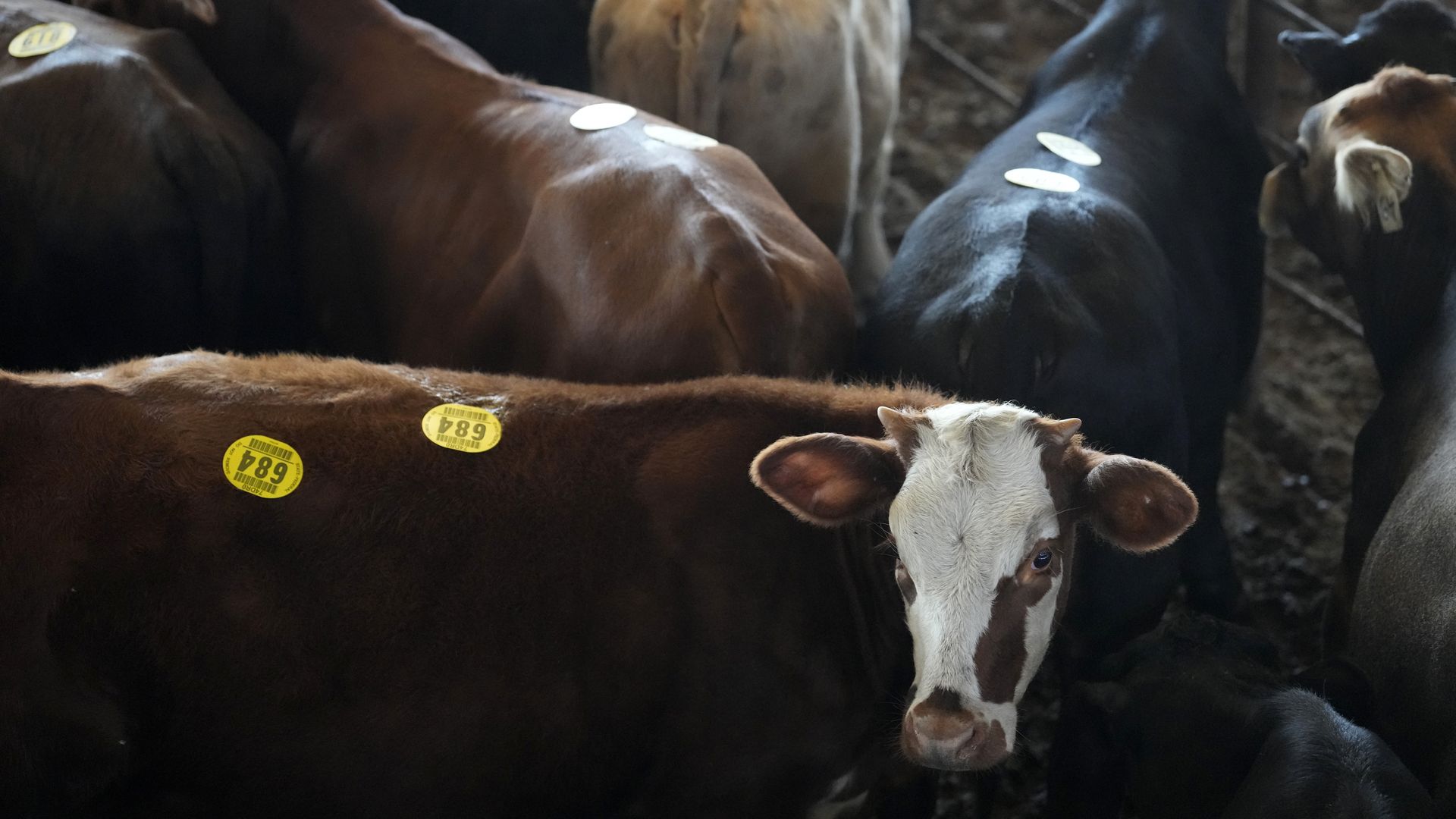
Cattle in pens at a livestock auction. Photo: Melissa Phillip/Houston Chronicle via Getty Images
The White House on Thursday said the fastest way to lower consumer beef prices was through increased imports — despite the concerns of both the domestic industry and key members of Congress.
Why it matters: President Trump firmly insists there's no inflation at the grocery store, but even he concedes beef prices have gotten too high.
- Yet the structural challenges that have driven that surge — including drought, smaller herds, labor shortages, and the lingering effects of COVID — aren't quickly fixed.
The big picture: The average price of a pound of lean ground beef has risen 12% so far this year and 38% versus five years ago, per the last government data released before the shutdown.
- Domestic producers are just now, for the first time in years, earning enough to pay down debts, invest in equipment, and retain heifers to expand herds that are the smallest in more than 70 years.
- The industry argues that lowering prices now will drive producers to sell while they can, instead of retaining livestock to re-establish the herd.
Driving the news: Last week, Trump said a deal was imminent to lower consumer beef prices, adding "we worked our magic" to get prices down.
- But there've been no firm details since, aside from a Politico report Wednesday that the U.S. might quadruple beef purchases from Argentina. (It was not immediately clear if that plan was directly tied to the recent $20 billion U.S. bailout of the country.)
- Doing so would increase beef imports slightly, as the country is a relatively small exporter to the U.S. Industry officials point to Australia and Brazil, for example, as much larger sources that could drive steeper price reductions.
What they're saying: White House press secretary Karoline Leavitt, in a briefing Thursday, said the administration was working on a multi-pronged plan to lower prices.
- "The immediate solution to the problem of the rising cost of beef — the president wants to bring that down — is we have to increase our supply. And so that's what he's doing with respect to these imports," she said.
- The rest of the plan, released by the USDA Wednesday, includes more cattle production and grazing access, as well as more access to capital to finance ranchers. The broad goal is to grow the domestic herd while increasing overall demand.
- "We want to incentivize more Americans to get into this noble profession," she said.
Yes, but: Key congressional leaders aren't on the same page on the import solution to high prices.
- "This isn't the way to do it," Senate majority leader John Thune (R-S.D.) told Semafor on Wednesday. "It's created a lot of uncertainty in that market. So I'm hoping that the White House has gotten the message."
Between the lines: The industry agrees with Thune on that desire for market certainty and stability, even as they praise the USDA plan.
- "These are items that producers throughout he country have been asking for, and we're grateful to the administration for leaning into them — and ask that they focus on those deregulatory issues that they campaigned on, and avoid comments or actions that impact that market that producers must buy or sell in every day," Ethan Lane, senior vice president of government affairs for the National Cattlemen's Beef Association, tells Axios.
What to watch: Whether the opposition from the industry and legislators gets any louder.
- A number of GOP senators have said publicly they were leaning on the administration to avoid the import route, while some farm groups have gone so far as to accuse the president of "betrayal."
The bottom line: The administration, for now, appears willing to look past anger from congressional Republicans and an otherwise supportive industry in an effort to notch a win with consumers.
