Senate passes crackdown on Chinese biotech

Add Axios as your preferred source to
see more of our stories on Google.
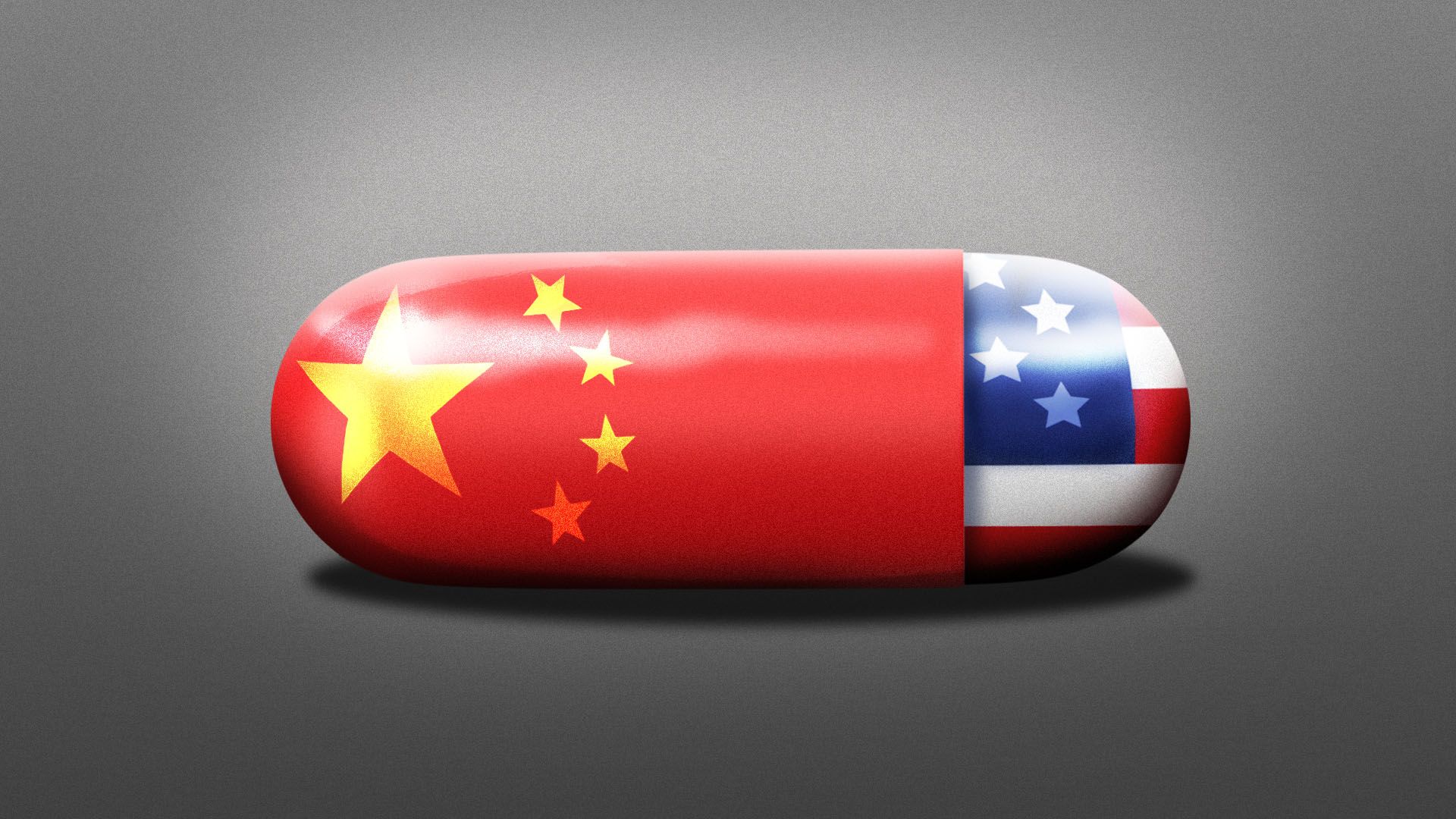
Illustration: Sarah Grillo/Axios
The Senate late Thursday voted to cut off taxpayer funding to certain Chinese biotech companies deemed to pose national security risks.
Why it matters: The push for the Biosecure Act shows how national security concerns are making their way into the health care sector as Congress focuses on competition with China.
Driving the news: The bipartisan measure from Sens. Gary Peters (D-Mich.) and Bill Hagerty (R-Tenn.) was passed as an amendment to the annual defense policy bill that cleared the Senate Thursday night.
- It would prevent federal agencies from contracting with unnamed "biotechnology companies of concern" to be designated by the White House.
- It also would cut off federal contracts from U.S. companies that would use equipment or services from companies of concern in performance of the contract.
The potential ripple effects on the life sciences and drug development have prompted concern in the past, considering the interconnected nature of biopharma research and testing.
- Major drugmakers rely on Chinese contract research firms for testing, ingredients and other services to help bring new medicines to market.
- But recent changes to the bill have helped alleviate some of the concerns, including the removal of specific target companies that prompted due process objections.
- The vote also comes against the backdrop of Chinese pharmaceutical deals threatening the U.S.'s role as a biotech leader.
What they're saying: "We must ensure that the Chinese Communist Party's malign biotechnology activities are not funding or enabled by the U.S. government," Hagerty wrote on X.
- Hagerty and other backers have raised the possibility that foreign adversaries could gain access to genomic data that could be used to create bioweapons.
- "This Act protects Americans' genetic data from Communist China-directed companies," Hagerty wrote. "It's critical that we ensure sensitive medical data of Americans does not transfer back to China for malicious or unknown purposes."
What's next: The Biosecure Act still would need to be included into the final version of the defense policy bill worked out between the House and Senate. The House hasn't voted on the Biosecure Act this year.
