Exclusive: SF Fed's Mary Daly says AI bubble not immediate risk to financial stability

Add Axios as your preferred source to
see more of our stories on Google.
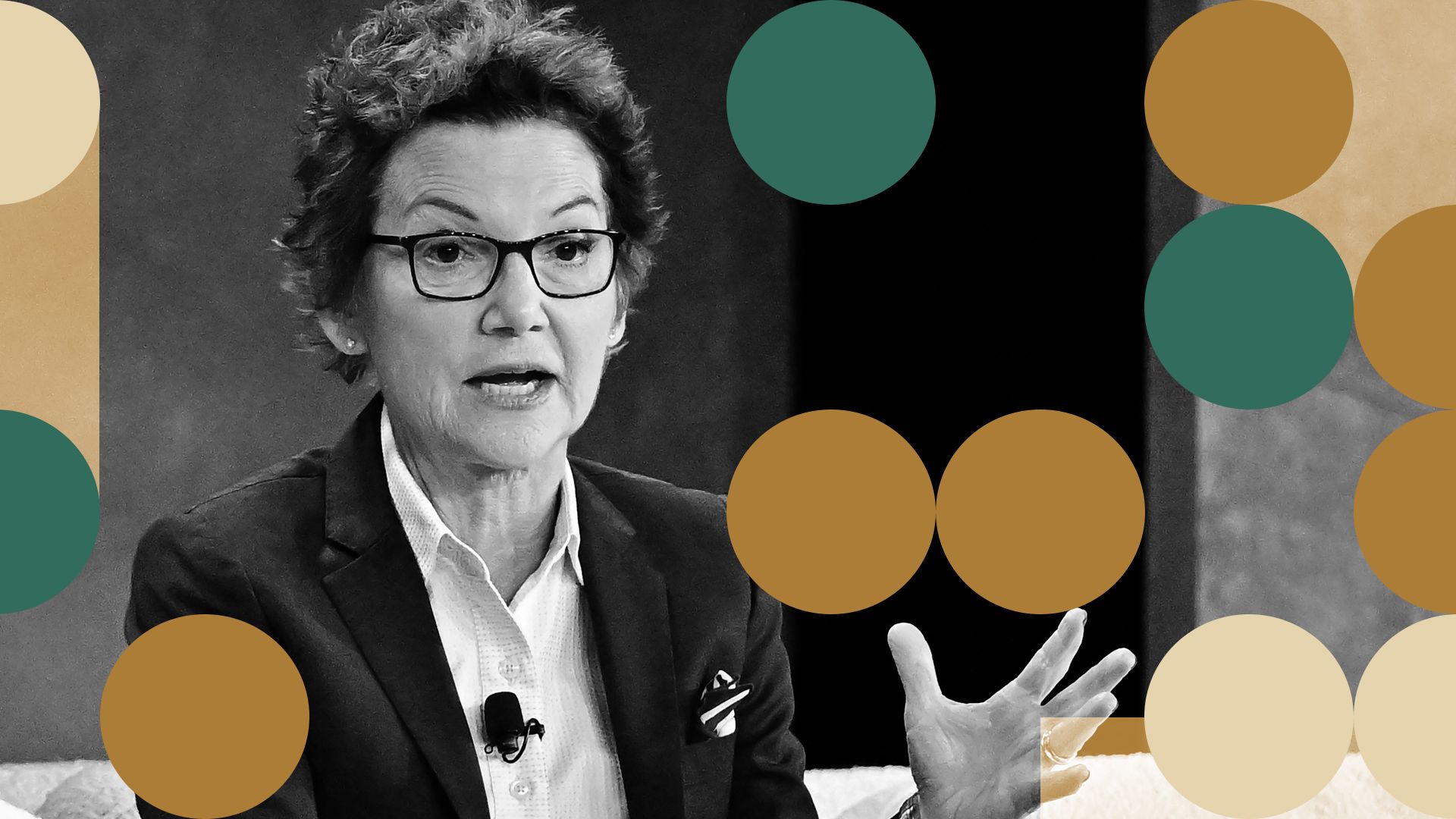
Photo illustration: Axios Visuals. Photo: Frederic J. Brown/AFP
San Francisco Fed president Mary Daly doesn't think a potential AI bubble in the stock market would threaten broader financial stability.
Why it matters: If the Fed doesn't see an AI-fueled selloff as an economic risk, it may be less likely to intervene if the bubble bursts and stocks slide.
What they're saying: "I do want to caution us against thinking all bubbles are financial," Daly tells Axios. "I don't see many signs that that's the case."
- "Research and economics call it more like a good bubble, where you're getting a ton of investment… Even if the investors don't get all the returns that the early enthusiasts think when they invest, it doesn't leave us with nothing. It leaves us with something productive," Daly says.
- The Federal Reserve Bank of San Francisco's district includes Silicon Valley, the epicenter of the AI boom.
Zoom in: In the Axios interview, Daly lays out three reasons she's watching, but not worrying, about an AI bubble.
- It won't be a financial bubble: The AI capex boom is coming from big, stable companies with the balance sheets to support their spending. This isn't a risky startup wave that could threaten broader financial stability.
- The tech could pay off: Even if there's too much investor enthusiasm, that could fuel growth in a transformative technology, similar to the way the dot-com bust still left us with the internet.
- It might all work out: AI could be as transformative as the iPhone, Daly says, unlocking opportunities we aren't even aware of and boosting productivity across the economy.
Yes, but: Productivity gains often mean fewer workers, and that part of AI's deployment could hurt the labor market.
- Daly says she is not seeing evidence of mass job replacement as a result of AI, but she is seeing the addition of "technology in place of hiring" as the economy slows. Instead, they're leveraging AI, fueling the low-hire, low-fire labor market.
Between the lines: AI could also "democratize…expertise, making it more available, which makes the country more productive," she says.
- This view echoes what Dario Perkins, macro strategist at TS Lombard, earlier noted: that AI could fuel opportunity for the middle class by allowing workers to "level-up" their skills and use the technology as a retraining tool.
Zoom out: The promise of AI has to be proven to support the run-up in stock prices we've seen for the largest tech companies.
- Consumer spending is being held up by the wealthy, who feel richer in part because stock prices are up.
- But Daly still says the labor market is the far superior indicator of consumer spending, rather than asset prices, including the stock market.
The bottom line: If for some reason AI's promise is not proven out, Daly is not too concerned about that causing contagion across the broader economy.
