With new app, ChatGPT prompts you

Add Axios as your preferred source to
see more of our stories on Google.
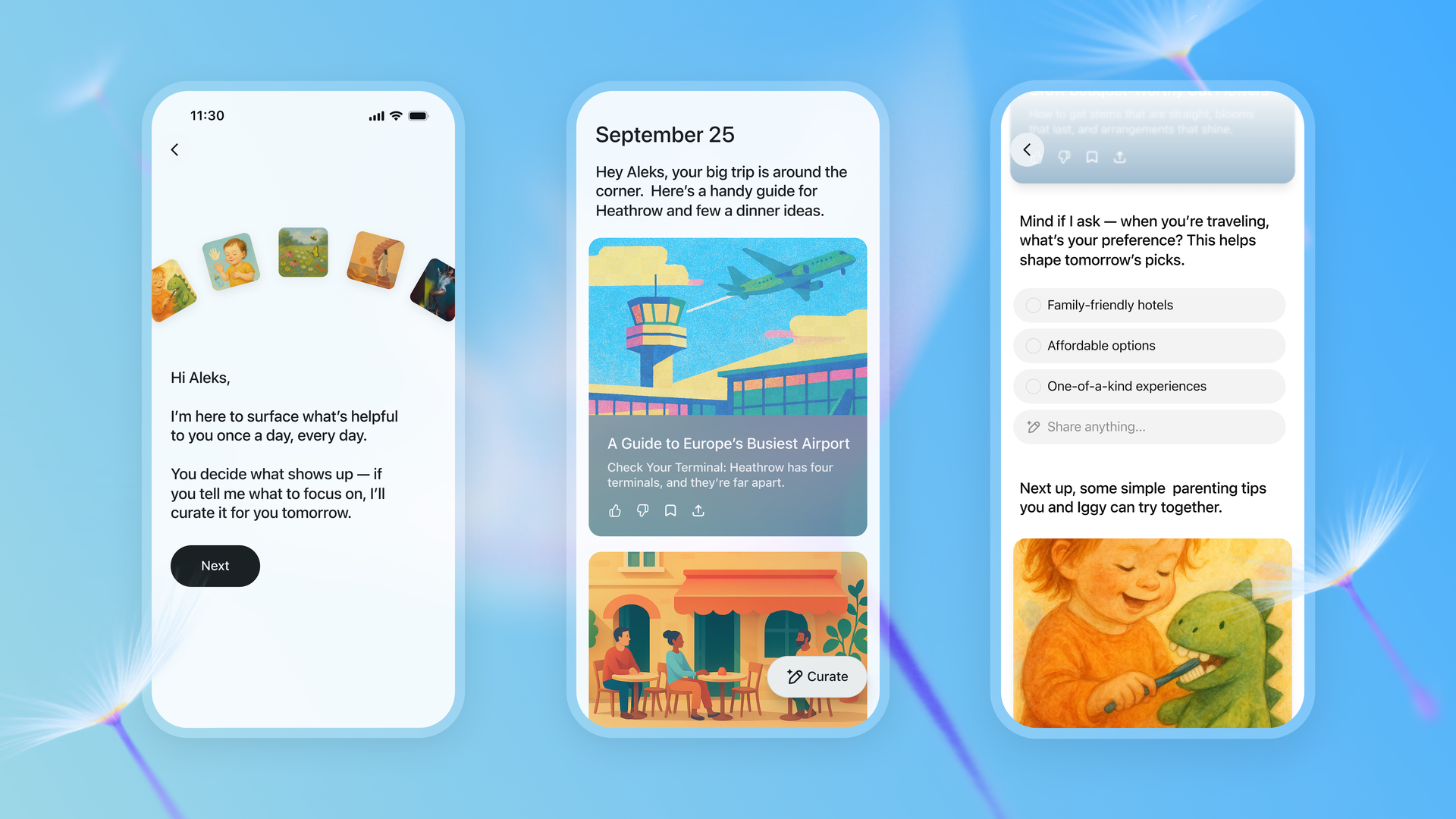
ChatGPT will now proactively start conversations with users through OpenAI's new preview of ChatGPT Pulse, released to Pro users on the mobile app Thursday.
Why it matters: Letting ChatGPT take the initiative could turn it into a more helpful personal assistant — and encourage users to turn over more of their private data and browsing habits.
The big picture: OpenAI calls ChatGPT Pulse a "new experience" where the app autonomously conducts research on your behalf and then delivers personalized updates based on your chats and feedback to the bot as well as your email, calendar and any other apps you connect.
- ChatGPT's results will appear in Pulse as scannable cards that open to provide more detail. Each day starts with a new set of updates.
- OpenAI says users can train Pulse by letting it know what's useful and what isn't.
Between the lines: The app integrations are off by default and can be switched on or off any time in settings, per OpenAI.
- The company also says the topics in Pulse will pass through safety checks to avoid showing harmful content.
- Pulse will roll out first to Pro subscribers, then Plus subscribers, before expanding to all users, OpenAI says.
One of the biggest roadblocks new users of ChatGPT and other genAI chatbots face is not knowing how to prompt correctly in order to take advantage of the tools' abilities.
- Pulse uses a Google app-like interface to make prompting easier.
- The new interface is designed to help "you make progress on the things that matter even when you don't think — or know how — to ask," OpenAI's CEO of applications, Fidji Simo, wrote in a blog post.
What they're saying: Simo describes Pulse as a great equalizer, giving average people access to the kinds of personal assistants that have long eased the lives of the wealthy.
- "We're building AI that lets us take the level of support that only the wealthiest have been able to afford and make it available to everyone," Simo wrote.
Yes, but: Not everyone will want a proactive chatbot or one that bases its responses on the app's memory of past chats.
- Clippy got a bad rap for a reason. Nobody wants to be bugged by a bot.
- Persistent memory has prompted some users to complain that ChatGPT feels intrusive.
- Pulse could lead users to overshare more personal details to get tailored assistance and the promise of better recommendations.
"We do try and make sure that ChatGPT is solving the problem or the question that you have," OpenAI personalization team lead Samir Ahmed told Axios in an interview about ChatGPT memory in June.
- Ahmed said focusing on making the bot helpful rather than annoying is OpenAI's "north star."
