Drugmakers meet Trump only halfway on pricing plan

Add Axios as your preferred source to
see more of our stories on Google.
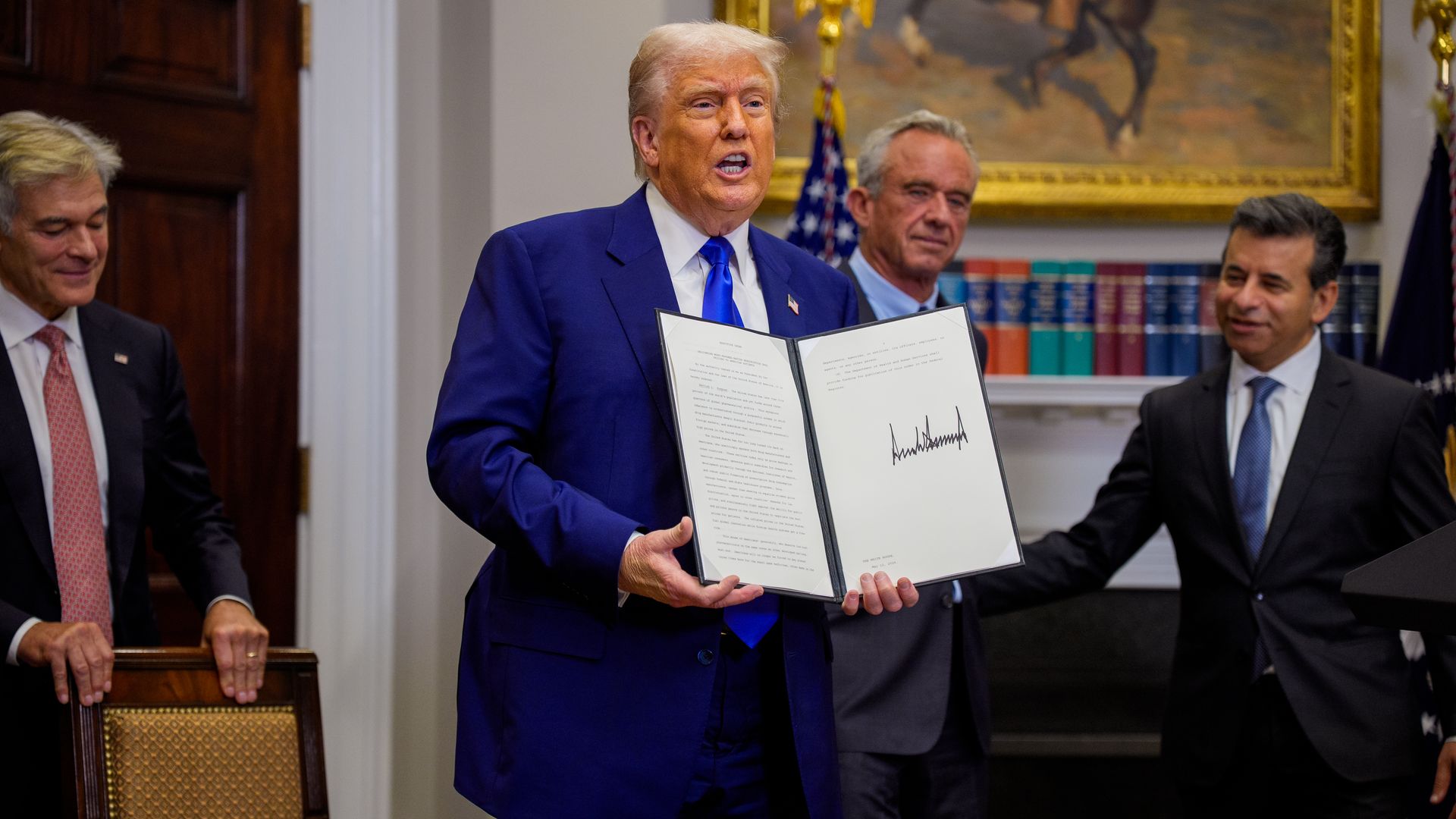
Trump in May issuing an executive order aimed at reducing the cost of prescription drugs. Photo: Andrew Harnik/Getty Images
Big drug companies so far are responding to President Trump's demand they commit to his "most favored nation" pricing policy by raising prices abroad without cutting them in the U.S.
Why it matters: That only gets halfway toward Trump's goal of ending what he calls "global freeloading" and getting other developed countries to foot more of the cost while lowering costs for Americans.
Driving the news: Bristol Myers Squibb became the latest company to make a pricing move on Monday, when it said it would sell its schizophrenia drug Cobenfy in the United Kingdom at the higher U.S. list price.
- There was no corresponding move to cut U.S. prices, though.
- The announcement came ahead of Trump's deadline next week for 17 major drug companies to take action on prices. There could be more moves amid ongoing industry talks with the administration.
- "We agree with the Trump administration that other countries need to pay their fair share," Adam Lenkowsky, BMS chief commercialization officer, said in a statement.
Asked about U.S. prices, a BMS spokesperson said: "We are staying closely engaged and coming forward with solutions with urgency to improve affordability in the U.S., increase transparency and cut out the middleman."
- Eli Lilly likewise announced last month that it would increase the U.K. list price of its diabetes drug Mounjaro, citing Trump's goals, but didn't make corresponding U.S. price cuts.
What they're saying: Trump might view higher prices abroad as a win, "but that might not feel like a win for patients who still can't afford their drugs here," said Rachel Sachs, a law professor at Washington University in St. Louis who was a Health and Human Services official in the Biden administration.
- There are also questions about whether the recent announcements would have much effect, since they affect list prices rather than the net prices that are actually paid.
Yes, but: The Trump administration is currently in talks with drug companies ahead of the Sept. 29 deadline for action.
- Industry observers say there could be more voluntary pricing pledges after that date, but it is unclear how big a dent those would actually make in what critics say are stubbornly high U.S. drug prices.
- "I believe it's likely that there will be some announcements of voluntary commitments after this deadline, but the actual significance of them remains to be seen," said Ian Spatz, national adviser at Manatt Health and a former vice president at Merck.
The administration still has leverage if it's displeased with the companies' response and could use the Center for Medicare and Medicaid Innovation to administratively impose lower prices.
- That gambit drew legal challenges when Trump unsuccessfully pursued an MFN policy in his first term. It could face the same fate this time.
The bottom line: The pharmaceutical industry says it agrees with the goal of making other countries pay more and putting an end to "foreign freeloading." But drastically cutting U.S. prices to match those abroad would hurt innovation, officials argue.
- Industry is more receptive to other Trump ideas like offering sales directly to patients who pay on their own without insurance.
- "We must reject foreign price control models that ration care and suppress innovation," PhRMA CEO Steve Ubl wrote in an op-ed in Stat in June.
- "If we instead required hospitals and [pharmacy benefit managers] to pass along the steep discounts they already receive — and ensured wealthy nations paid their fair share — U.S. prices could fall without jeopardizing our life sciences edge."
