Trump's drug ad crackdown may get a reality check

Add Axios as your preferred source to
see more of our stories on Google.
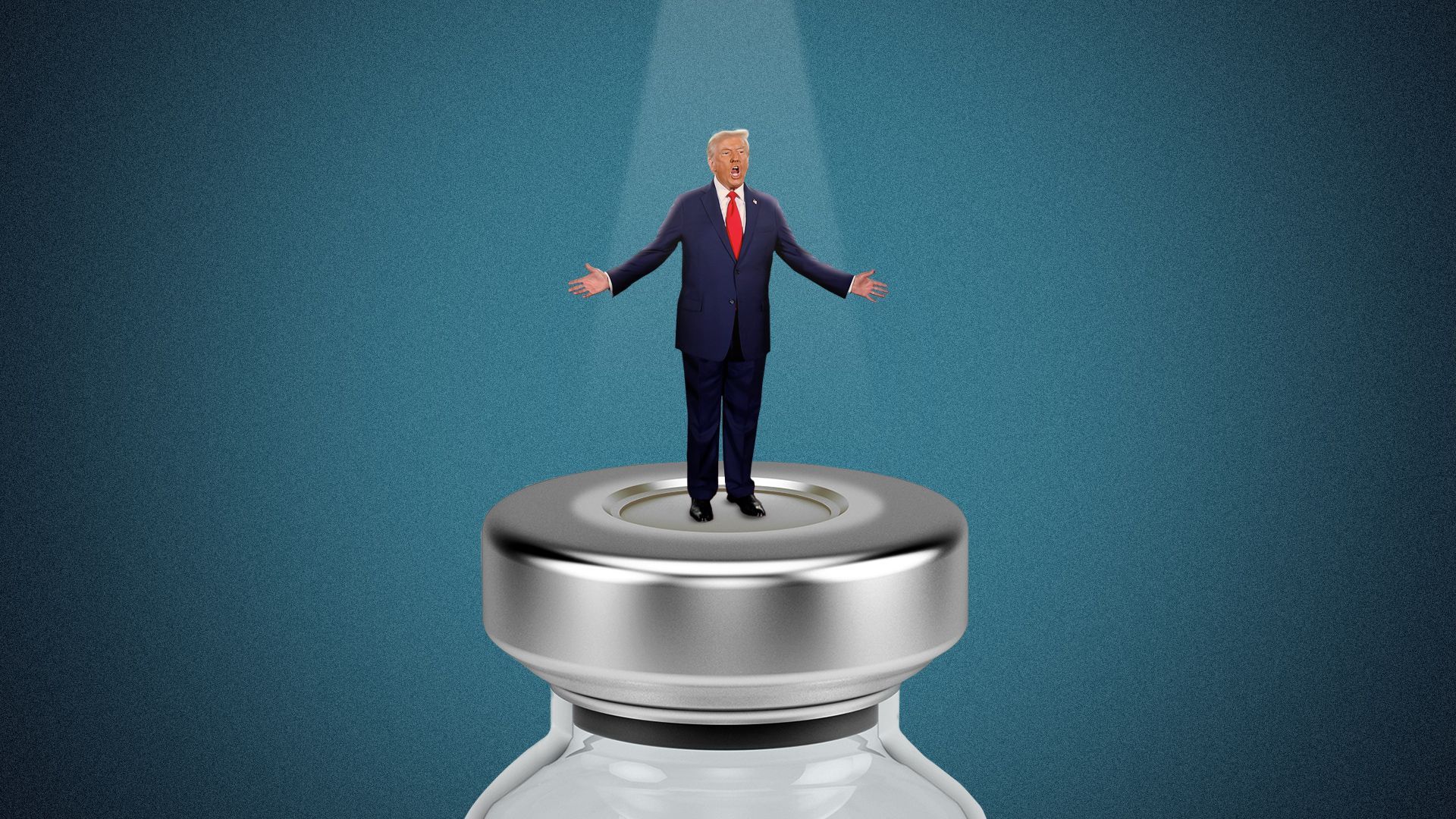
Photo illustration: Aïda Amer/Axios. Photo: Chip Somodevilla/Getty Images
President Trump's high-profile crackdown on drug advertising could quickly hit a wall due to legal challenges and the changing ways medicines are marketed to the public.
Why it matters: Trump's targeting of misleading direct-to-consumer ads isn't backed by legal authority to actually ban pharmaceutical advertising.
- Rather, it hinges on threatened sanctions and public shaming — and on health agencies whose staffs were depleted by layoffs and retirements.
Driving the news: Trump last week ordered stepped-up enforcement of prescription advertising laws, especially in how safety risks about drugs are disclosed in advertisements.
- To do that, the Food and Drug Administration is initiating a process that would dial back advertising rules to standards that were in place in the late 1990s, when drugmakers had to present more comprehensive risk information.
- It's also sent 100 cease-and-desist letters to companies whose ads were deemed deceptive — and thousands more warnings to companies with misleading ads.
The enforcement not only targets drugmakers but affects telehealth companies like Hims & Hers that in recent years have branched into delivering customized copycat versions of drugs to patients.
- A spokesman for Hims & Hers told the New York Times that the company looked forward to "engaging with the FDA to address any concerns and ensure continued access to safe and affordable health care."
"The thing that's clear is the world has changed," said Andrew Wilson, a managing director at consulting firm West Monroe.
- Big pharma companies have spent years and billions of dollars finding ways to communicate information to patients that don't run afoul of existing standards.
- But telehealth has evolved from a simple online interaction between a provider and patient to something fundamentally different, Wilson said.
- "They're blurring the lines where they're promoting and potentially creating a world where you circumvent primary care providers or health care providers in general," Wilson said.
Another challenge is what to do about health influencers who promote treatments online and weren't around the last time drug advertising regulations changed.
- "The world in 2025 is entirely different from 1997. We have celebrities and influencers touting cures on television and social media, and television avenues that didn't exist before the turn of the millennium," said Robin Feldman, a professor at the University of California Law San Francisco. "As advertising changes, the FDA must keep pace."
- But the FDA can only regulate drug companies, leaving many influencers operating in a gray zone, seemingly out of the agency's reach.
- "What makes influencers so powerful is ... their ability to mask what seems like an honest recommendation from people who look like you, from people who sound like you ... when in fact it's not. It's an advertisement," Wilson said.
Between the lines: The administration, as a result, may be pursuing "death by disclosure and rulemaking," Raymond James analyst Chris Meekins wrote in a note.
- "Whether it can survive legal challenges is very much an open question," he wrote.
- While big drugmakers have an incentive not to upset the administration, legal challenges are still likely because the crackdown could make current direct-to-consumer ads "unworkable," Emarketer health care analyst Rajiv Leventhal said in an emailed statement.
- "The industry will do everything in its power to challenge any policy changes in court — a tactic that has previously proven successful," Leventhal said. Broadcasters and other beneficiaries of the drug industry's advertising dollars may also pile on.
Yes, but: Leventhal said pharma marketers may find that longer commercials with more complete product disclosures are a better fit on digital channels where consumers are spending more time anyway.
- "Big Pharma brands also have the budgets to buy lengthier TV spots if they choose. Companies could also work out deals with TV networks in which purchasing ad space becomes cheaper since both sides would be financially motivated to keep running drug commercials during highly rated programming," Leventhal said.
What they're saying: "PhRMA member companies are committed to responsible advertising and look forward to weighing in on the FDA's planned rulemaking," Alex Schriver, senior vice president of public affairs at PhRMA, told Axios in a statement.
- "Truthful and non-misleading DTC advertising is protected under the First Amendment and has documented evidence of advancing patient awareness and engagement."
The other side: "The FDA is not banning prescription drug advertisements — the First Amendment prohibits such action," FDA commissioner Marty Makary wrote in an opinion piece in JAMA.
- "But the First Amendment does not protect deceptive and misleading advertisements that have flooded the media, strained the health care system, and driven unnecessary spending that could have been avoided with proper regulatory oversight."
