SAD: Shorter days could change your mood

Add Axios as your preferred source to
see more of our stories on Google.
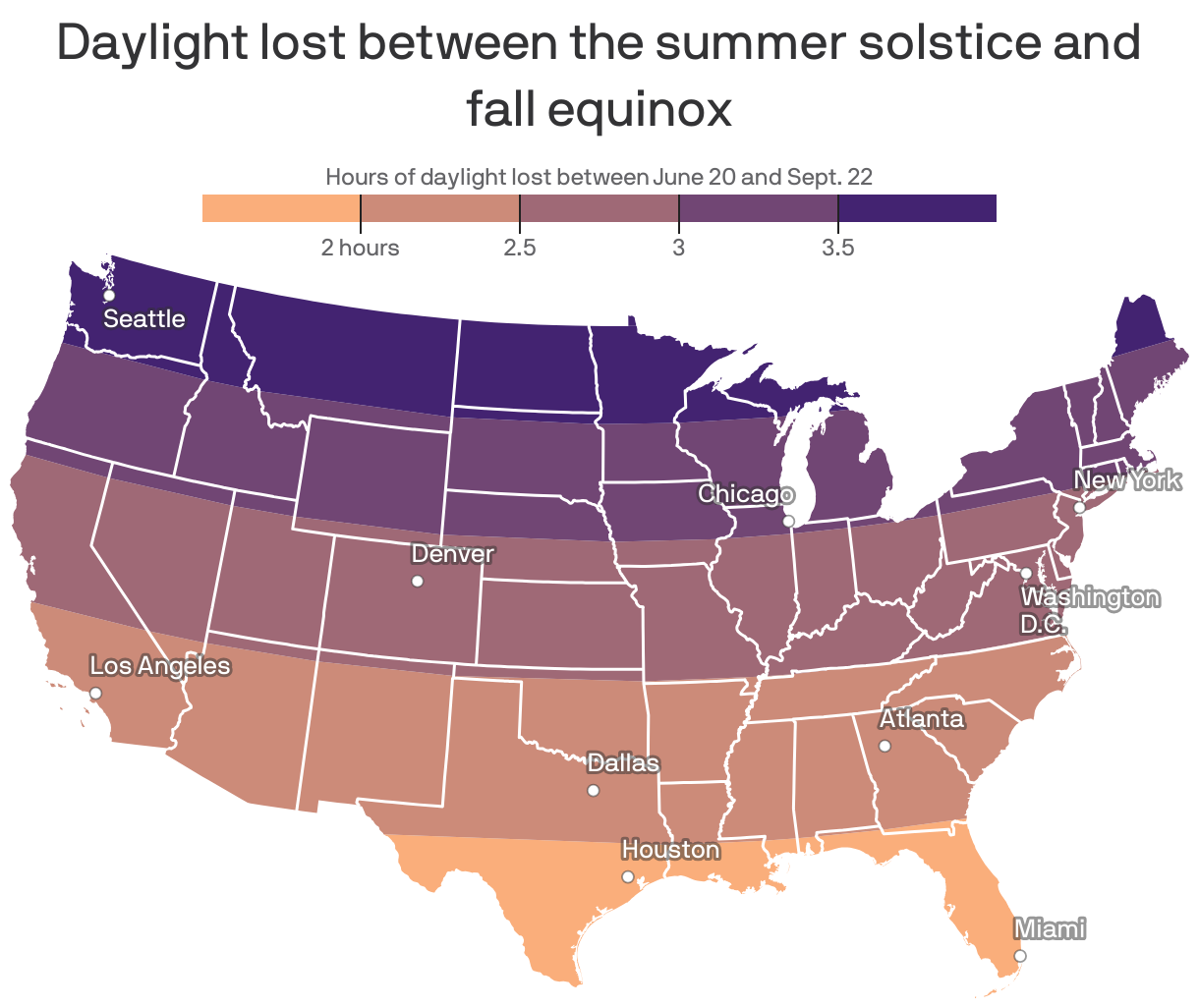
You may have noticed: Days are getting shorter.
Why it matters: As the Sun's path in the sky shifts southward, that could also mean your mood goes South.
What's happening: A reduction in light exposure can change the balance of brain chemicals like serotonin (which can affect mood) and melatonin (important for sleep), and disrupt the body's circadian rhythm.
The big picture: Although feeling some sadness during the darker months is normal, 5% of U.S. adults deal with more pervasive sadness: seasonal affective disorder (SAD) or seasonal depression, according to the American Psychiatric Association.
- Younger people and women seem to be at higher risk of SAD, says the APA, and so do people living farther from the equator.
Between the lines: Mood disorders can lead to sleep loss, and the inverse is also true: Even a single sleepless night can interfere with the brain's ability to regulate emotions.
The bottom line: It's crucial to prioritize sleep during the fall and winter.
