Alleged "fake electors" in Michigan avoid criminal trial

Add Axios as your preferred source to
see more of our stories on Google.
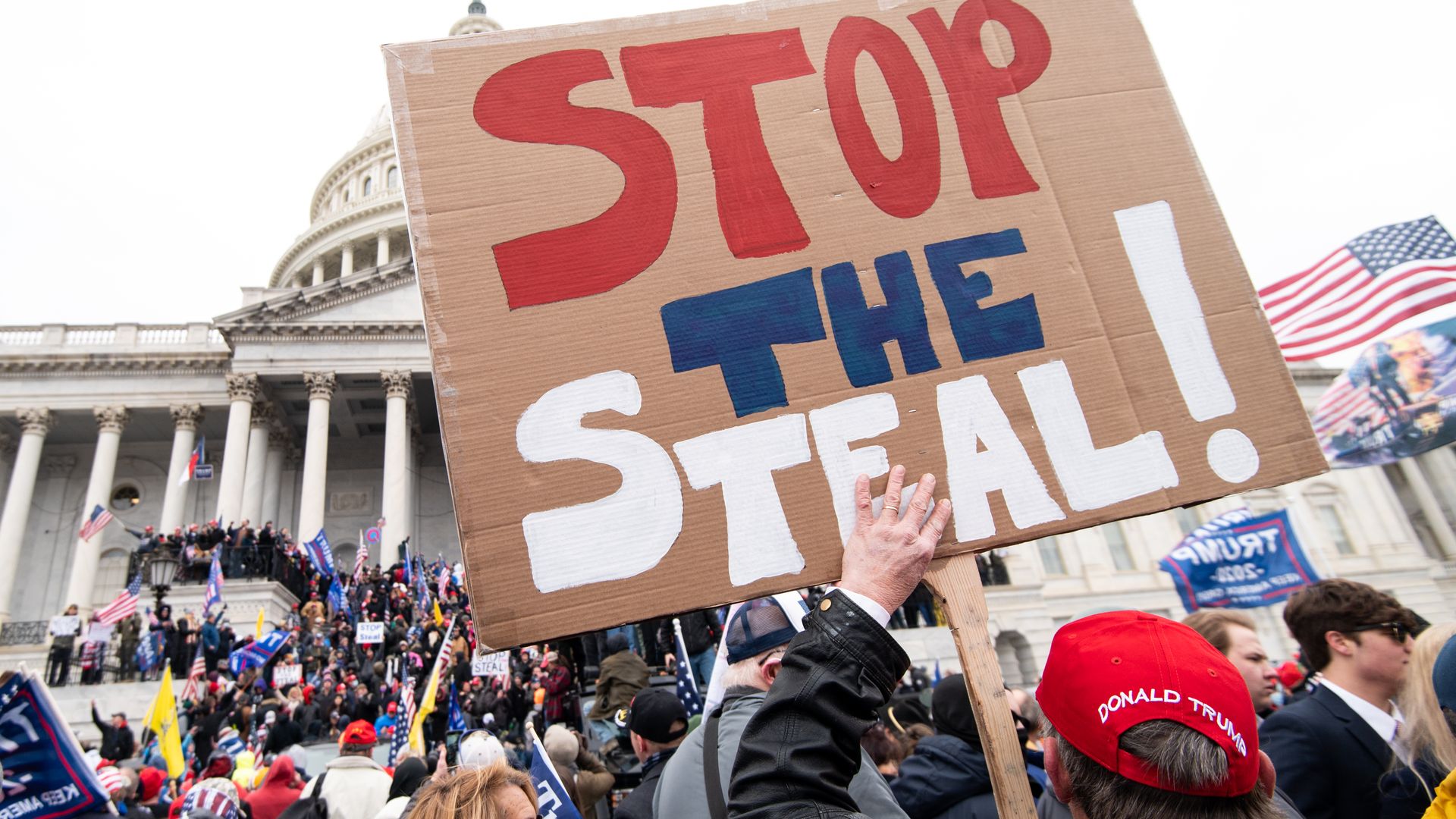
A man holds a stop the steal sign on Jan. 6, 2021. Photo: Bill Clark/CQ-Roll Call, Inc via Getty Images.
The 15 Michigan men and women accused of trying to help President Trump overturn the 2020 election and dubbed "fake electors" by prosecutors will not face a criminal trial, a district judge ruled on Tuesday.
Why it matters: The charges followed the Justice Department's end to several investigations into Trump in compliance with an internal policy against prosecuting sitting presidents.
Catch up quick: Michigan's attorney general, Dana Nessel, announced felony charges against the electors for signing multiple certificates falsely identifying themselves as the "duly elected and qualified electors" for Michigan's vote for U.S. President in 2023.
What they're saying: "This is a fraud case, and we have to approve intent, and I don't believe that there's evidence sufficient to prove intent," District Judge Kristen Simmons said from the bench in the courtroom Tuesday.
- Simmons said that the defendants believed in the president's repeatedly debunked claims that the election was stolen, and therefore thought they were "executing their constitutional right to seek redress," and not committing a crime.
- "The prosecution would like the court to believe that these same defendants were savvy or sophisticated enough to understand fully the electoral process, which the court does disagree because the document that was presented doesn't even align with the level of sophistication" that an official document certifying the election for the state of Michigan would include, Simmons added.
The other side: "Every serious challenge to the election had been denied, dismissed, or otherwise rejected by the time the false electors convened," Nessel said in a news release announcing the charges in 2023.
- She said "it would be malfeasance of the greatest magnitude" if her office failed to act "in the face of overwhelming evidence of an organized effort to circumvent the lawfully cast ballots of millions of Michigan voters in a presidential election."
- "The false electors' actions undermined the public's faith in the integrity of our elections and, we believe, also plainly violated the laws by which we administer our elections in Michigan."
- The Michigan AG office did not immediately respond to Axios' request for comment.
Go deeper: Where Trump's cases stand as Inauguration Day nears
