How Trymaine Lee turned his trauma into a new story of survival

Add Axios as your preferred source to
see more of our stories on Google.
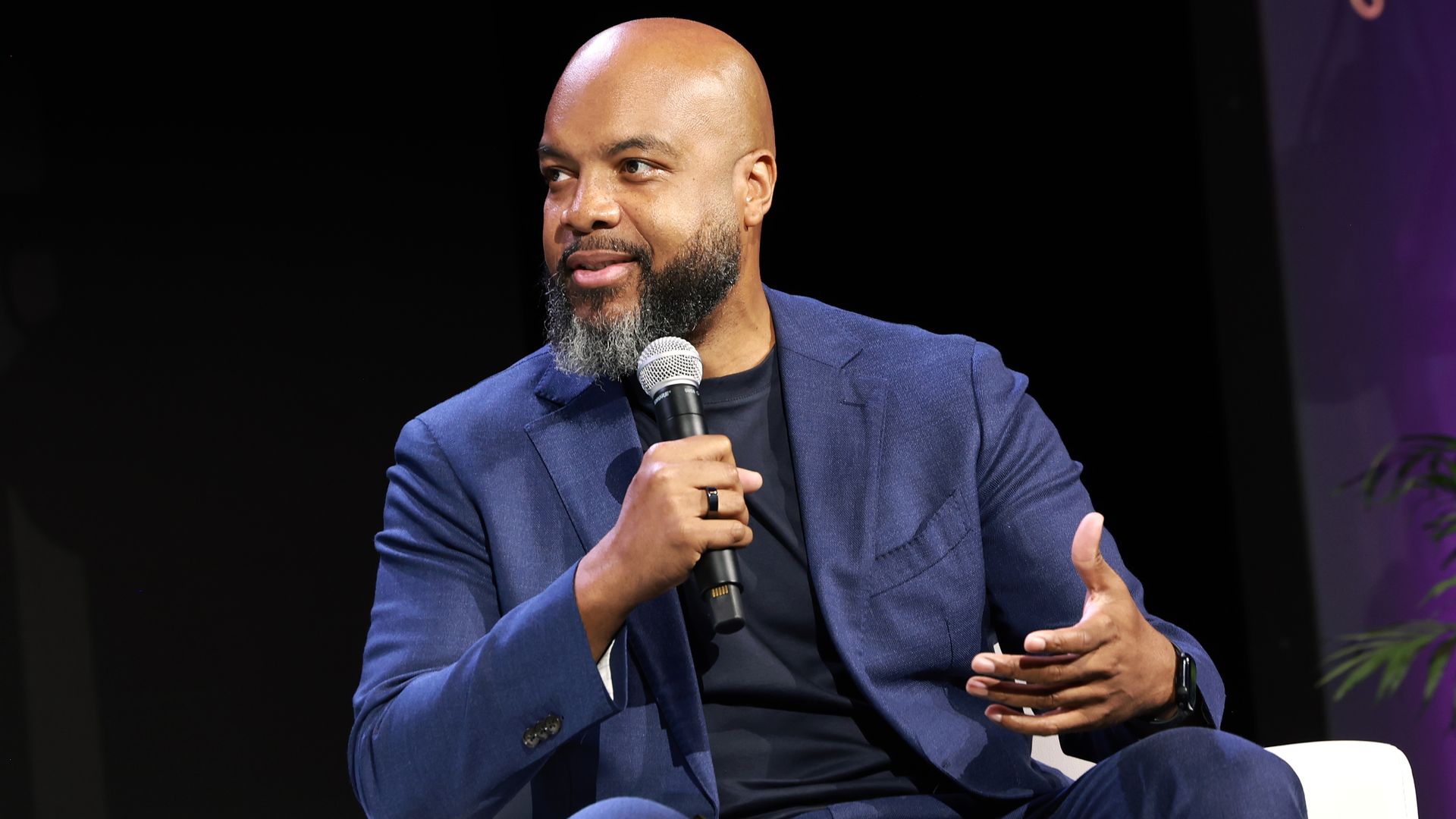
Trymaine Lee speaks at the 2024 Essence Festival in New Orleans. His new book, A Thousand Ways to Die, explores the generational toll of gun violence. Photo: Arturo Holmes/Getty Images
Trymaine Lee's new book reframes gun violence not just as a crisis of safety, but as a crisis of memory, history and health.
Why it matters: A veteran journalist, Lee has long reported on the violence that scars Black communities. But in his new book, A Thousand Ways to Die, he turns the lens inward, using his own family's story — and his own body — to show how deep the wounds really go.
- "This book began as a story about the economic cost of gun violence," Lee told Axios. "But it became about the personal cost — the generational cost. And the psychic toll we don't always name."
The big picture: Lee begins the book, which is released on Sept. 9, with a heart attack. Not a metaphor — a real, near-death moment in front of his wife and daughter that forces him to examine the accumulated trauma of covering, witnessing and internalizing Black death over decades.
- From there, he weaves together memoir, history and reporting — tracing how gun violence has shaped not only his life, but Black America as a whole.
Context: Lee is a longtime MSNBC contributor and host of the "Into America" podcast, where he explores the intersection of Blackness, power and politics.
- He first made national headlines for his early coverage of Trayvon Martin's death. He later reported on the ground in Ferguson, Missouri, in the days after Michael Brown's murder — a moment he still carries.
Between the lines: Lee doesn't just document what happens when a bullet hits. He asks:
- What led to that moment?
- What does a family carry afterward?
- And how have guns historically been used — from slavery to policing — to keep Black people compliant through terror?
He walks readers through his own family's untold migration story, explaining how a shooting in the South prompted his family to move north to New Jersey. It's a story that mirrors millions — often unspoken, but deeply felt.
- "We don't always talk about what forced us to flee. For my family, it was violence — plain and simple."
What the book says:
- Guns weren't just tools of war or crime — they were tools of control, dating back to the "guns-for-slaves" cycle.
- Black people have paid a steep emotional and physical price — even when they survive.
- The U.S. rarely measures the full cost of violence — the therapy, the health consequences, the relocations, the silence.
Reality check: Lee builds this argument through stories of survivors, cities grappling with crime, and his own experience as a father trying to shield his daughter — all while healing his own trauma.
A new report from Black Alder Labs, a media justice lab building trauma-informed and equity-centered storytelling tools, backs that up. The report, released in August, details that:
- Journalists who cover trauma — especially race-based and gender-based violence — are deeply impacted, but rarely supported.
- 79.4% of journalists reported mild to moderate stress from covering traumatic events.
- 74.1% reported anxiety.
- 75.3% have never sought professional help — often due to lack of access or fear of perception.
- Just 12.9% had access to trauma-informed training.
- 32.9% said their newsroom provided no mental health resources at all.
What they're saying: "This report is both a warning and an invitation," said Takara Pierce, principal researcher and co-founder of Black Alder Labs. It calls for a fundamental shift toward journalism rooted in care, accountability and healing.
Lee's story is part of that invitation — to stop pretending that journalism is neutral, or that trauma leaves no mark.
What's next: Lee told Axios he hopes the book opens up more conversations — especially among Black men about health, grief and vulnerability.
- "I'm in this. My family's in this. Our communities are in this. So I couldn't pretend to be outside of the story."
