After driving stocks to record highs, investors lose their appetite for risk

Add Axios as your preferred source to
see more of our stories on Google.
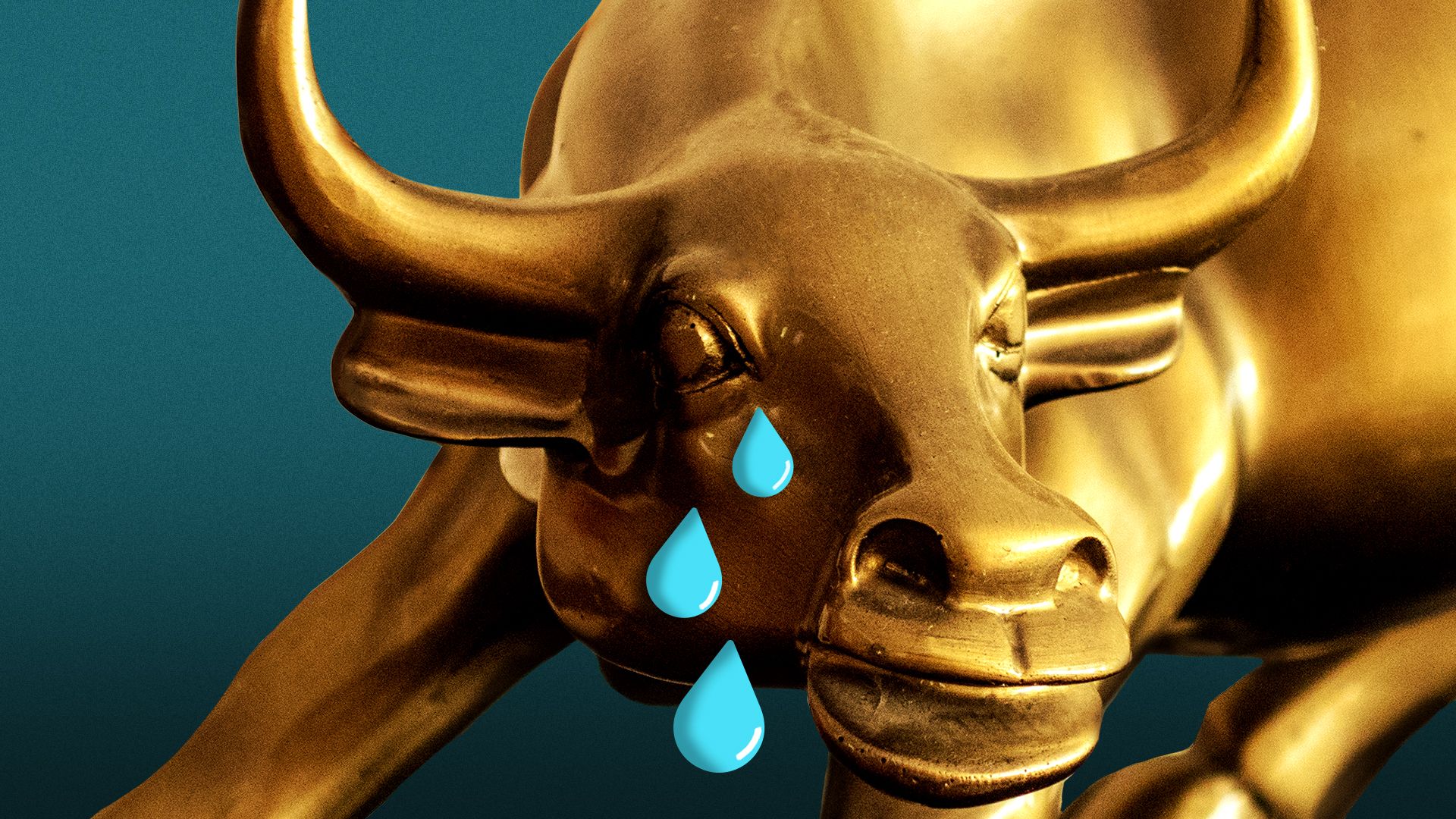
Illustration: Shoshana Gordon/Axios
Investors, after driving stocks to record highs, are now starting to lose their appetite for risk, the S&P Global Investment Manager Index survey finds.
Why it matters: High valuations and continued uncertainty over tariffs are making investors more skittish. Plus we're also getting deeper into August and soon September, historically weak months for stocks.
- That could be a recipe for a near-term pullback.
By the numbers: Investor sentiment in August hit its lowest level since April, highlighting "a worsening near-term equity outlook" and "increased political uncertainty affecting market dynamics," the S&P analysis shows.
- The last time U.S. investor risk appetite was this low was April, when markets hit an intraday bear market off the back of record high tariff announcements.
- The Investment Manager Index that shows expectations for market performance fell to negative 35% in August from negative 5% in July.
What they're saying: "We expect investors to look through near-term weakness to focus on a 2026 recovery," Sitara Sundar, head of alternative investment strategy and market intelligence at JPMorgan, writes in a note.
- Indeed, investors have become increasingly bullish about 2026, while they anticipate interest rate cuts combined with earnings growth.
- The next four months, however, are less rosy, with Morgan Stanley, Deutsche Bank and Evercore ISI all calling for a near-term pullback.
Yes, but: Anyone who got out of the market in April is eager to rush in to buy any dips. And in a market defined by dip buying, how bad could a near-term pullback really get?
- Since April, the market has declined by more than 1% for the day only once, which signals that investors are flocking in to buy any weakness.
What we're watching: How is an increased aversion to risk playing out?
- Stocks just grind higher.
- The bond market has remained calm since its April "yips."
- Crypto, a measure of risk-on sentiment, is hitting record highs.
- The VIX, a measure of volatility, has remained historically muted.
Zoom in: On a sector basis, investors are net bullish on financials, communication services and information technology, S&P notes.
- Bullishness in IT fell substantially in part due to semiconductor tariff announcements. Consumer discretionary is the sector with the most bearish views, reversing bullish sentiment that built up during July.
The bottom line: Consensus earnings per share for the S&P 500 is expected to come in at $300 in 2026, rising from an expected $267 per share in 2025, which means investors still see upside.
- The road there will not necessarily be smooth.
