What investors see in the sale of AI chips to China

Add Axios as your preferred source to
see more of our stories on Google.
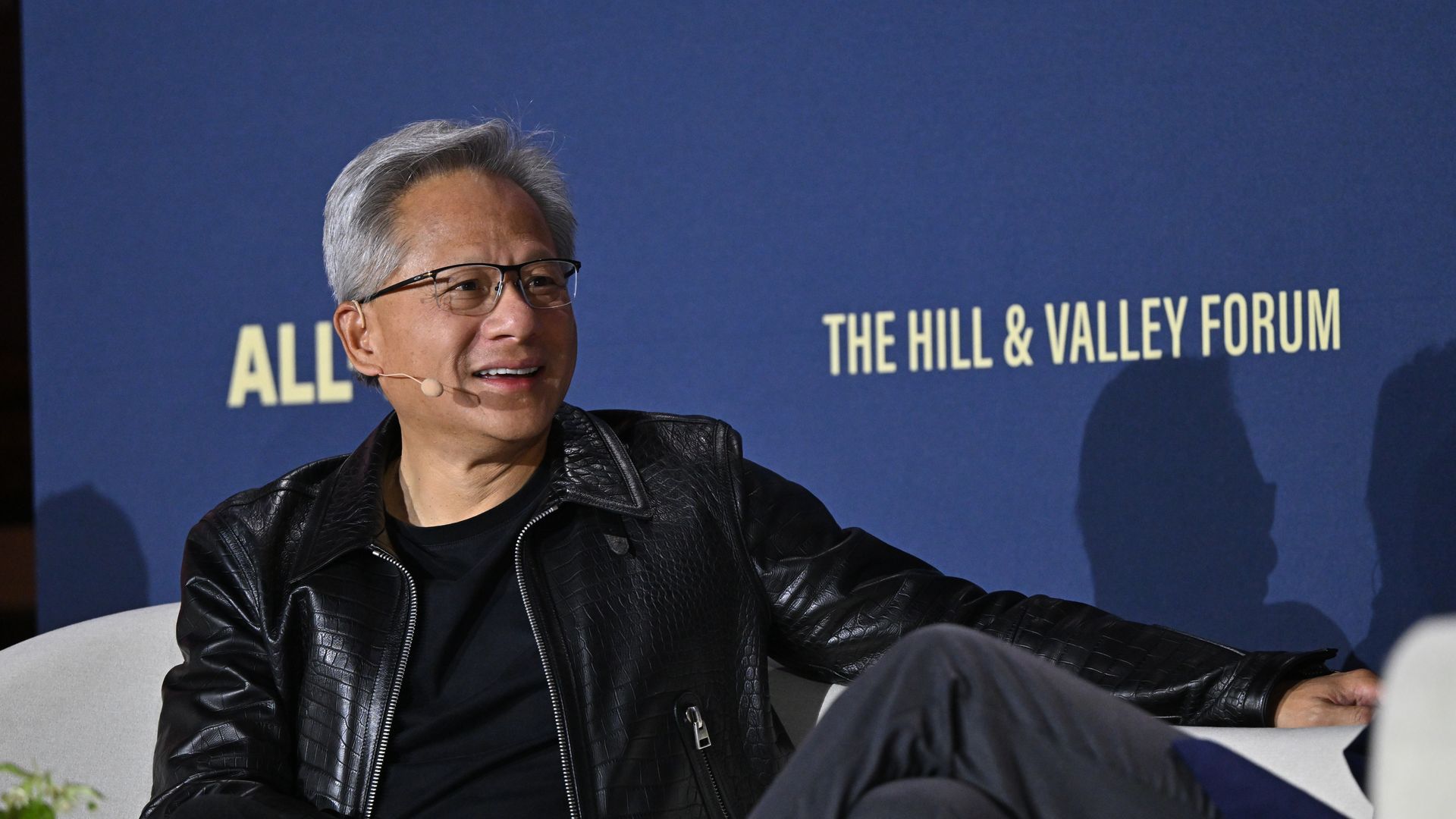
Photo by Roy Rochlin/Getty Images for Hill & Valley Forum.
Nvidia and AMD can sell their AI chips to China for the low price of 15% of their revenue, paid out to the U.S. government. Investors are unfazed.
Why it matters: Shareholders are focusing on the revenue opportunities that come with more access to Beijing, not on the unprecedented involvement of the Trump administration in Nvidia's business dealings.
What they're saying: "There's way more upside," Daniel Newman, principal analyst and CEO of The Futurum Group, tells Axios.
Catch up quick: The Trump administration previously backed export controls on Nvidia's H20 chips, which are "orders of magnitude" less powerful than Nvidia's Blackwell chips, Newman says.
- A month ago, the administration signaled that it was shifting course on these controls, but did not issue the licenses required for sales to be possible.
- That appeared to change after Nvidia CEO Jensen Huang met with President Trump.
- Nvidia walked away with promises of licenses so long as the chip giant cut the U.S. government a check for 15% of its China revenue.
Zoom in: Nvidia stock is up nearly 0.5% since the news broke Monday, with investors and analysts bullish on the deal.
- The lifting of the export controls could lead to a $15 billion revenue windfall for Nvidia.
- Both Nvidia and AMD have pricing power, given the strength of demand for AI chips in China, according to a note from Bank of America.
- That means the 15% expense could be passed on to Chinese customers.
Between the lines: While the deal could lead to billions of dollars in additional revenue for the U.S. government, it's not just about the money. It's also about access to rare earth magnets, Newman says.
- The U.S. has powerful AI chips that China wants.
- China has rare earth metals the U.S. wants.
- When the administration first changed course on export controls in July, Commerce Secretary Howard Lutnick told CNBC that selling the "fourth best" AI chip to China wasn't material.
- Lutnick also said the export control rollback was tied to a rare earths deal, though those details have not fully materialized.
Yes. but: Export controls are typically put in place for a reason: in this case, national security concerns.
- The 15% revenue split, first reported by the Financial Times, includes an anonymous source quote that points to the security concerns:
- "What's next — letting Lockheed Martin sell F-35s to China for a 15% commission?"
Situational awareness: Beijing is urging local companies to avoid buying chips from American companies because of its own security concerns.
- Newman says that may be political theater – an effort for China to keep the upper hand in ongoing negotiations.
- Chinese companies will likely still want access to the best possible chips.
Be smart: In just January of this year, investors feared China outpacing the U.S. in the AI arms race given the reported success of DeepSeek.
- Since, investor concern about the U.S. losing steam on AI has subsided.
- "China's resolve, and their commitment to try is there…but the gap is more significant than most people realize," Newman says.
