Jim VandeHei to Mel Robbins: Sorry!

Add Axios as your preferred source to
see more of our stories on Google.
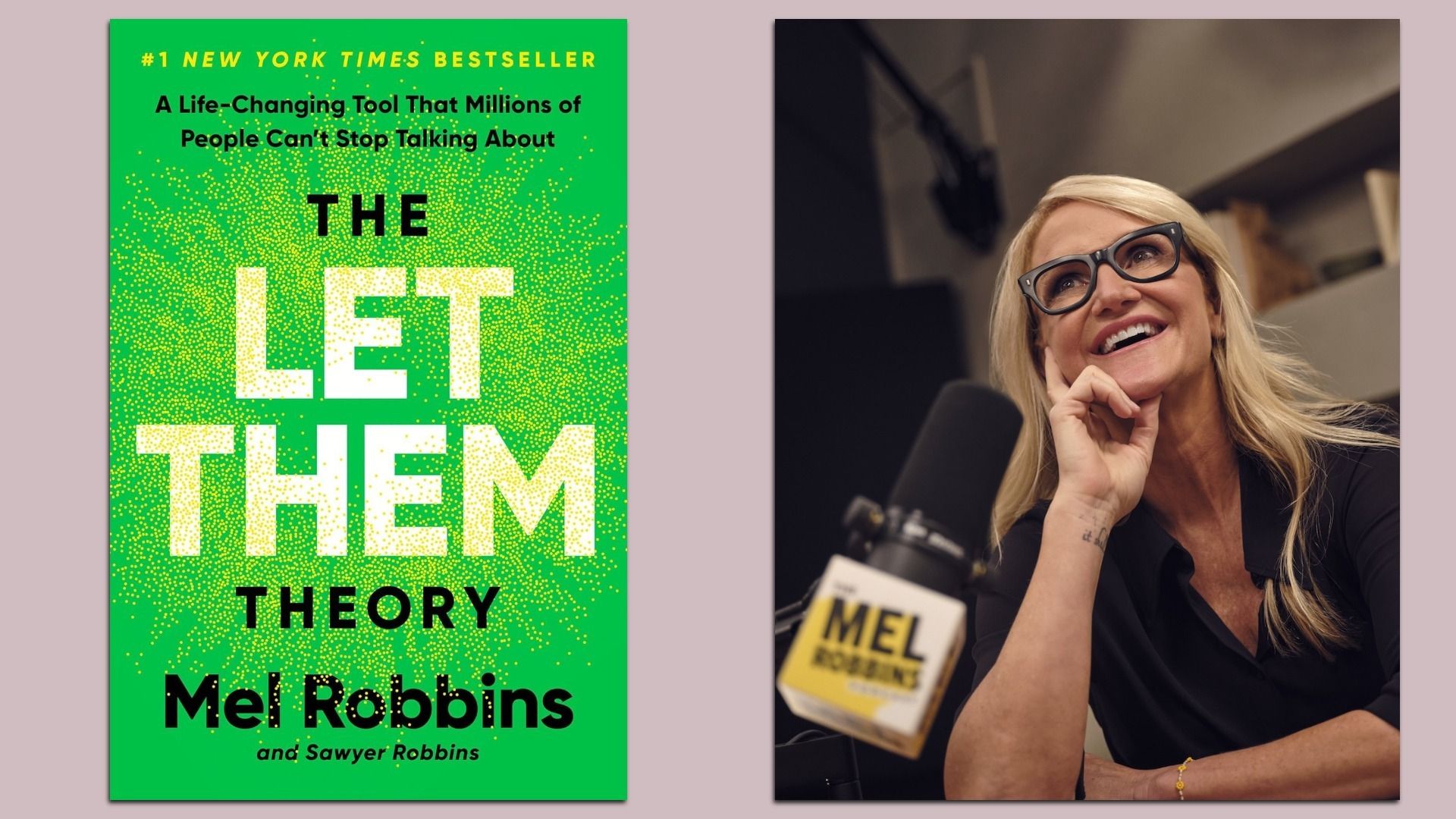
Cover: Hay House. Photo: Cody O'Loughlin
Axios CEO Jim VandeHei writes:
I owe a huge apology to Mel Robbins, author of the bestselling book in the world.
- Maybe it was author envy, or bad "blink" instincts, or both. But I must confess to hearing the premise of "The Let Them Theory" and thinking: No shit!
"Let Them" argues that we need to stop letting others' actions or words bother and control us.
- The inner Jim's response: "Duh? If I could just let people be moronic, selfish and make-me-want-to stab-myself annoying, I would — but I can't!"
Why it matters: I was wrong, at least about Robbins' book. I went down the Mel Robbins rabbit hole this past week and discovered how valuable her insights are. I get why she has sold 6 million copies in just under eight months — more books in a shorter time than any author in history.
I also listened to her on several podcasts, including a visit to Kara Swisher's "Pivot." A few quick takeaways:
- Robbins' theories are persuasive and impressive. She provides specific tips and tools to flip the script and control things on your terms. Her examples resonate.
- She's normal and likable. People trust authenticity. She nails this with a mix of cursing, humility and self-deprecation. So much of self-help feels preachy or unrelatable.
- She listens. This is something most people, often including me, suck at. But she listens to her guests and seems to cling to what they say, without an urge to inject her own smarts or wisdom.
It was as if Kara and Mel were talking to me, personally, when they made fun of dopes who dismissed her book as obvious.
- "The reason this is so successful is because I'm reminding you of what you already know to be true," she told Kara. Robbins gives credit to the Stoics and therapists and scientists who have said the same things in a different context. But there's magic in creating a modern template to put the oldest of thinking into a contemporary plan.
- "It's very easy to make something complicated," Robbins said. "It is extraordinarily difficult, and takes a lot of rigor, to distill complicated things and do a simple thing that anybody can use and you can remember."
The big picture: Some people dismissed our first book, "Smart Brevity," as obvious.
- But the truth is: Writing shorter, without losing any value, is harder than people think.
- The book helps. With 350,000 copies sold, it's been a big success.
It was self-evidently hypocritical of me to have a "no shit" reaction to Robbins' big idea.
- As an author who would relish her success, the smart response would be to learn from her.
The bottom line: Mel Robbins' advice is useful. At Axios, we're obsessed with usefulness. It's an underrated gift: People listen, act and share something if it's truly useful and actionable. Her book and podcast often frame topics around specific, useful applications.
- I'll leave you with what she describes as one of the most meaningful conversations she has ever had, with Dr. Jim Doty, a Stanford neuroscientist and bestselling author who died last month.
The topic: manifesting the outcomes you want. Three useful steps:
- Write it. Visualize it. Say it, silently and aloud. The repetition, pulling on — and in — three senses literally creates a neural network to force action.
- Shift out of fear mode. Fear triggers biological stress and makes it a lot harder to do what you're trying to do. Doty argues you need to downshift to "heart mode," where you are calm and open. If you can, your body has a literal physiological response that vastly enhances your chance of getting what you want.
- Lose the negativity. Your mind and body react positively if you spend more time thinking good things about yourself and others. No one can do this always. But everyone can do it more.
🎧 The first 30 minutes of the podcast are time very well spent. The full podcast is here.
Anyways ... Sorry, Mel!
- 📬 Let Jim ... know what you think: [email protected].
