Trump to supercharge private equity with 401(k) order

Add Axios as your preferred source to
see more of our stories on Google.
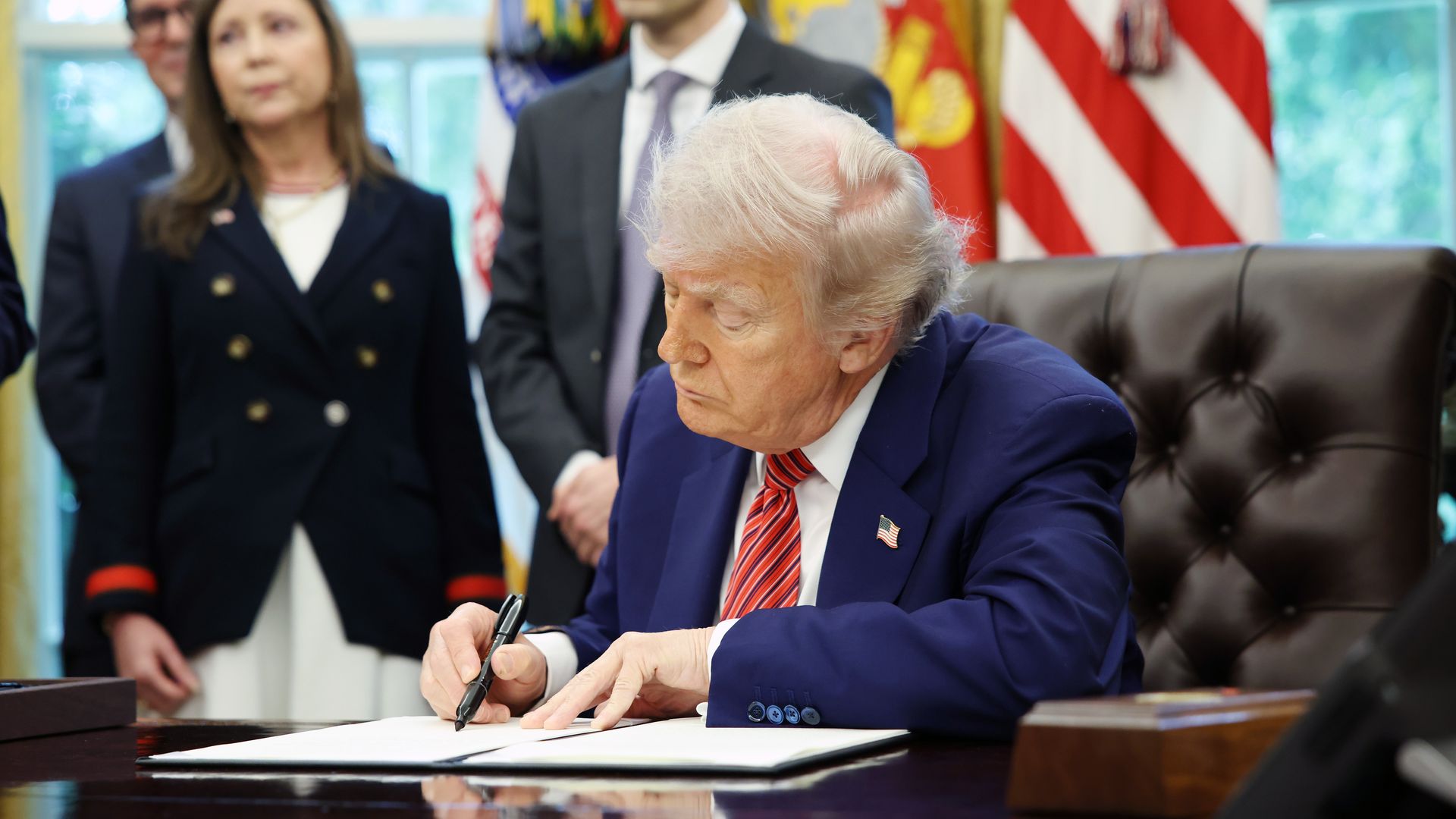
President Trump signing an earlier executive order. Photo: Samuel Corum/Sipa/Bloomberg via Getty Images
President Trump on Thursday signed an executive order to allow private equity and other alternative assets into 401(k) retirement accounts.
Why it matters: This is a major realignment of the capital markets, and could result in private equity becoming even more ubiquitous.
Catch up quick: Federal rules currently discourage most defined-contribution plans from investing in alt assets like private equity, private credit, real estate, and cryptocurrencies. In short, it's considered a breach of fiduciary duty.
- As such, they mostly invest in stocks and bonds.
- Trump issued guidance in his first term to relax these restrictions, but the language was later rescinded by former president Biden.
Driving the news: Trump's new executive order goes further, giving the Department of Labor 180 days to reevaluate existing rule interpretations and, if necessary, propose regulatory changes.
- It also asks the SEC to revise applicable rules and guidance to better facilitate retirement fund investments into alt assets.
The big picture: This is the holy grail for private equity, both in the U.S. and globally, opening up trillions of dollars in new investment.
- And it couldn't come at a better time for the industry, which traditionally has been funded by public and corporate pensions, family offices, private foundations, university endowments, and sovereign wealth funds.
- Many of those longtime limited partners have begun to question their commitments, and even lower allocations, due to a multi-year dearth of distributions. Adding 401(k)s could refill the pot, after several years of fundraising declines.
Zoom out: It also could be a giant boon for cryptocurrency markets, with Bitcoin prices rising ahead of the EO signing.
Yes, but: It's no sure bet that retirement plan administrators will rush into alt assets.
- Some may be turned off by the high fees, long-dated investment horizons, redemption restrictions, and lack of transparency.
- Others may worry that both the crypto and private credit markets aren't yet mature enough.
The bottom line: The executive order is directional, so investors must wait for final rules.
Editor's note: This story was updated with additional information.
