Job market barely budges in July, past revisions signal warning for economy


Add Axios as your preferred source to
see more of our stories on Google.
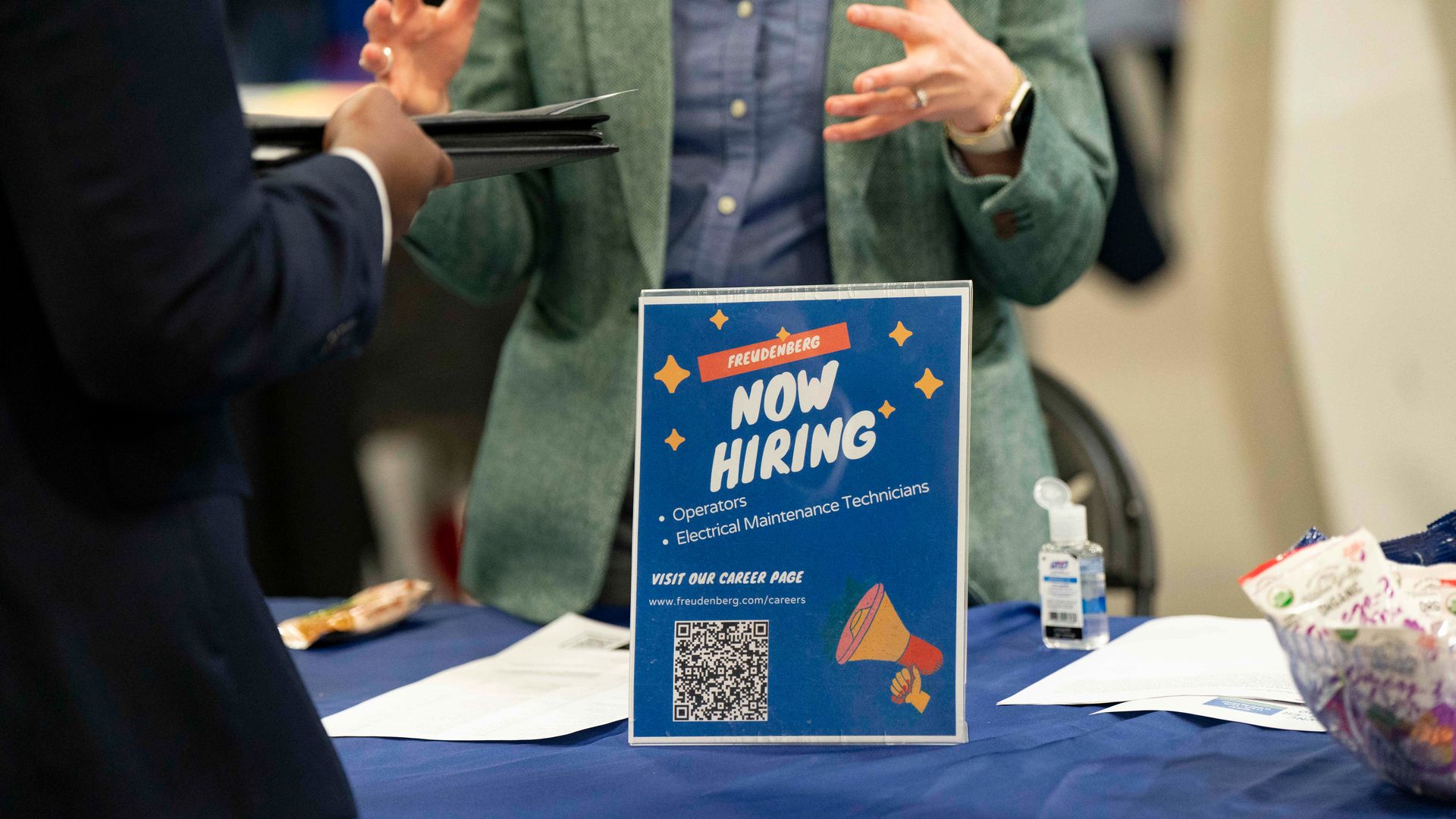
A job fair in North Carolina. Photo: Allison Joyce/Bloomberg via Getty Images
U.S. employment barely budged in July as the unemployment rate edged up, while prior job gains were revised to be much weaker than initially thought.
Why it matters: It is the first major economic indicator to point to danger ahead for the U.S. economy.
Driving the news: Employers added 73,000 jobs to their payrolls last month, the Labor Department said Friday.
- The unemployment rate was 4.2%, compared with 4.1% in June.
Threat level: The Labor Department announced massive downward revisions for job growth in May and June, changes they characterized as "larger than normal."
- The economy added just 19,000 in May, not the 144,000 the government initially reported.
- June job gains were revised down to 14,000, from the 147,000 first estimated.
- Taken together, employment over the prior two months is 258,000 lower than previously reported.
- In other words, job creation over the last three months was just 106,000 — the lowest rolling three-month total since the pandemic. Excluding 2020, it was the softest three months of job creation since late 2010.
Between the lines: The decline in payrolls growth is likely driven in significant part by less labor supply due to tighter immigration enforcement — immigrants with uncertain legal status either being deported, self-deporting, or staying away from their workplace.
- Federal Reserve chair Jerome Powell said in a news conference on Wednesday that "the main number you have to look at now is the unemployment rate," because job growth numbers are affected by both supply and demand factors.
Flashback: The Fed left interest rates unchanged, citing continued low unemployment and elevated inflation.
- However, there have been some hints of underlying weakness in the employment picture, with low rates of hiring and voluntary quits, negative revisions, and other warnings that things may not be as good as the headline unemployment rate suggests.
The intrigue: In a statement this morning, Fed governor Christopher Waller, who dissented this week, said that "while the labor market looks fine on the surface, once we account for expected data revisions, private-sector payroll growth is near stall speed, and other data suggest that the downside risks to the labor market have increased."
- President Trump, in multiple Truth Social posts Friday morning, blasted Powell and demanded the Fed lower rates immediately.
- "Too Little, Too Late. Jerome "Too Late" Powell is a disaster. DROP THE RATE! The good news is that Tariffs are bringing Billions of Dollars into the USA!" Trump posted after the report.
The bottom line: With a single report, the understanding of the U.S. economy has shifted.
- What appeared to be a resilient labor market now looks notably weaker than previously believed.
- It comes as President Trump ramps up tariffs around the world — a move that economists have warned will weaken the economy.
Editor's note: This story has been updated with additional data.
