Money anxiety is basically a part-time job now

Add Axios as your preferred source to
see more of our stories on Google.
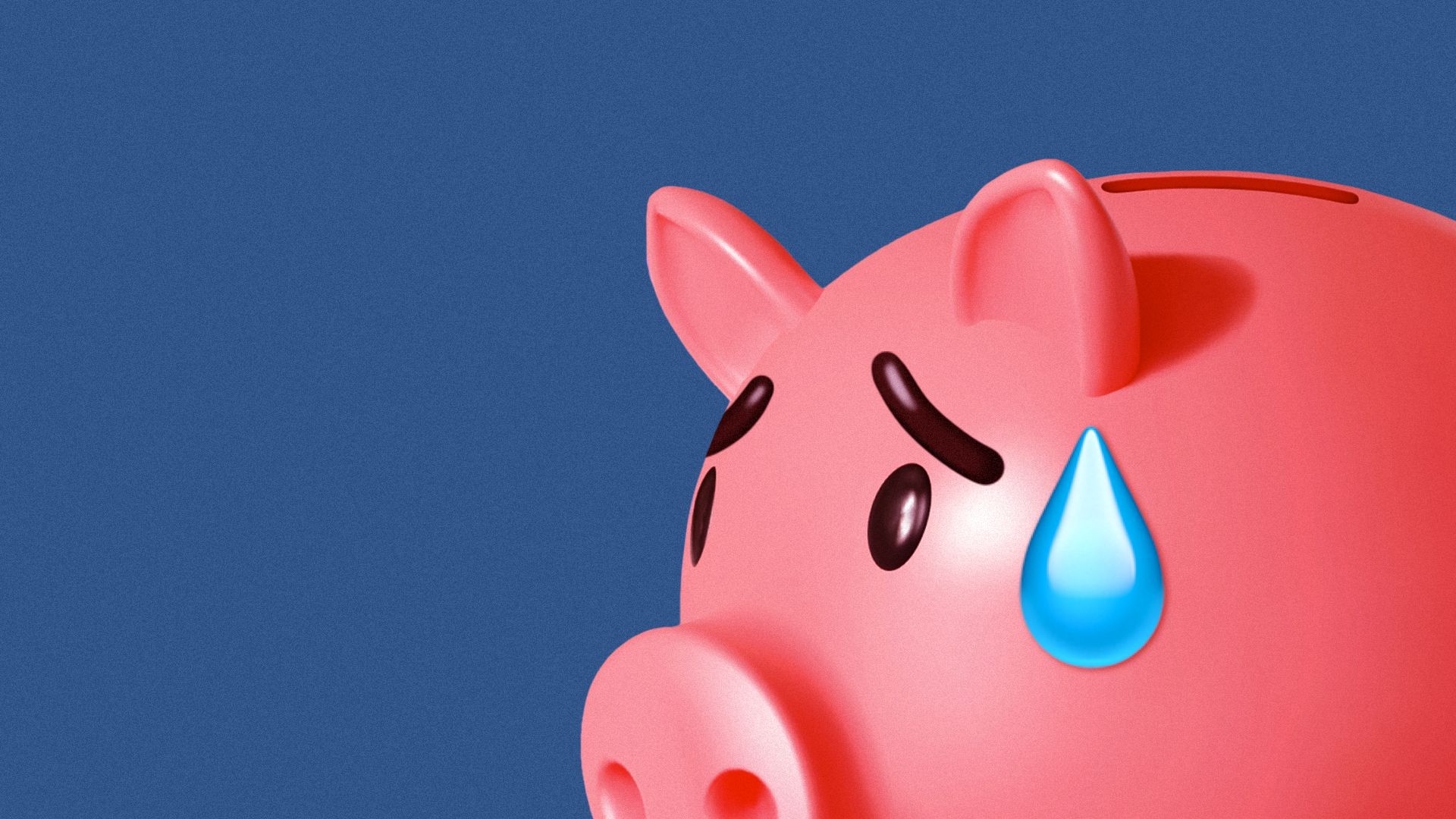
Illustration: Lindsey Bailey/Axios
Americans now spend nearly four hours a day thinking about money, the equivalent of a part-time job, per a new Empower study.
Why it matters: Financial anxiety could be fueling recent pressure on consumer spending.
- If the negative economic vibes continue to drive less spending, that could weigh on the economy and the stock market.
What they're saying: "People check their money like they're checking the weather," said Rebecca Rickert, head of communications and consumer insights at Empower.
By the numbers: Top money worries center on everyday expenses.
- 57% of Americans cited bills, 51% pointed to inflation, and 34% are stressed about housing.
- Debt (30%), tariffs (28%) and retirement savings (24%) round out the list.
- The inclusion of tariffs among financial concerns mirrors recent polling indicating that voters are increasingly anti-tariff.
Between the lines: Types of money worries vary across age, with younger generations worrying about housing costs, job security and debt, while older people are more concerned about stock market performance, retirement savings and emergency funds.
- The split shows financial stress tracks with life stages — older Americans are focused on preserving wealth, while younger ones are still trying to build it.
Zoom in: What would ease financial anxiety?
- A higher income (47%) tops the list of stress relievers, followed by lower living expenses (45%) and a stronger economy (29%).
Zoom out: One silver lining? The anxiety may be leading to better financial decisions.
- Nearly half of Americans say this anxiety is motivating them to shift from passive worries to proactive behaviors, Rickert said.
- 40% of millennials proactively work to improve their finances when these thoughts arise.
- 1 in 4 adjusts their spending habits monthly due to financial concerns, mostly by dining out less or buying fewer non-essentials.
Yes, but: Sentiment, or vibes, about finances that are detailed in surveys do not always directly align with consumer behavior.
- Card spending was up across the board this quarter, according to bank earnings, which didn't point to broad evidence of consumers saving by dining out less.
The bottom line: Consumers may say they're saving money by eating at home more, for example — but that could be a "microchoice," like one extra dinner at home per month, Rickert said.
- Still, those smaller changes give people a way to "scale back where they are comfortable."
