Dollar weakness persists even amid trade deals

Add Axios as your preferred source to
see more of our stories on Google.
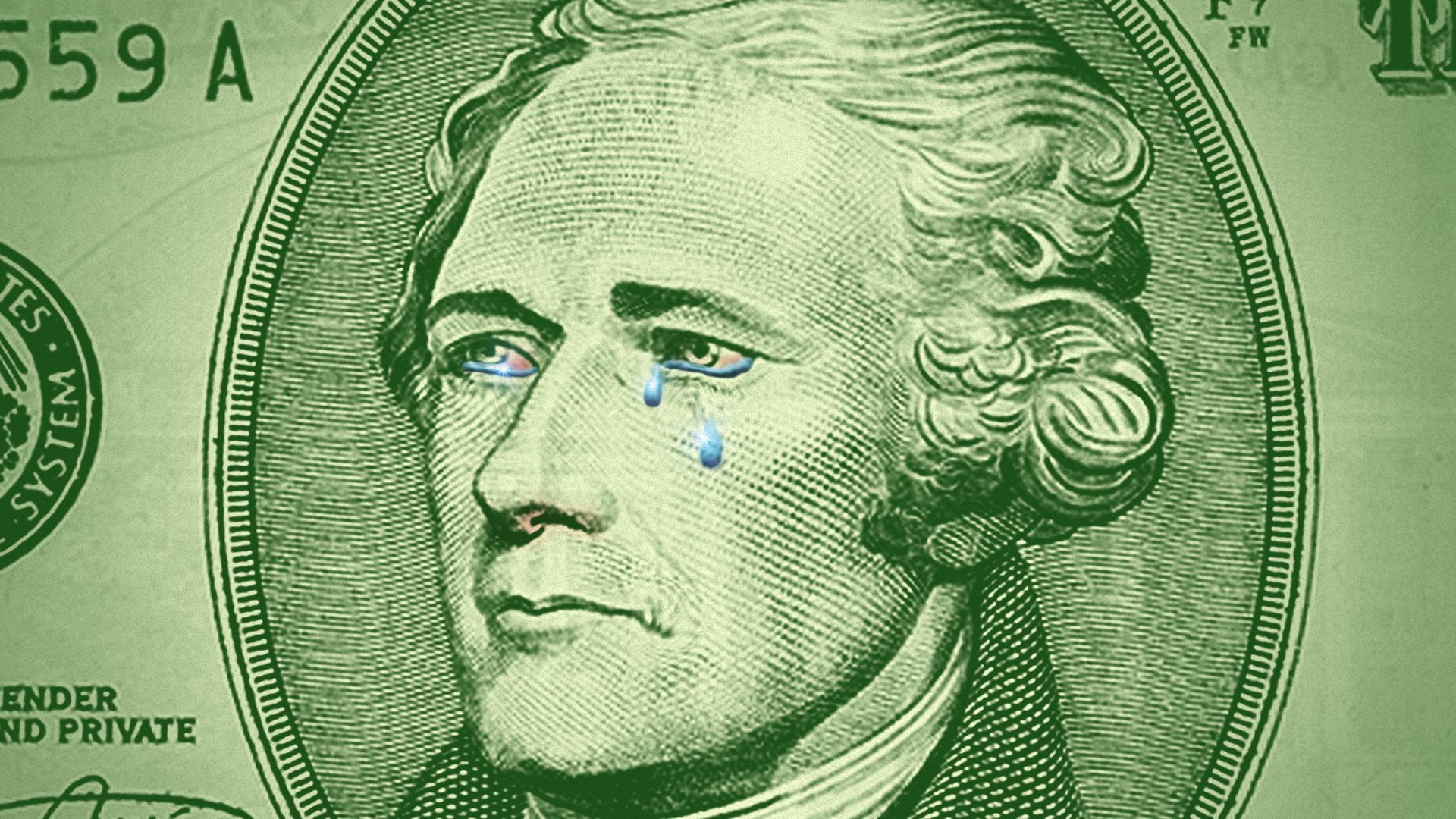
Illustration: Natalie Peeples/Axios
The trade deals keep coming, yet the dollar continues to weaken, down over 10% this year after the biggest first-half loss since 1973.
Why it matters: The greenback slump could be a sign that countries are now embracing de-dollarization: moving away from dollar-denominated assets as uncertainty about fiscal policy in the U.S. remains a headwind.
- Mass de-dollarization is not just bad for the dollar. It can weigh on stocks.
What they're saying: "I check the dollar every morning the first thing when I wake up," Mohamed El-Erian, the former PIMCO CEO and current president of Queen's College, Cambridge, told Axios.
- "Policy-induced uncertainty" is driving de-dollarization, he said.
- Many investors think this is a reset we will emerge from with a more efficient system, but El-Erian cautions that instead it could result in "a Jimmy Carter moment where we end up in stagflation."
Be smart: As uncertainty drives dollar declines, that also impacts other parts of the market and the economy.
- Dollar weakness could steepen the yield curve, which would lead to higher borrowing costs for corporates and households.
- If global investors truly move away from not only the dollar, but also dollar-denominated assets like stocks, that may be a headwind for the broader market as well.
Yes, but: There "is no real alternative" to the dollar, so investors can only reduce their overweights to the greenback "very gradually," El-Erian said.
Zoom out: The recent dollar declines come after a three-year bull run, according to a research note from Vanguard, which also argues:
- Recent weakness leaves the greenback at "fair value."
- Upside could come from trade deals and policy in the near term.
- Productivity and higher rates support dollar valuations in the long term.
The bottom line: Dollar declines may not be permanent, but the weakness is a reminder of the importance of global diversification, Vanguard wrote.
- As valuations are stretched for U.S. equities and international markets continue to offer outsized returns, "spreading risk across regions" is key for long-term investing.
