Senators discuss broad principles for crypto regulation

Add Axios as your preferred source to
see more of our stories on Google.
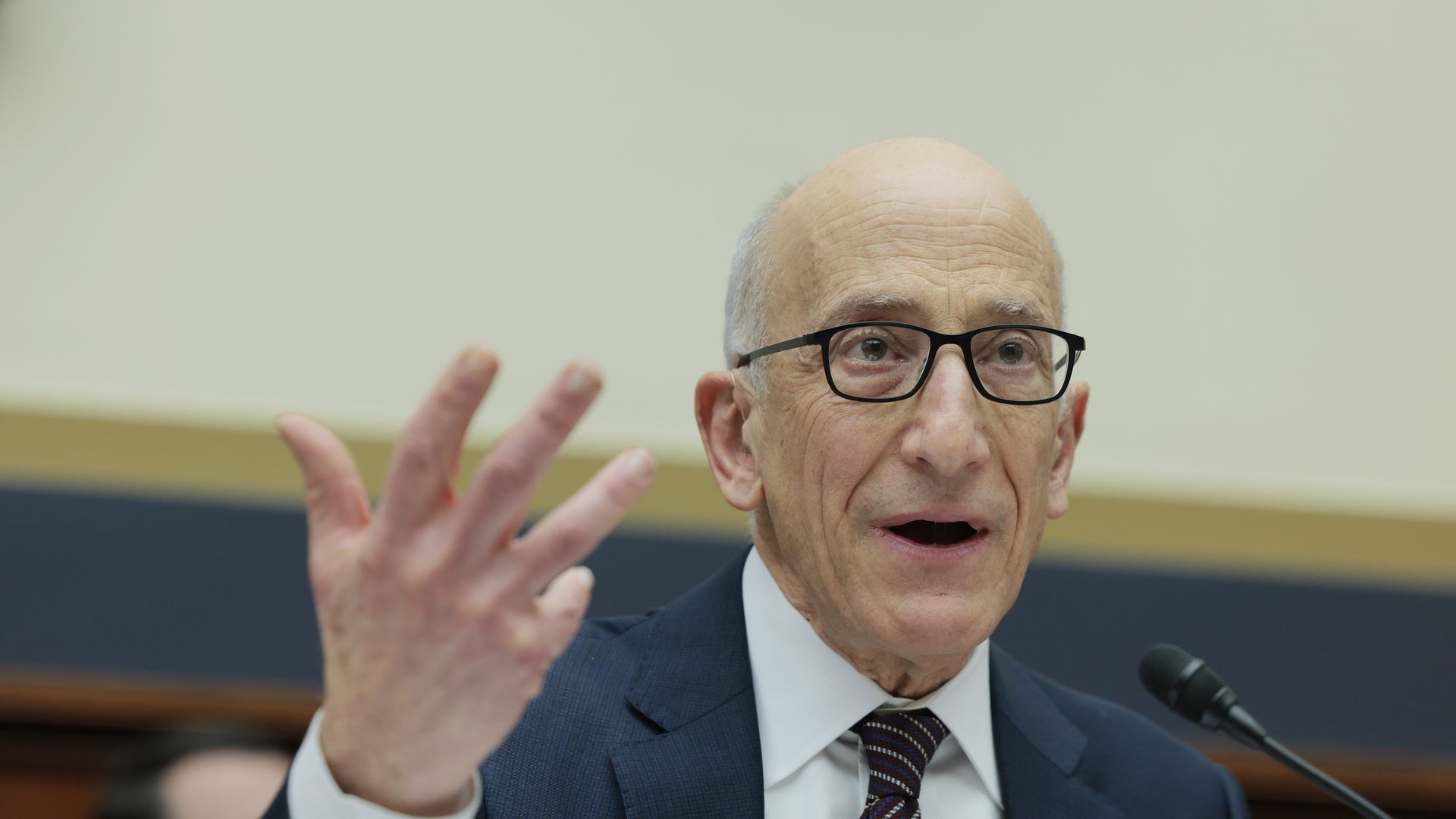
Timothy Massad, the former chairman of the Commodity Futures Trading Commission, during a congressional hearing in February. Photo: Anna Moneymaker/Getty Images
The big question at Wednesday's Senate Banking Hearing on regulating digital assets was whether Congress can trust financial regulators to fill in the details from new laws for the crypto industry.
Why it matters: Americans will have to live for years with any law this Congress passes, if Republicans get something done.
The hearing Wednesday was to discuss a Senate market structure bill, one that would establish a legal framework for broad U.S. crypto regulation.
- The House's version, CLARITY, runs more than 200 pages and gets detailed about which kinds of assets are subject to the jurisdiction of the Commodity Futures Trading Commission or the Securities and Exchange Commission.
The big picture: The question now is how detailed the Senate's version will get, versus how much rulemaking power it will leave for regulators in the name of fostering innovation.
- "I hear you saying that digital assets are different," Sen. John Kennedy (R-La.) said to the industry representatives on the hearing's panel. "Digital assets need special rules. I agree with that.
- "The obvious question is, what should those rules be, and to what extent should we allow you to draft them?"
Zoom in: In yesterday's hearing, everyone was talking about principles that should frame a new bill.
- Sen. Elizabeth Warren (D-Mass.) offered five in her opening remarks, around things like investor protections and protecting taxpayers from bailouts.
- Republican leaders published six principles beforehand, including a modernized regulatory approach and clear lines of jurisdiction.
- The Blockchain Association has 12 principles. Paradigm, a major investor, has 17.
One of the Democrats' panelists, Timothy Massad of the Harvard Kennedy School, was all about principles, as well.
- He warned lawmakers that anything they tightly define today is likely to be outdated tomorrow, and then exploited by clever lawyers.
Between the lines: "This is a technology, it's not an asset class," Massad said. "Whether something in digital form is a security, a commodity — or neither — cannot be easily defined by a paragraph or two in a statute."
- His recommendation? Principles, by statute. Then let the regulators write rules from there. He specified two: "Do no harm, and keep it simple."
Yes, but: The industry is gun shy about U.S. financial regulators.
- As Ripple CEO Brad Garlinghouse put it, "Where Mr. Massad and I disagree is that, depending upon an SEC and CFTC to work together assumes good faith appointed officials doing that."
- Nevertheless, the SEC is already at work on new rules.
The bottom line: "We've watched this movie before," Richard Painter of the University of Minnesota Law School said on the panel Wednesday.
- "We do not want to watch a movie that is a combination of 'West Wing' or 'House of Cards' and 'The Big Short.'"
