Trade deals come and go. Can stocks rally either way?

Add Axios as your preferred source to
see more of our stories on Google.
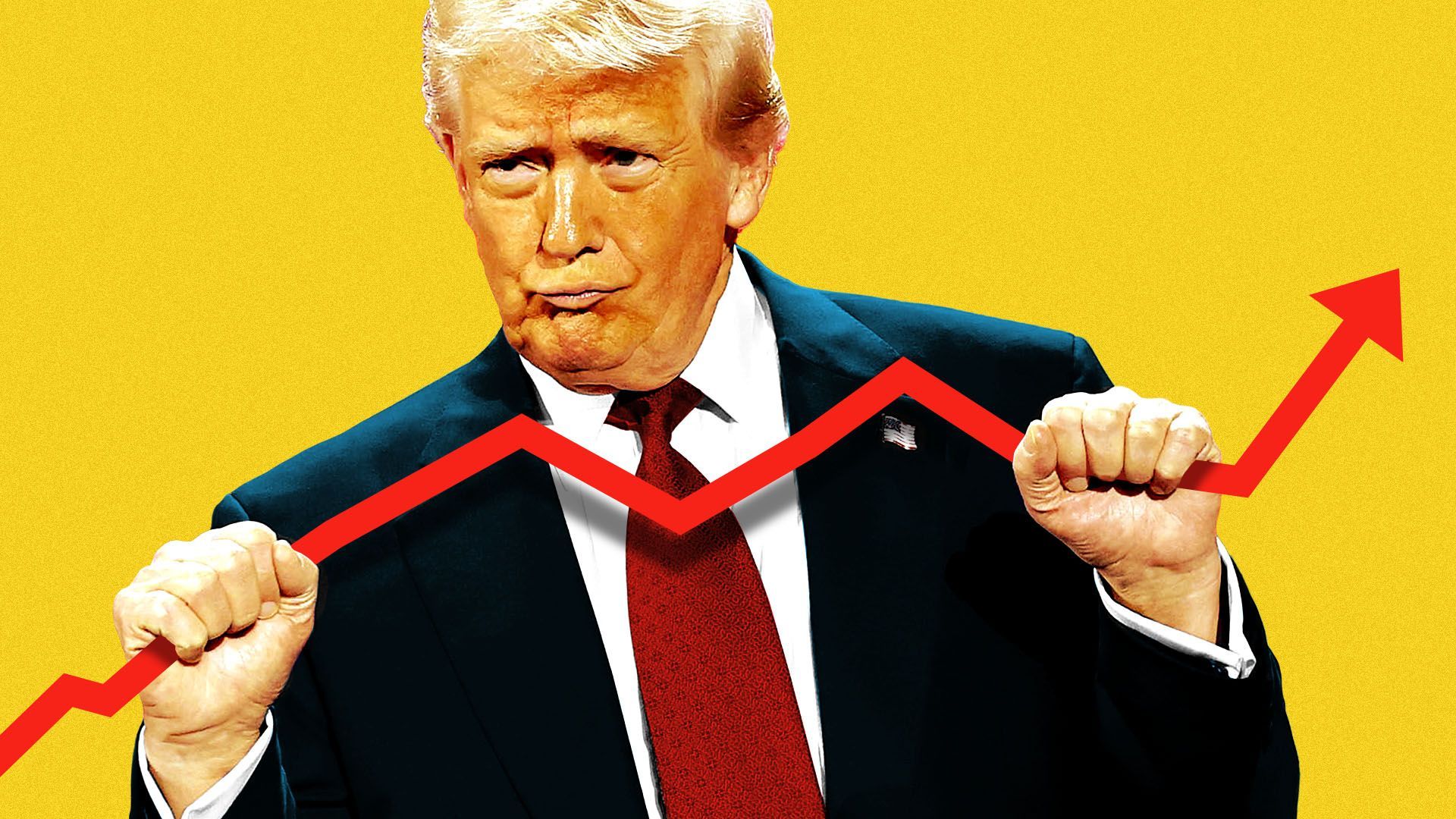
Photo illustration: Sarah Grillo/Axios. Photo: Win McNamee/Getty Images
Investors just got three extra weeks to decide if they need to care about tariffs again.
- But Wall Street's tariff optimism could be tested if President Trump picks tougher trade negotiation tactics over markets in the month ahead.
Why it matters: How tariff negotiations unfold amid the new extension could either confirm the TACO trade, or signal that high levies are a risk investors need to account for again, which could threaten the rally that's driven stocks to fresh all-time highs.
Catch up quick: Trump is now set to send letters on Monday to a dozen other countries, setting tariff rates on their imports. The letters could reaccelerate a trade war that some investors felt had begun to fizzle.
- His threat late Sunday night to put additional punitive tariffs on BRICS countries unsettled markets even further. Early Monday morning, S&P 500 futures were about 0.3% lower.
Between the lines: Investors may be falling prey to black-and-white thinking, according to Terry Haines, founder of Pangaea Policy.
- "Markets want it all one way or the other, and the answer is we're kind of living in the twilight world where it's not easy," he tells Axios.
- Haines points to the press in India calling any tariff deals with the U.S. "phase one" deals, indicating they could change.
- Regardless of the back and forth for each country, some form of tariffs are likely to continue to exist.
Zoom out: Tariffs matter to investors if they matter to consumers, according to data from Goldman Sachs.
- Companies are set to pass on 70% of the cost of levies to consumers through higher prices, according to economists at Goldman Sachs.
- If consumers can eat that increased cost without decreasing spending overall, that could keep corporate earnings intact.
- If consumers cut back on spending, which is starting to show in economic data, that could hinder corporate earnings growth, which could weigh on the broader market.
Friction point: "The market is underestimating the probability that Trump imposes unilateral tariffs," David Woo, CEO of David Woo Unbound, says in a video to clients on Sunday.
- Woo argues it's time to "get properly short the market," as current equity levels make investors vulnerable to a negative shock, which could come from tariff policy.
Bottom line: The levies Trump announced in April sent stocks to the brink of a bear market. Since then, consensus has been building around better-than-expected trade deals, or Trump flinching in the face of a bad market reaction.
- The coming month, which is filled with tariff deadlines and the kickoff of second quarter-earnings, could help prove investors right or wrong when it comes to pricing in policy risks.
