Wearables take center stage in RFK Jr.'s personal health push

Add Axios as your preferred source to
see more of our stories on Google.
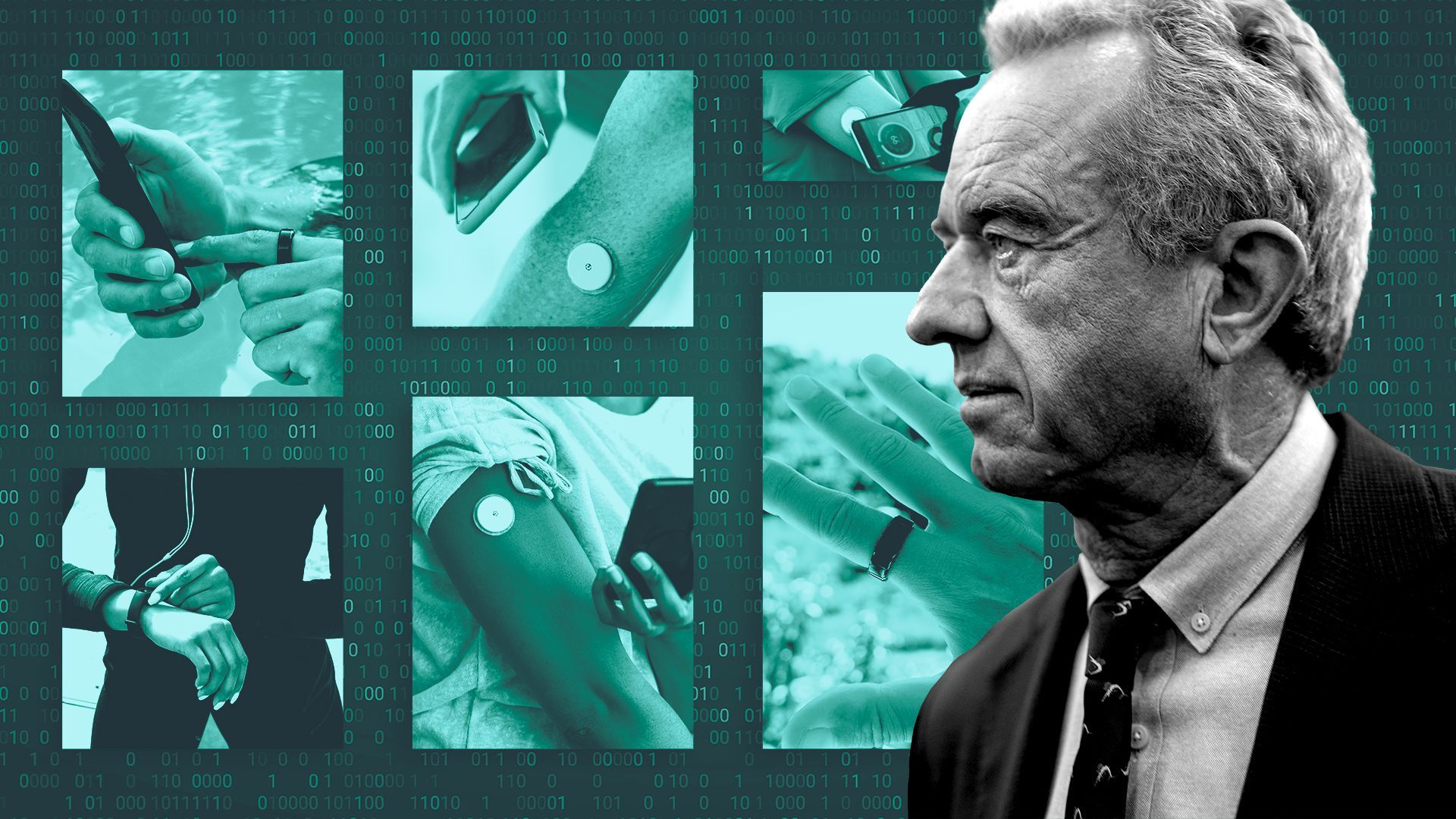
Photo illustration: Brendan Lynch/Axios. Photo: Kent Nishimura/Bloomberg via Getty Images
Health Secretary Robert F. Kennedy Jr. envisions Americans becoming healthier by using wearable health devices that track heart rates, blood sugar and other vitals — offering real-time feedback on how food affects their bodies.
Why it matters: It's a buzzy component of a health care agenda that emphasizes self-empowerment — and self-responsibility — over relying on clinicians.
- But some doctors and ethicists say the push could backfire if the devices spit out faulty data or jeopardize the safety of sensitive, personal health data.
Driving the news: Kennedy said he'd like to see every American using wearables within the next four years, while testifying before the House in late June.
- He later clarified in a statement to Axios that "they are not for everyone because of concerns like cost and personal privacy."
Last month, Health and Human Services solicited applications for contractors to design a multimillion-dollar marketing campaign that will include "populariz[ing] technology like wearables as cool, modern tools for measuring diet impact and taking control of your health."
- The campaign won't be about wearables specifically, Kennedy later told Axios. Rather, HHS is looking for something focused on "inspiring Americans to stop eating ultra-processed foods and reclaim control of their health," he said.
- "This campaign will empower Americans to take personal responsibility for their health, including choosing what tools are right for them," he added.
Zoom out: "Wearables" refer to a wide range of electronics that people wear on their bodies to monitor health metrics — or even aid in diagnosis.
- Food and Drug Administration-approved wearable medical devices are becoming increasingly common in patient care and provide valuable clinical data for both individual treatment and public health, says Andrew Brightman, a professor of engineering practice at Purdue University who researches biomedical ethics.
- The wearables umbrella also includes consumer products, like Oura Rings or Fitbits, that track health metrics but in most uses don't require government approval for safety and effectiveness.
Between the lines: "Providing individuals with reliable, accurate, useful medical information is critically important to support health and well-being," Brightman says.
- "But the contrary is providing people with unreliable, inaccurate and confusing information, no matter how digitized or quantified or how sexy the tech looks to people and is fun to use," he says. "It can lead them to make poor choices about their health."
- For example, a tracker might conclude someone is in good health because they're getting plenty of sleep and exercising. That could give the user a false sense of security and lead them to delay a visit to the doctor.
- Supporting wearables is a good strategy to promote health and well-being — if it also comes with more resources and funding to bolster government oversight and regulation of the devices in the market, Brightman says.
Expanding the use of wearables also increases health data risks.
- The main federal health privacy law, HIPAA, protects health data when it's used by a covered entity, like a provider or insurer. But when a consumer enters data into a health app or allows a wearable to track health metrics, their data isn't subject to HIPAA, says Lisa Pierce Reisz, a partner at law firm Epstein Becker Green.
- Companies have to honor the privacy policies they've created, but terms and conditions aren't standardized and can change — and few people stop to read those policies before allowing their data to be collected anyway.
- "We lose a lot of control of our data once we input it," Reisz says. "People think, 'Oh, it's just my steps,' or 'It's just my heart rate,' but it potentially is so much more when you look at location information, or if you start to add details about menstrual periods."
- That's sensitive information that, if leaked or exposed, could endanger people's safety or be used against them.
The growing threat of cyberattacks also complicates the picture.
- Hackers could break into wearable device companies' systems and access troves of people's personal health data.
- "I am fully aware of the dangers mass data collection poses to personal freedoms, and I do not advise anyone to purchase a wearable that does not provide ironclad privacy protections," Kennedy said in his statement to Axios.
What we're watching: Not everyone in Kennedy's core "Make America Healthy Again" base is on board with wearables, and some prominent supporters of his agenda are sounding the alarm about the data risks of the devices, The Bulwark reported.
- Kennedy has already backed away from saying every American should be using wearables, so it's not clear how hard he'll push the devices in the future.
But if he does double down, some of his key allies stand to benefit: Surgeon General nominee Casey Means, for example, has a health tech company of her own. She founded Levels, a phone app that combines health tracking with blood sugar monitoring via a continuous glucose monitor and dietitian counseling.
