Hot off accurate Mamdani, Trump calls, prediction markets show surprising muscle

Add Axios as your preferred source to
see more of our stories on Google.
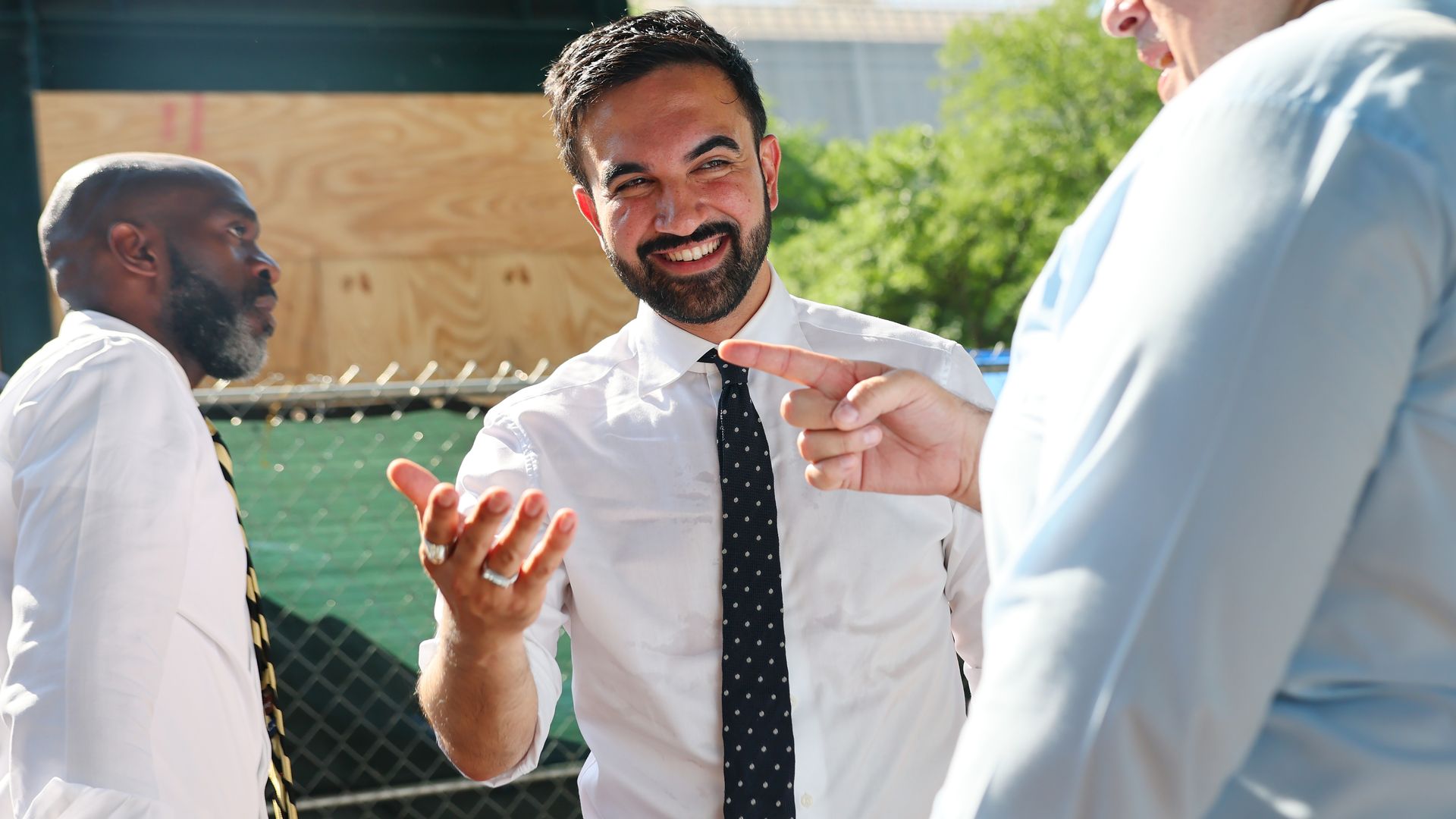
New York mayoral candidate Zohran Mamdani greets voters Tuesday. Photo: Michael M. Santiago/Getty Images
Prediction markets are becoming a go-to place to watch the final hours of major political elections.
Why it matters: This week's NYC Democratic mayoral race showed how fast and responsive prediction markets can be — though their accuracy in predicting a winner still depends on the quality of the info traders are working with, which isn't always the same across elections.
Catch up quick: The NYC race went down to the wire on Tuesday, with traders on Kalshi vacillating until the bitter end on which candidate would prevail.
- The market correctly settled on 33-year-old progressive Zohran Mamdani in the final minutes of the contest as investors, analysts and voters furiously looked for clues on the outcome.
- But for months prior to the final stretch — until a prominent poll earlier this week pegged Mamdani as the leader — traders had been favoring former New York Gov. Andrew Cuomo.
The intrigue: The action on Kalshi was in sharp contrast with the U.S. presidential election, when traders gave Trump a much better chance of winning than the polls seemed to indicate in the final month of the race.
- After President Trump's decisive reelection in a campaign that many analysts saw as 50-50, the prediction markets were credited with identifying the reality on the ground in ways that experts seemed to miss.
The big picture: Fresh off that 2024 presidential election call, Kalshi's mayoral election market this week showed the promise — and limits — of event trading platforms' power to predict.
Between the lines: Multiple factors could have played a part.
- For one, more than 7,000 of the 10,840 traders in Kalshi's NYC mayoral market were based outside of New York City, according to Kalshi data, meaning that over 65% of them were likely making predictions from afar.
What they're saying: "The prediction markets were remarkably accurate in the presidential race, but the correlation in my view between the people betting and the people actually voting was pretty high," Brad Tusk, managing partner at Tusk Venture Partners, told Axios.
- That means the information they're reacting to is likely thirdhand, Tusk noted.
There was less information to react to, as well, with far less polling, news and conversation around the mayoral primary than there was in the presidential race.
- And in a far larger market, some big traders in the presidential prediction markets even performed their own bespoke voter research.
The bottom line: Prediction markets are big business — Kalshi Wednesday announced it had raised $185 million at a $2 billion valuation.
Madison Mills contributed reporting.
