Andrew Cuomo concedes to Zohran Mamdani in NYC mayoral primary

Add Axios as your preferred source to
see more of our stories on Google.
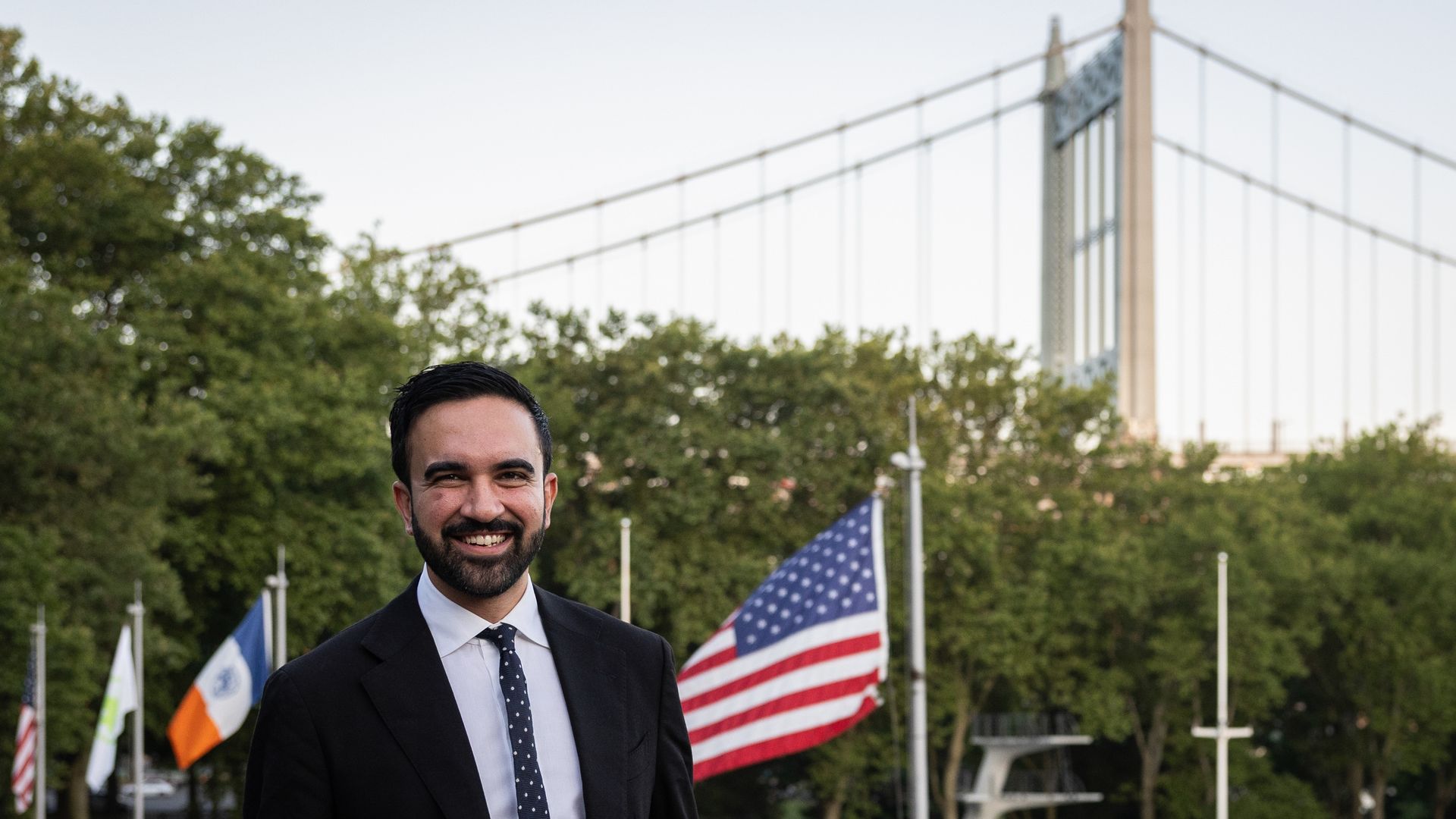
Photo: Christian Monterrosa/Bloomberg via Getty Images
Former New York Gov. Andrew Cuomo conceded to state assemblyman Zohran Mamdani in New York City's Democratic mayoral primary on Tuesday night.
Why it matters: Mamdani, a 33-year-old democratic socialist, is on course for an earthquake victory after running an extraordinary grassroots campaign focused on affordability in America's largest city.
- "In the words of Nelson Mandela: it always seems impossible until it's done. My friends, it is done. And you are the ones who did it," Mamdani told supporters in remarks Tuesday night. "I am honored to be your Democratic nominee for the Mayor of New York City."
- Mamdani was leading 10 other Democrats — including his top opponent, scandal-ridden Cuomo — in the first round of the ranked-choice election as of late Tuesday night.
- Mamdani's policy proposals include rent freezes, free buses, and city-run grocery stores, all funded by $10 billion in new taxes on corporations and the wealthy.
By the numbers: Mamdani received nearly 44% of votes with 90% of votes counted as of 10:30pm on Tuesday, per AP.
- Cuomo received 36% of votes.
What they're saying: Cuomo said he called Mamdani Tuesday night to concede and congratulate him on his expected victory.
- "Tonight is his night," Cuomo said at a watch party. "He deserved it. He won."
Speaking at his election night party in Queens, Mamdani promised to be a "mayor for every New Yorker, whether you voted for me, for Gov. Cuomo, or felt too disillusioned by a long-broken political system to vote at all."
- "We have won because New Yorkers have stood up for a city they can afford. A city where they can do more than just struggle. One where those who toil in the night can enjoy the fruits of their labor in the day, where hard work is repaid with a stable life," Mamdani added.
Rep. Alexandria Ocasio-Cortez (D-N.Y.), who along with Sen. Bernie Sanders (I-Vt.), backed Mamdani's campaign, also congratulated him.
- "Billionaires and lobbyists poured millions against you and our public finance system. And you won," she wrote on X.
Brad Lander, NYC comptroller and another Democratic mayoral candidate, told a reporter at Mamdani's victory party that voters were "hungry for a more hopeful vision of the city." He and Mamdani cross-endorsed each other earlier this month, in an effort to ensure one of them would beat Cuomo.
- "This was such a campaign between a hopeful vision of the future and a sort of dark, sour politics of the past," Lander said. "And people said, we want that vision of the future."
- Lander was in third with about 11% of the votes Tuesday night, per AP.
Driving the news: A Monday Emerson poll showed Cuomo and Mamdani in a statistical tie, four weeks after the same poll gave Cuomo a 12-point lead.
- While Cuomo drew support from prominent establishment Democrats and major donors, Mamdani electrified a young generation of voters with populist policies and charismatic messaging.
What's next: The general election is on Nov. 4.
- The Democratic primary winner will face the incumbent mayor Eric Adams. Adams has decided to run as an independent amid public backlash against corruption charges dismissed by the Trump administration last month.
- Cuomo has also left the door open to running as an independent, saying in his concession speech that he will be giving "some thought" to what comes next.
- The Republican mayoral candidate is Curtis Sliwa, founder of the Guardian Angels, a crime prevention nonprofit.
The big picture: New York City's next mayor will navigate the city through three years of the Trump administration.
- President Trump tried to end Manhattan's congestion pricing policy, and his crackdown on immigration could target hundreds of thousands of undocumented immigrants in New York.
Context: New York City uses ranked-choice voting in its primary. In a 2019 ballot measure, 74% of New York City voters voted yes for ranked-choice voting.
- Under this system, first-choice votes are counted first. If a candidate receives more than 50% of first-choice votes, that candidate wins.
- If no candidate earns more than 50% of votes, counting continues for additional rounds.
- At the end of each round, the last-place candidate is eliminated. Voters who chose that candidate then have their vote counted for their next choice. The process continues until there are two candidates left.
Go deeper: Democratic power struggle fuels NYC mayor's race
Editor's note: This story has been updated with additional details.
