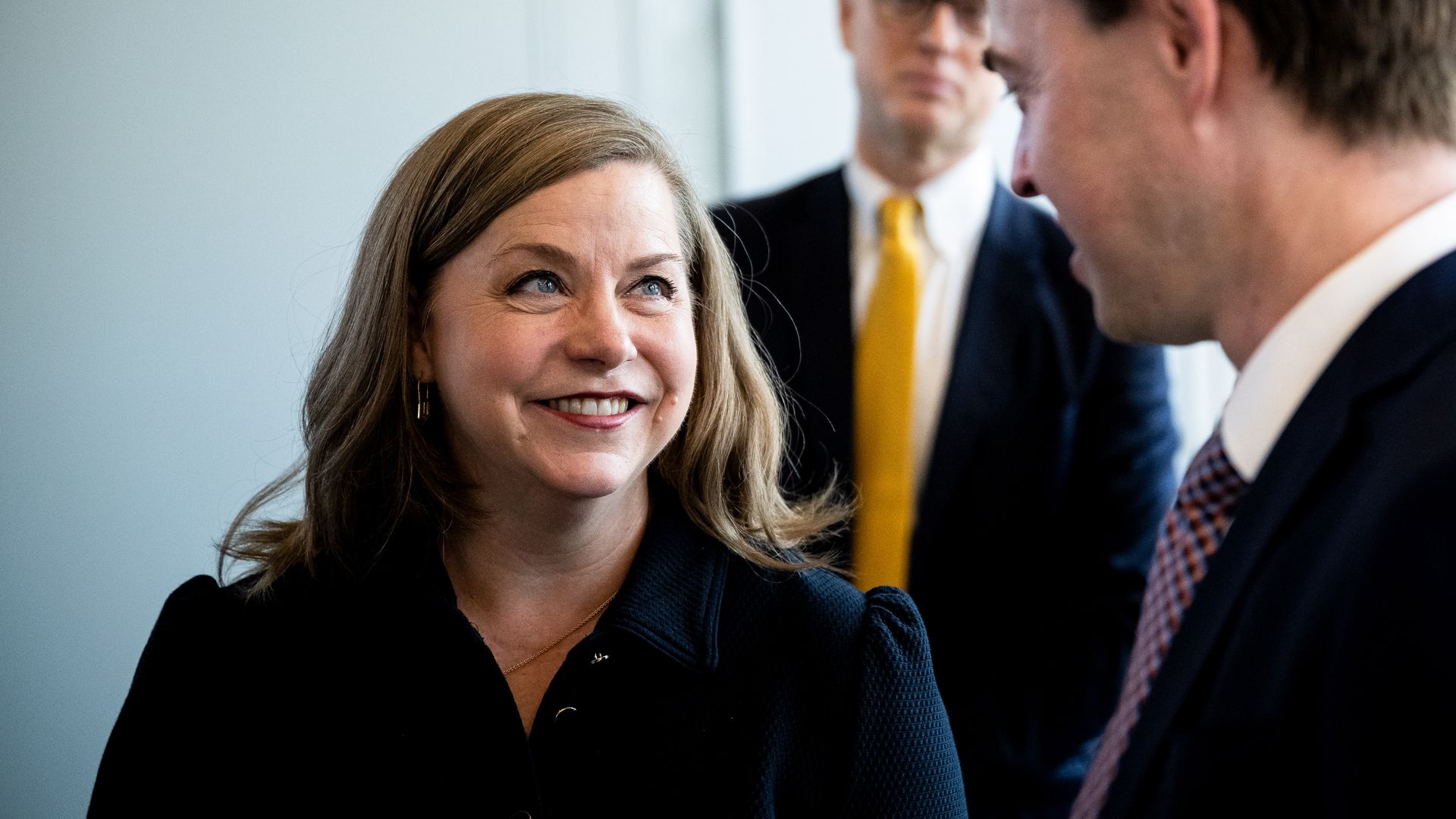
Fed vice chair for supervision Michelle Bowman. Photo: Graeme Sloan/Bloomberg via Getty Images
Bowman and Waller are making a rate cut argument that has a shot of persuading their colleagues around the table at the FOMC. It's distinctly different from the one Trump himself is making.
Trump said Friday on Truth Social that "numbskull" Powell would save the federal government up to $1 trillion by cutting rates.
It was the latest in his repeated calls for the central bank to lower rates to save the government money on its debt service costs.
Reality check: If bond investors came to believe that the Fed was setting rates based on what would be most advantageous for the government's debt service costs, rather what is justified by inflation and growth, they would start to price in higher long-term inflation and thus higher long-term rates.
"We have to cut rates to save the government money" is a nonstarter of an argument among central bankers, and would be counterproductive if they were seen as acting on the impulse.
The whole point of giving central banks a measure of independence is to ensure they don't simply do what is most convenient for fiscal policy, but rather what is best for the economy in the medium term.
What's next: Powell is set to testify tomorrow and Wednesday on Capitol Hill, delivering his semiannual monetary policy report known as the Humphrey-Hawkins testimony.
What we're watching: Whether the new enthusiasm for cheaper money, embraced across the Trump administration, is shared by congressional Republicans, who have traditionally preached the virtues of monetary hawkishness.