Circle's IPO euphoria revives debate over the stock "pop"

Add Axios as your preferred source to
see more of our stories on Google.
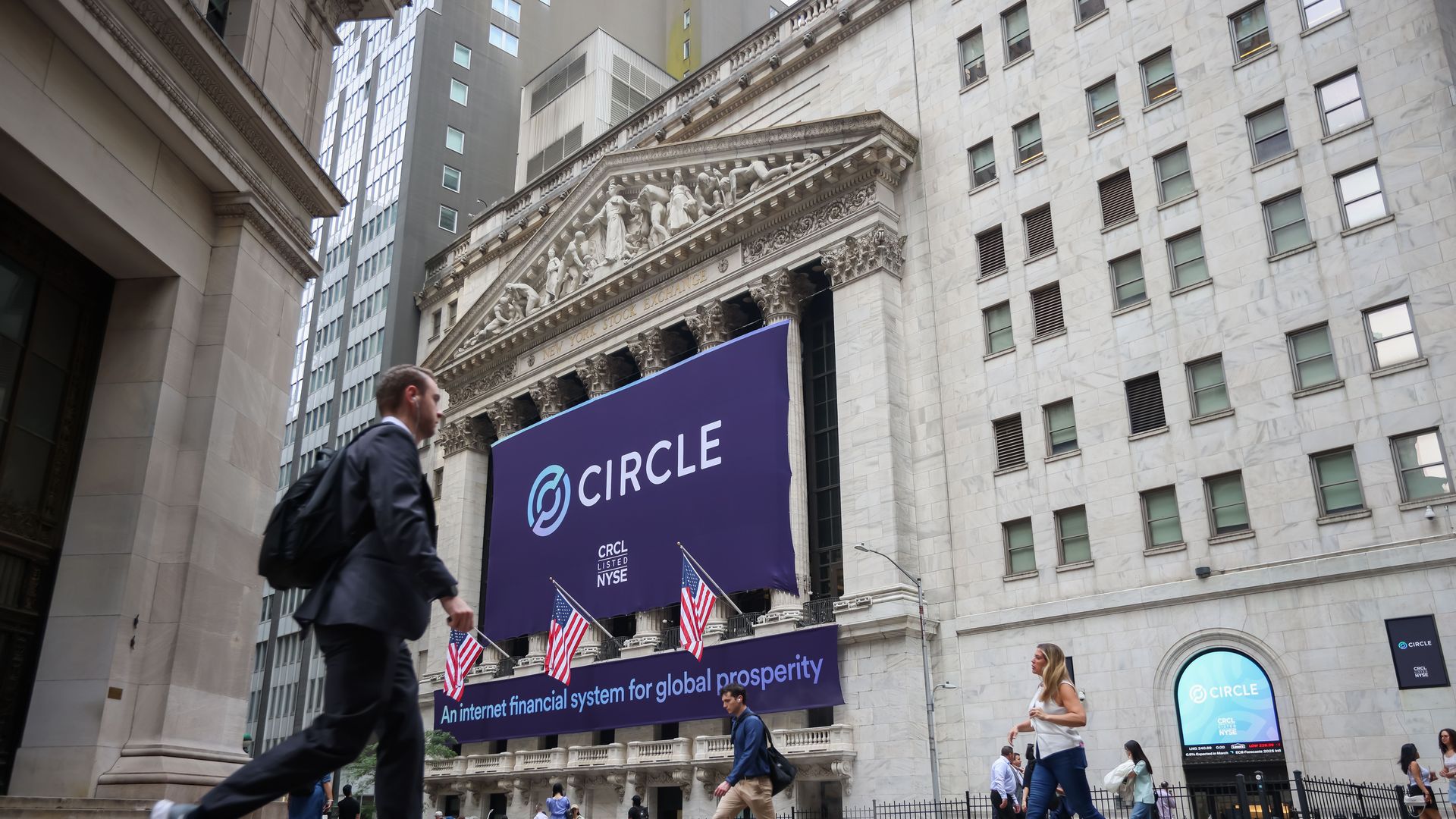
Photo: Michael Nagle/Bloomberg via Getty Images
Circle's IPO euphoria has revived debate over the "pop."
The big picture: This is a first-world problem, after years of IPO dormancy, but could impact the anticipated rush of second-half offerings.
By the numbers: Circle priced its IPO earlier this month at $31 per share, and closed Friday trading at $240.38 per share. That's a whopping 675% increase.
- This included a 168% pop on its first day of trading, which was a record for a company that raised at least $1 billion in its IPO.
- Circle had originally filed to price at $26-$28 per share, before upping the range.
Zoom in: Critics view this as further evidence that the IPO system is broken, designed for bankers to reward their best clients rather than for issuers to maximize earnings. Particularly in an age where technology should be able to make a more efficient market.
- Had Circle just doubled its IPO price — which still would be less than one-third of the current mark — it would have added another $1.1 billion to its balance sheet. Venture capital firm General Catalyst (and its LPs) would have netted an extra $110 million.
- Defenders of the status quo, however, emphasize that the pop rewards issuers by boosting employee morale, making it easier to recruit new employees, and solidifying the resolve of long-term institutional investors. Pricing for perfection, they argue, sounds better in theory than it works in practice.
Yes, but: Circle may be an outlier, operating within the volatile and feels-based crypto industry.
- Moreover, it got to ride legislative tailwinds last week when the U.S. Senate passed stablecoin legislation, before which shares were trading at around $150. It was an expected development at the time of the IPO, but hardly guaranteed (and still needs to pass the House).
- For context, neobank Chime popped 59% at the open on its first day of IPO trading but has since slumped down to a 9% gain. Digital health company Omada is actually trading below its IPO price.
The bottom line: The official IPO calendar is threadbare, with bankers seeming to prepare more for summer vacations than for new offerings, but price talk should return once Labor Day is within view.
