Where uninsured rates have fallen the most since 2013

Add Axios as your preferred source to
see more of our stories on Google.
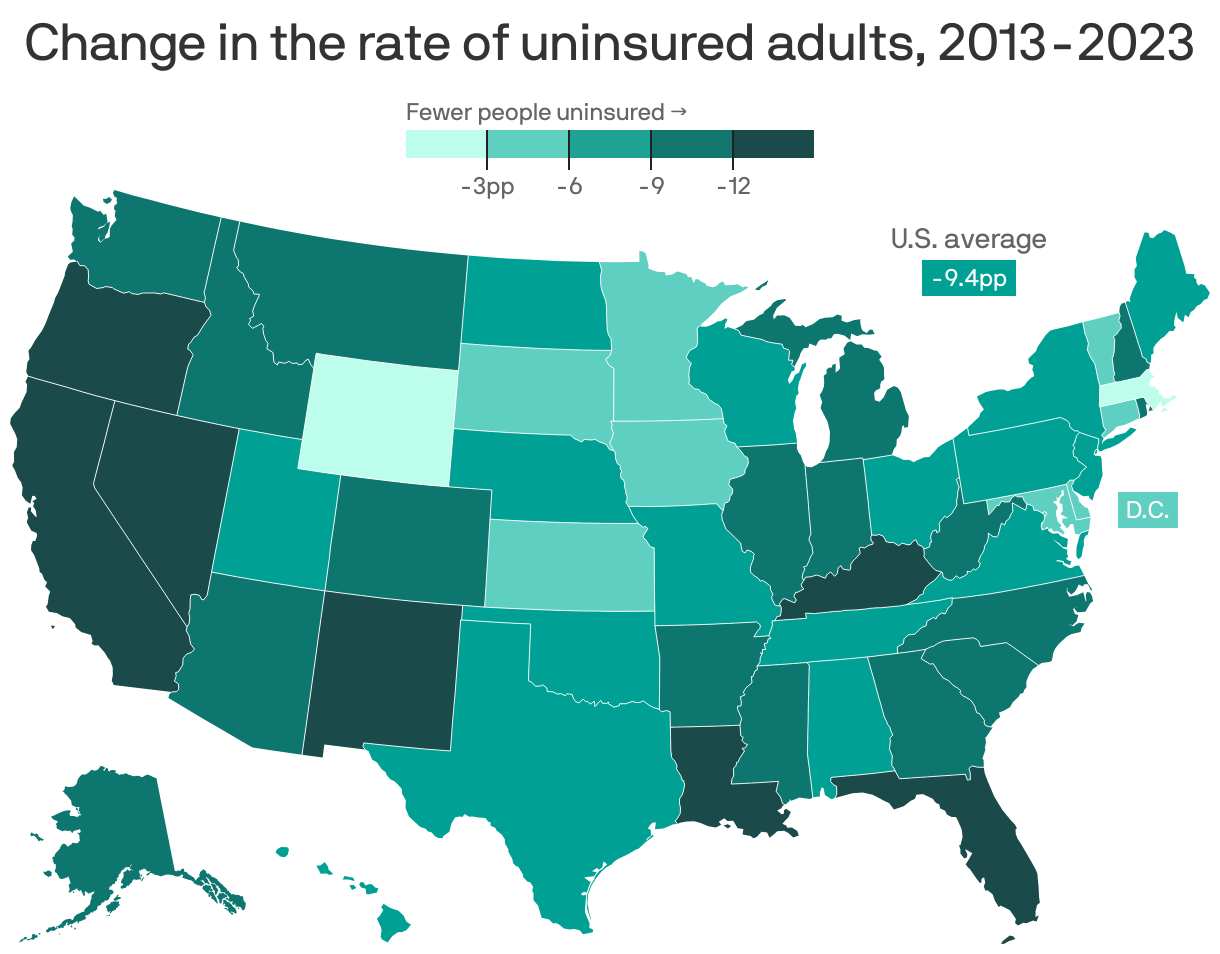
Uninsured rates hit record lows in all U.S. states by 2023, driven by coverage expansions under the Affordable Care Act and related policy changes, per a new report.
Why it matters: Although a greater share of people now have some form of health insurance, many remain uninsured — particularly in states that haven't expanded Medicaid access.
Driving the news: The uninsured rate for working-age U.S. adults dropped from 20.4% in 2013 to 11% in 2023, according to an analysis of census data from the Commonwealth Fund, a health care foundation.
- California (-15 percentage points), New Mexico (-14.9) and Louisiana (-14.7) had the biggest drops over that period — meaning more residents are now insured.
- Washington, D.C. (3.4%), Massachusetts (3.6%) and Hawai'i (3.9%) had the lowest uninsured rates as of 2023.
Caveat: Places that already enjoyed relatively low uninsured rates in 2013, like Massachusetts and D.C., had less room for improvement over the following decade.
Reality check: Despite these gains, some states still have high rates of uninsured working-age adults.
- In Texas, for example, the uninsured rate is 21.6% as of 2023 — meaning about one in five adults lacks health coverage.
Context: Under the ACA, states can expand Medicaid coverage to adults with incomes up to 138% of the federal poverty level.
- 10 states have not done so.
Zoom in: The states that still have relatively high uninsured rates "generally haven't expanded Medicaid," per the report, which compares the cases of Kentucky and Tennessee.
- In Kentucky, which was quick to expand Medicaid, "the uninsured rate for people with incomes under 200% of poverty fell by two-thirds between 2013 and 2023," the report says.
- "By contrast, in Tennessee, which has not expanded Medicaid, the uninsured rate for the same group of low-income adults declined by only one-third."
Zoom out: Many residents of states that haven't expanded Medicaid can still get covered under ACA marketplace plans.
- Yes, but: About 1.4 million residents of those states are stuck in the "coverage gap," the report notes, failing to qualify for either ACA plans or Medicaid.
Between the lines: About 5 million uninsured people are ineligible for coverage under ACA expansions because of their immigration status, affecting the overall numbers in states with many residents lacking legal status.
What's next: Congressional Republicans have been pushing for significant Medicaid cuts and changes that could result in millions of Americans losing their coverage.
