Fed leaves rates steady, projects higher inflation


Add Axios as your preferred source to
see more of our stories on Google.
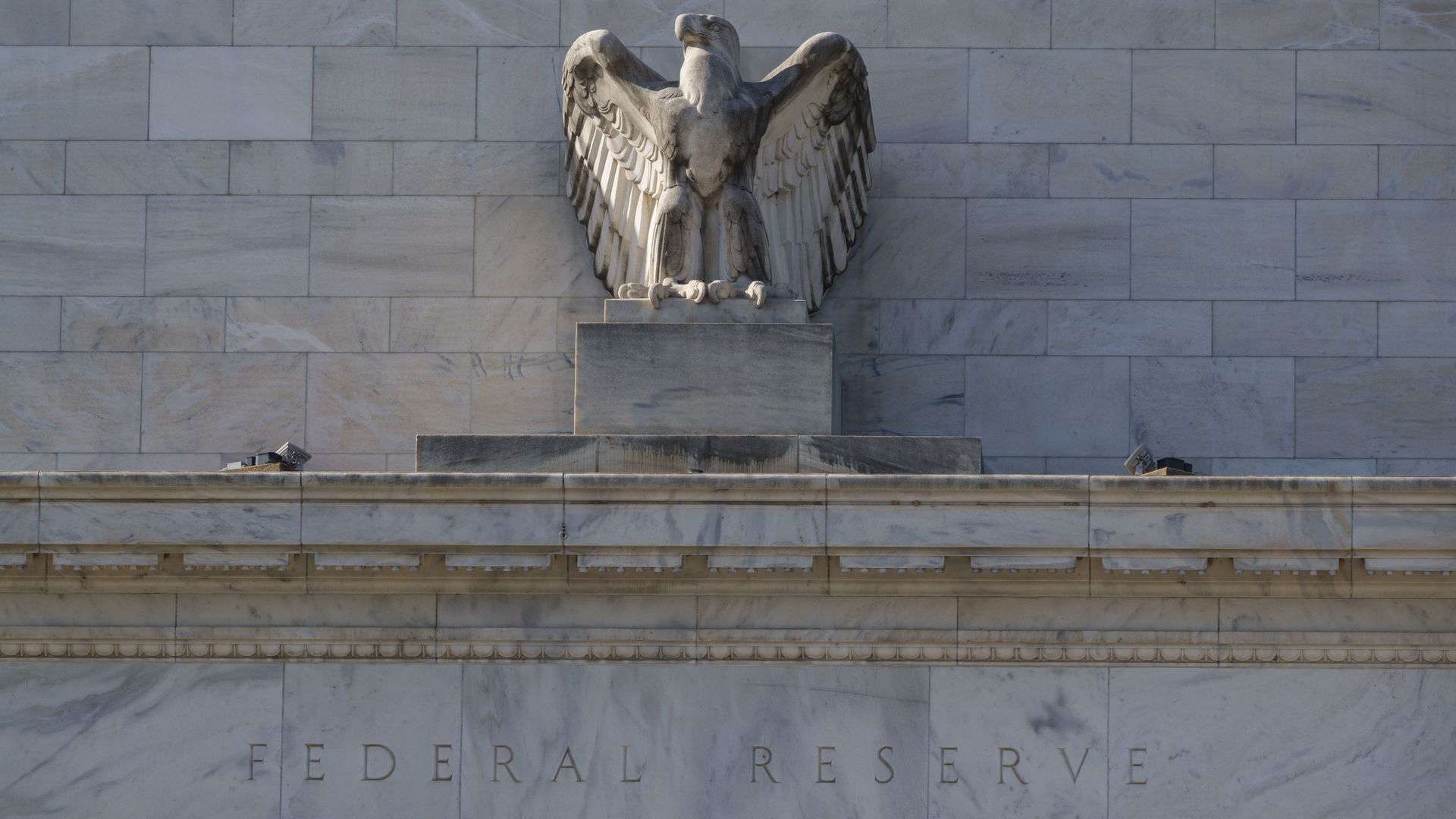
The Federal Reserve building in Washington, DC. Photo: Kevin Carter/Getty Images
The Federal Reserve left interest rates unchanged for the fourth straight meeting, as its leaders projected weaker growth and higher inflation this year than they envisioned three months ago.
- Even so, they continue to expect two rate cuts later this year.
Why it matters: The central bank has resisted President Trump's calls for immediate rate cuts, as its leaders believe that a volatile policy environment will fuel both higher prices and a weaker job market in the near term.
Driving the news: The policy-setting Federal Open Market Committee unanimously voted to keep the interest rate target steady at a range of 4.25% to 4.5%, where it has been since December.
- However, the median top official at the central bank continues to anticipate bringing the Fed policy rate down to 3.9% by year end, the same as in March, implying two rate cuts ahead.
- The consensus projection also implied only one rate cut in 2026, not the two suggested in March.
- "Uncertainty about the economic outlook has diminished but remains elevated," the committee said, tweaking language from its previous statement that uncertainty had "increased further."
By the numbers: In new projections, the Fed signaled a stagflationary economic state, with higher inflation alongside slower growth.
- The median Fed official anticipated 3% inflation this year, up from the 2.7% they penciled in in March. They saw the unemployment rate rising to 4.5% at year-end, up from 4.4%.
- The median GDP growth forecast was trimmed to 1.4%, from 1.7% in March.
Between the lines: The March projections were made before President Trump's "Liberation Day" reciprocal tariffs, which sent markets in a tailspin and caused a wave of recession worries.
- Since then, the trade war has de-escalated and the administration promised a wave of deals, though uncertainty among businesses remains elevated and the risk of supply chain disruptions high.
- The Fed is holding off on policy shifts until it is clear whether an upsurge in inflation, or worsening in labor market conditions, represents the bigger economic threat.
What they're saying: "As long as we're seeing the kind of labor market that we have, and reasonably decent growth and inflation moving down, we feel like the right thing to do is to be where we are," Fed chair Jerome Powell said.
- He added that the Fed anticipated to learn more over the summer on tariffs and the economic impact: "I don't know what the right way for us to react will be," Powell said.
- "I think it's hard to know with any confidence how we should react until we see the size of of the effects," he added.
Yes, but: The Trump administration has seized on recent benign inflation readings to accuse the Fed and Powell of being asleep at the wheel and unduly reluctant to cut rates.
- "We have a man who just refuses to lower the Fed rate," Trump said earlier Wednesday. "Just refuses to do it. And he's not a smart person. I don't even think he's that political. think he hates me, but that's OK."
- Asked about Trump's criticism, Powell said: "From my standpoint, it's not complicated."
- "What everyone on the FOMC wants is a good, solid American economy with strong labor market and price stability. That's what we want," Powell said. "That's all that matters to us."
Editor's note: This story has been updated with comments from Fed chair Jerome Powell.
