Detroit keeps milking its cash cows

Add Axios as your preferred source to
see more of our stories on Google.
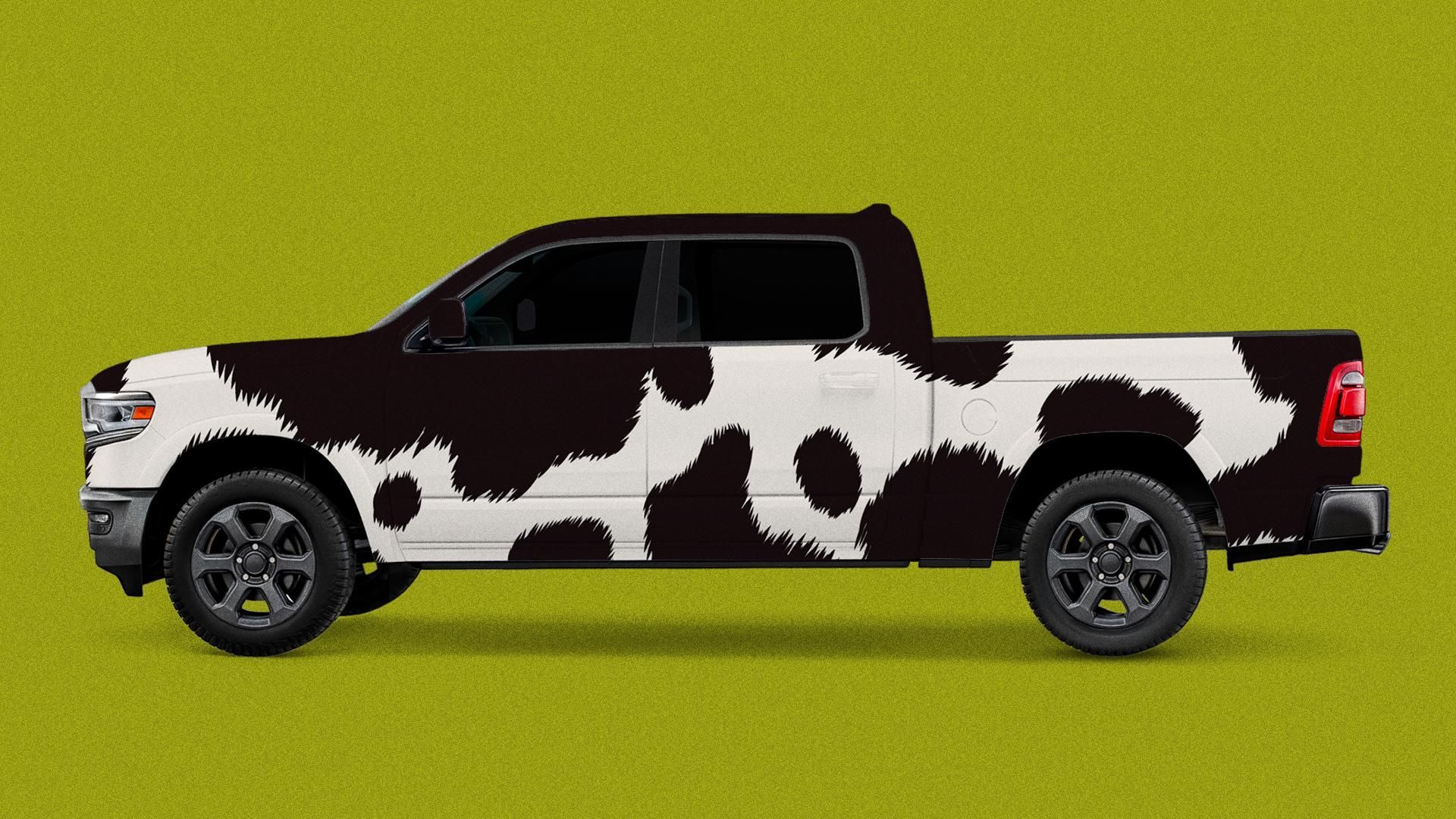
Illustration: Maura Losch/Axios
The future of transportation, it turns out, looks pretty familiar, with lots of gasoline-powered pickup trucks and SUVs.
Why it matters: With electric vehicle sales stalled, regulations in flux and tariff threats upending supply chains, automakers are leaning into their core moneymakers for the foreseeable future.
- In the case of the Detroit 3, that means building more high-margin pickup trucks and SUVs.
The latest: General Motors said last week it was scrapping plans for a second EV factory in Michigan and would instead use its Orion Assembly plant to crank out more gas pickups and SUVs like the Chevrolet Tahoe and Cadillac Escalade.
- The pivot follows last month's decision to invest nearly $900 million in a new line of V-8 engines at a New York plant that had been slated to build EV components.
- "We had planned for that to be a big EV plant," GM Chief Financial Officer Paul Jacobson said of the Orion plant during a recent investor meeting. "We were thinking about rapid expansion of electric vehicles, and clearly we haven't seen that happen."
- The best decision, he explained, was to double down on trucks and SUVs, because other factories in Indiana and Texas can't keep up with demand.
- Plus, by pulling some truck and SUV production from Mexico, GM will avoid newly imposed tariffs.
The big picture: The future product pipeline at most automakers is in shambles, per BofA Securities' recent "Car Wars" report, produced annually by automotive analyst John Murphy.
- "The unprecedented EV head-fake has wreaked havoc on product plans," wrote Murphy, whose research on future products offers clues about which carmakers have momentum and could gain market share.
- Product activity is "at a crawl," he said, with 159 new or redesigned models to be launched industrywide over the next four years, down sharply from the more than 200 models forecasted in last year's report.
- "The next four-plus years will be the most uncertain and volatile time in product strategy ever."
Between the lines: Some planned EVs, including a large Ford SUV, have been killed, while others, including a Ram electric pickup, are being reconsidered.
- Sales of existing electric trucks remain weak, and no one is making money on them.
- "We're going to see multibillion[-dollar] write-downs over the next few years," Murphy predicts.
Yes, but: That's not to say EVs are dead — far from it. And the arrival of more affordable models like the next-generation Chevy Bolt EV later this year could help spur demand.
- But the mix of future products, at least for the next four years, has shifted dramatically toward hybrids.
- One sign it's already happening: Ford's EV sales fell 25% in May, while hybrids jumped 29%.
What to watch: Stellantis' breakthrough Ramcharger pickup, the industry's first range-extended electric pickup, has slipped into 2026 while it seeks to ensure better quality.
- GM plans to add plug-in hybrids to its lineup, but is feeling less urgency under the Trump administration, which is rolling back tough Biden-era standards.
- In the meantime, the product pipeline is relatively light at the Detroit 3 for the next couple of years.
- They won't redesign their most popular pickups and SUVs until the 2028 and 2029 model years.
The bottom line: They've got to keep milking the cows in the barn.
