Judge blocks Trump passport policy targeting transgender people

Add Axios as your preferred source to
see more of our stories on Google.
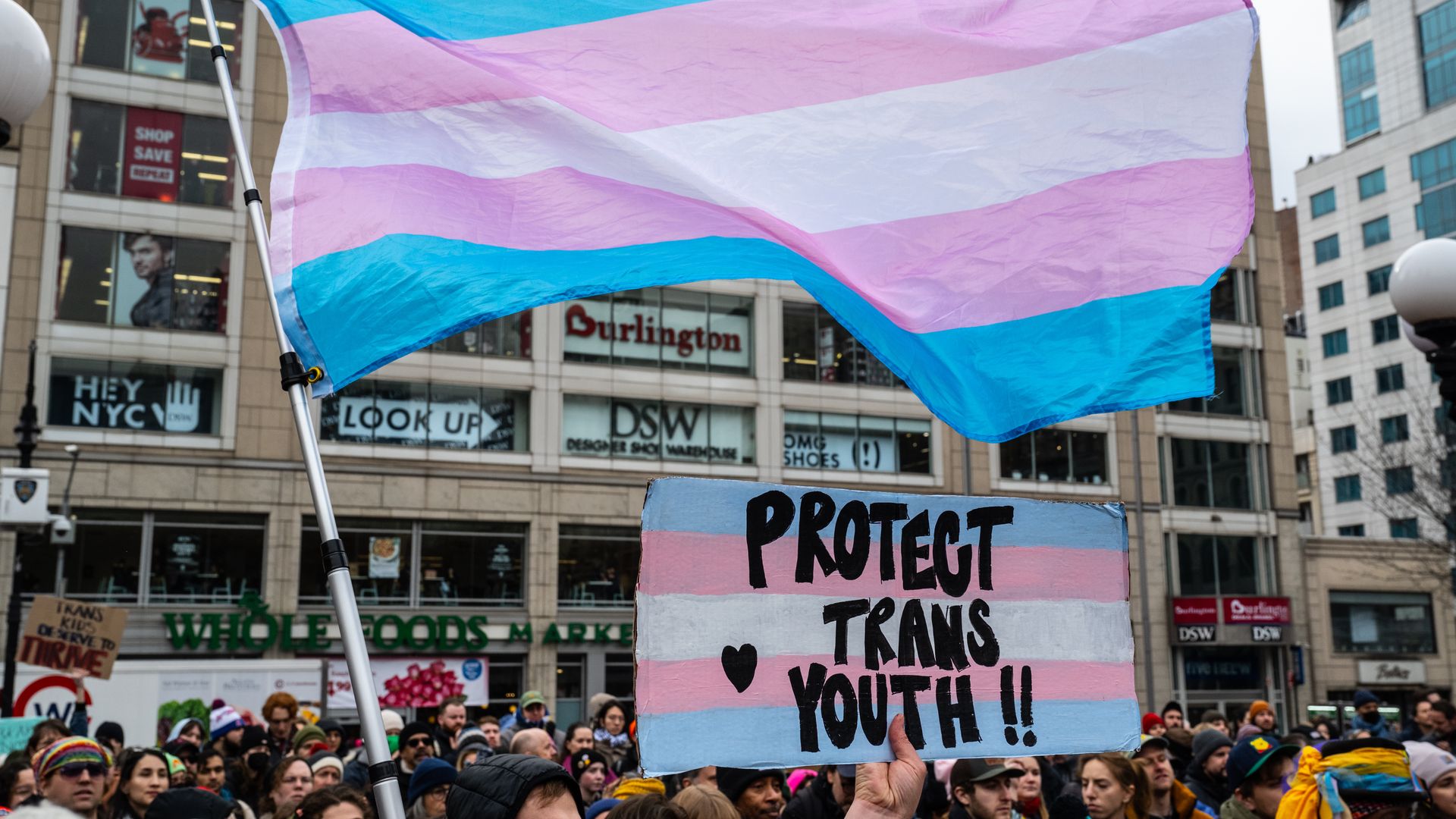
Photographer: Stephanie Keith/Bloomberg via Getty Images
A federal judge on Tuesday blocked a Trump administration order barring transgender and nonbinary Americans from passports that reflect their gender identities.
The big picture: U.S. District Judge Julia Kobick in Boston issued a preliminary injunction on Tuesday expanding her order from April to all people. Her original order only shielded six of the people who originally sued the Trump administration from the policy.
State of play: Kobick granted the plaintiffs "class certification" in the lawsuit, which gives the case the green light to proceed as a class action.
- Specifically, Kobick wrote, that means the lawsuit can apply to all of those who "currently want, or in the future will want, a U.S. passport issued with an 'M' or 'F' sex designation that is different from the sex assigned to that individual under the Passport Policy."
- It also applies to "all people who currently want, or in the future will want, a U.S. passport and wish to use an 'X' sex designation."
What we're watching: The judge said in the order, the Trump administration may "conclude[s] that it is necessary to request additional information to determine whether a passport applicant is a member" of the class that she certified.
Catch up quick: President Trump's policy comes from Secretary of State Marco Rubio.
- "The policy of the United States is that an individual's sex is not changeable," Rubio said to his staff in a January cable obtained by The Guardian.
- Following Trump's order, State Department staff were ordered to "suspend any application requesting an X sex marker" and to "suspend any application where the applicant is seeking to change their sex marker" from the definition outlined in Trump's executive order.
By the numbers: About 1.3 million U.S. adults identify as transgender or gender-nonconforming, and as many as 5 million Americans may be intersex, according to a January brief from the Williams Institute, a UCLA Law School think tank that researches sexual orientation and gender identity.
Editor's note: This story has been updated with additional details and context throughout.
