The economic risks of Israel's Iran attack


Add Axios as your preferred source to
see more of our stories on Google.
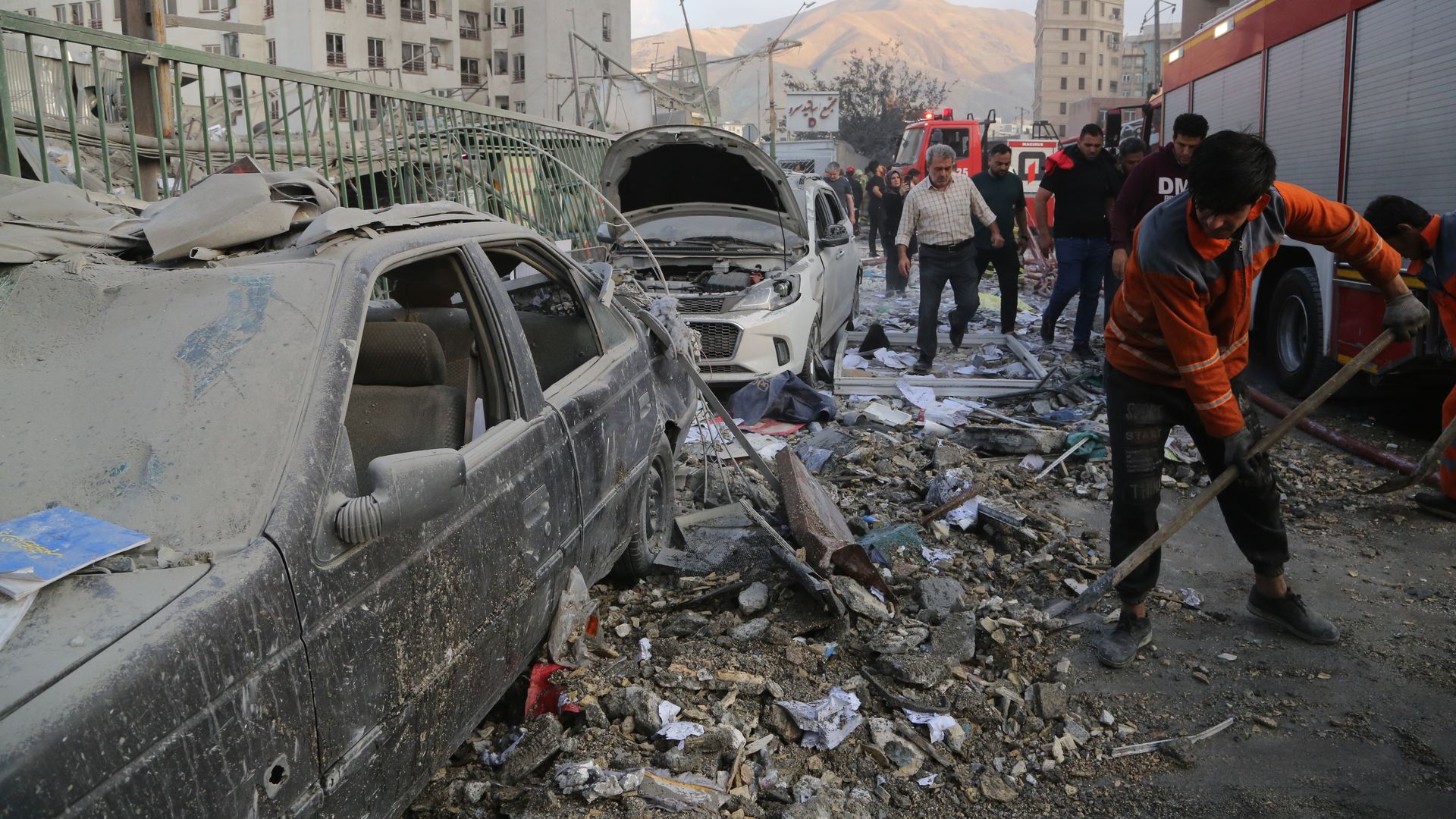
Damage in Tehran following Israeli strikes. Photo: Fatemeh Bahrami/Anadolu via Getty Images
Israel's strikes against Iranian military leadership and nuclear facilities open up a new wave of risks for an already precarious global economy.
The big picture: Global financial markets Friday morning displayed classic flight-to-safety, risk-off moves — with some wrinkles that suggest the onset of new conflict in the Middle East could act as a stagflationary force for the rest of the world.
- It comes at a particularly vulnerable time, as global supply chains are already adjusting to the onset of new tariffs and other tensions between the U.S. and its major trading partners.
By the numbers: The S&P 500 was down 0.4% as of 11:45am ET, and the price of West Texas Intermediate crude oil up 6%.
- The U.S. dollar index was up 0.3% this morning, showing that the U.S. currency's safe haven status remains intact despite taking some blows this spring.
- Gold was up 1.2%.
The intrigue: U.S. Treasury bond yields were up (and prices of the securities down) Friday morning, contrary to the usual pattern on days in which traders are shedding risk and seeking safe havens.
- It points to concern that the inflationary impulse from higher energy prices will make the Fed all the more reluctant to pivot to interest rate cuts anytime soon, even after a run of benign data on price pressures this week.
- The two-year Treasury yield, highly sensitive to policy expectations, was up 0.07 percentage point Friday morning at 3.97%, implying less rate-cutting on the way.
Between the lines: If the Israel-Iran confrontation widens further, its economic effects could resemble those of Russia's Ukraine invasion, which caused a spike in energy prices.
- That shock also exacerbated pre-existing global supply disruptions from the COVID-19 pandemic reopening.
- Even though it was a negative for global growth, by fueling an inflation surge, it tilted the Fed and other central banks toward tighter money.
Yes, but: For now, market moves are fairly modest, suggesting investors do not anticipate the economic damage to be severe or long-lasting.
- The S&P only gave up a week's worth of gains, and oil prices were higher as recently as January.
- Armed conflict in the Middle East is hardly a new risk for the global economy and markets to digest.
The bottom line: "The main impact on the global economy and financial markets is via oil prices," wrote Mark Dowding, chief investment officer at BlueBay Fixed Income, adding that it should be contained absent dramatic escalation by Iran.
- "Yet at a time of some market complacency, which we have been highlighting, the Middle East and geopolitics more broadly is a source of risk which we cannot ignore," he noted.
