Circle IPO shows investors want in on stablecoins

Add Axios as your preferred source to
see more of our stories on Google.
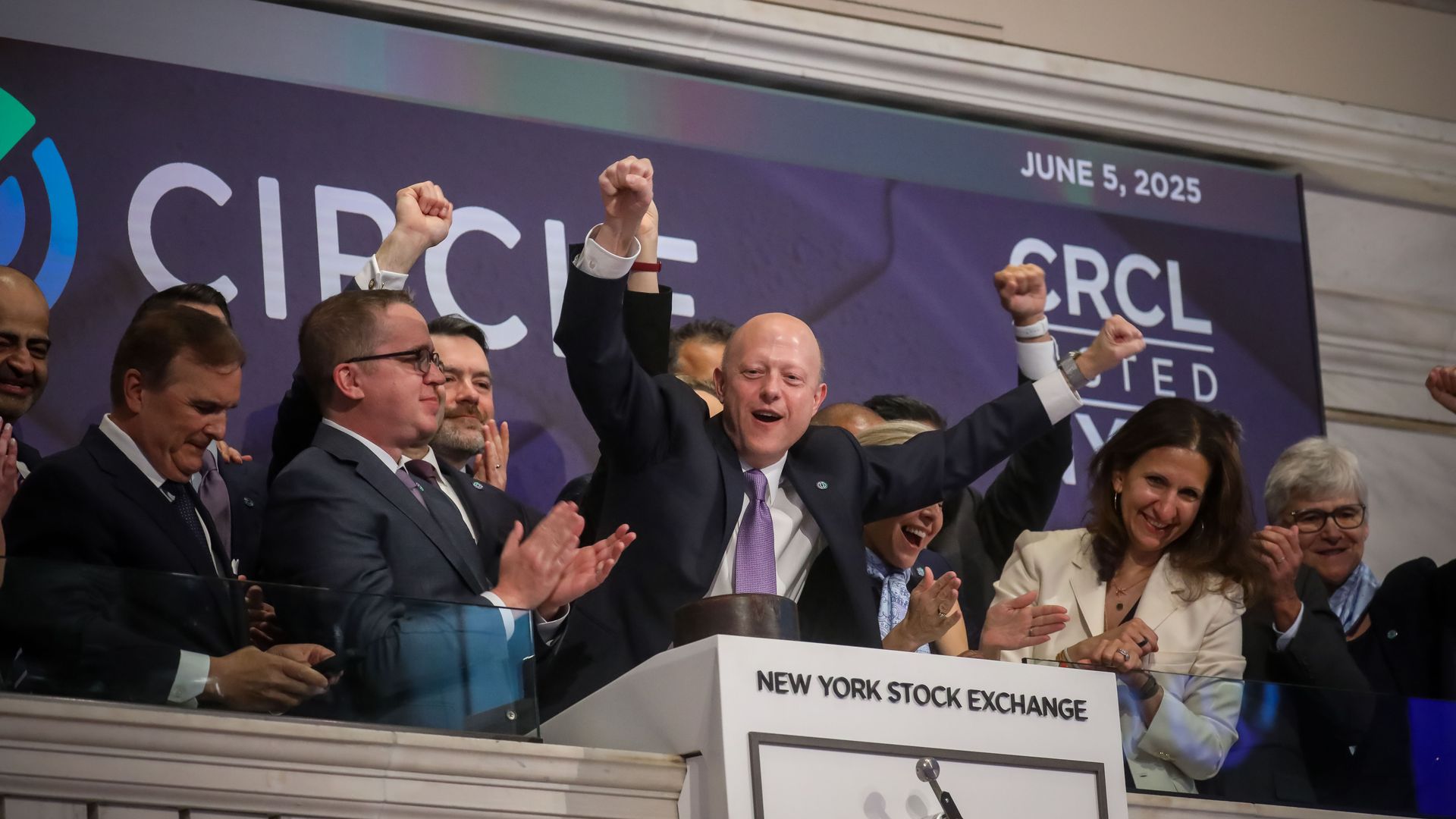
Circle CEO Jeremy Allaire rings the opening bell on the floor of the New York Stock Exchange. Photo: Michael Nagle/Bloomberg via Getty Images
Circle shares surged Thursday following an IPO valuing the company at almost $7 billion, showing that investors have an appetite to get exposure to the nascent stablecoin economy.
Why it matters: The bet is that stablecoins will only get bigger once the U.S. properly gives a green light to issuers.
By the numbers: It's tough to argue with stablecoins' results. Ark Invest estimates that the total value transacted through stablecoins was higher than Visa in 2024, though the lion's share of that is in trading pairs on crypto exchanges.
- New research from Artemis Anyalytics shows that stablecoins are on track to facilitate tens of billions in volume for real world payments this year too.
- Is that tiny compared to global payments? Yes. Is it bigger than anyone thought this sector would ever get only a few years ago? Also, yes.
Between the lines: Investors have had a way to get some exposure to Circle's stablecoin, USDC, for years, because much of Circle's revenue gets sent to another publicly traded crypto company: Coinbase, the American crypto exchange, which Circle partnered with to launch the stablecoin in 2018.
- Coinbase gets half of Circle's main source of revenue, interest earned on reserves backing USDC. In fact, that represented 15% of Coinbase's $2 billion in Q1 revenue.
- Coinbase, incidentally, raised just slightly more than Circle in its 2021 IPO.
Zoom out: Elsewhere, other nations are digitizing their currencies.
- The U.S. is unlikely to do that any time soon.
Our thought bubble: Circle's USDC is the second-largest stablecoin in the world after Tether's USDT, which has a market cap of $153 billion — but Tether isn't really Circle's most important competitor.
- Circle wants its stablecoin to be the conduit for big institutional money around the world. Tether does not.
- But with banks talking about stablecoin consortiums in both the U.S. and in Europe, USDC's direct competitor will likely be the giants of traditional finance.
Yes, but: Circle is out ahead of them.
- Amidst its IPO, it announced the Circle Payment Network, a regulatory fence around the stablecoin economy that should make traditional players much more comfortable with these new instruments.
- So even if its token, USDC, drops further back in the pack, Circle itself has made a strategic early move to make itself a crucial infrastructure provider to the stablecoin industry.
The latest: Circle shares were trading up over 160% from their IPO price with less than an hour left of trading Thursday.
The bottom line: A billion fresh votes of confidence have just hit the first IPO that's all about blockchains' killer app.
