Trade threats consume the U.S. economy

Add Axios as your preferred source to
see more of our stories on Google.
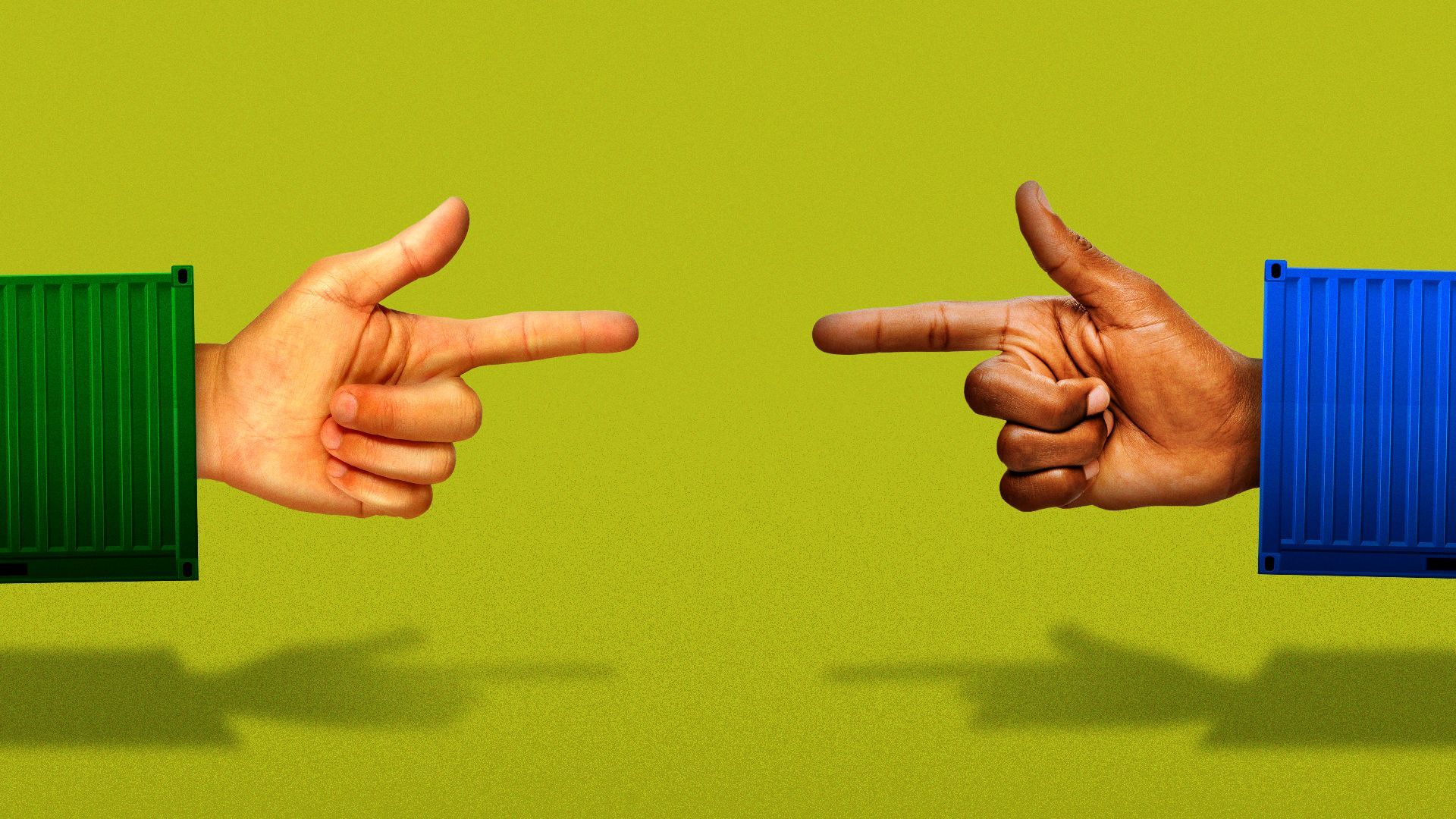
Illustration: Allie Carl/Axios
An upbeat inflation report on Friday was overshadowed by President Trump's warning about escalating U.S.-China trade tensions.
Why it matters: Little captures the rattled state of the American economy like the morning's sequence of events.
- Inflation kept decelerating in April, defying gloomy warnings about tariff-related price hikes.
- But Trump's social media post about China, pushed out minutes before the data hit the tape, was a clear reminder that the economy is largely at the mercy of the White House's trade agenda.
By the numbers: The Personal Consumption Expenditures Price Index — the Federal Reserve's preferred inflation gauge — was benign for yet another month.
- After a streak of hot reports, the economy looks to be solidly back on a disinflationary path. The core measure that excludes food and energy increased 2.5% from a year ago, the lowest annual gain since February 2021.
- By another measure, core PCE rose at a 2.7% annualized rate over the last three months — down sharply from 3.5% in March.
What to watch: So far, Trump's trade drama has played out against a largely favorable economic backdrop.
- But spending data released with the upbeat inflation figures offers an early warning that this backdrop might be shifting.
- Personal consumption expenditures rose 0.2%, a pullback from the 0.7% increase in March. Spending on services was partially offset by a drop in goods purchases.
- That is despite another jump in disposable income, which rose 0.8% last month, up from the 0.7% increase in March. The Commerce Department said that jump largely reflected new legislation that allowed certain public sector employees to receive more Social Security benefits.
- The personal saving rate soared by 0.6 percentage point to 4.9%, as consumers socked away more of their income than they spent.
What they're saying: "The U.S. consumer remains resilient, though that resilience, to some degree, is underpinned by fear of what's likely to come," Olu Sonola, an economist at Fitch Ratings, wrote in a note Friday morning — referring to tariff-related disruptions.
- "The Fed will welcome the favorable inflation reading in this report, but they are likely to interpret it as the calm before the storm. They will continue to wait for the storm—unless consumer spending buckles and the unemployment rate rises rapidly," Sonola added.
State of play: Trump implemented the steepest tariff rates to date in April before backing off days later. China was the exception, with U.S.-bound goods taxed at 145% for much of April.
- Economists don't expect price pressures to seep into the data until the summer months. Retailers are rolling through inventory stockpiled before the worst of the tariffs took effect.
The bottom line: Even if the courts decide Trump's expansive tariffs are illegal, the White House can implement the levies through other authorities.
- Trump is tossing aside expectations of de-escalating trade tensions, as his top economic official signals "stalled" negotiations with China.
- "The bad news is that China, perhaps not surprisingly to some, HAS TOTALLY VIOLATED ITS AGREEMENT WITH US. So much for being Mr. NICE GUY!," Trump wrote on Truth Social, without explaining how China had fallen short.
