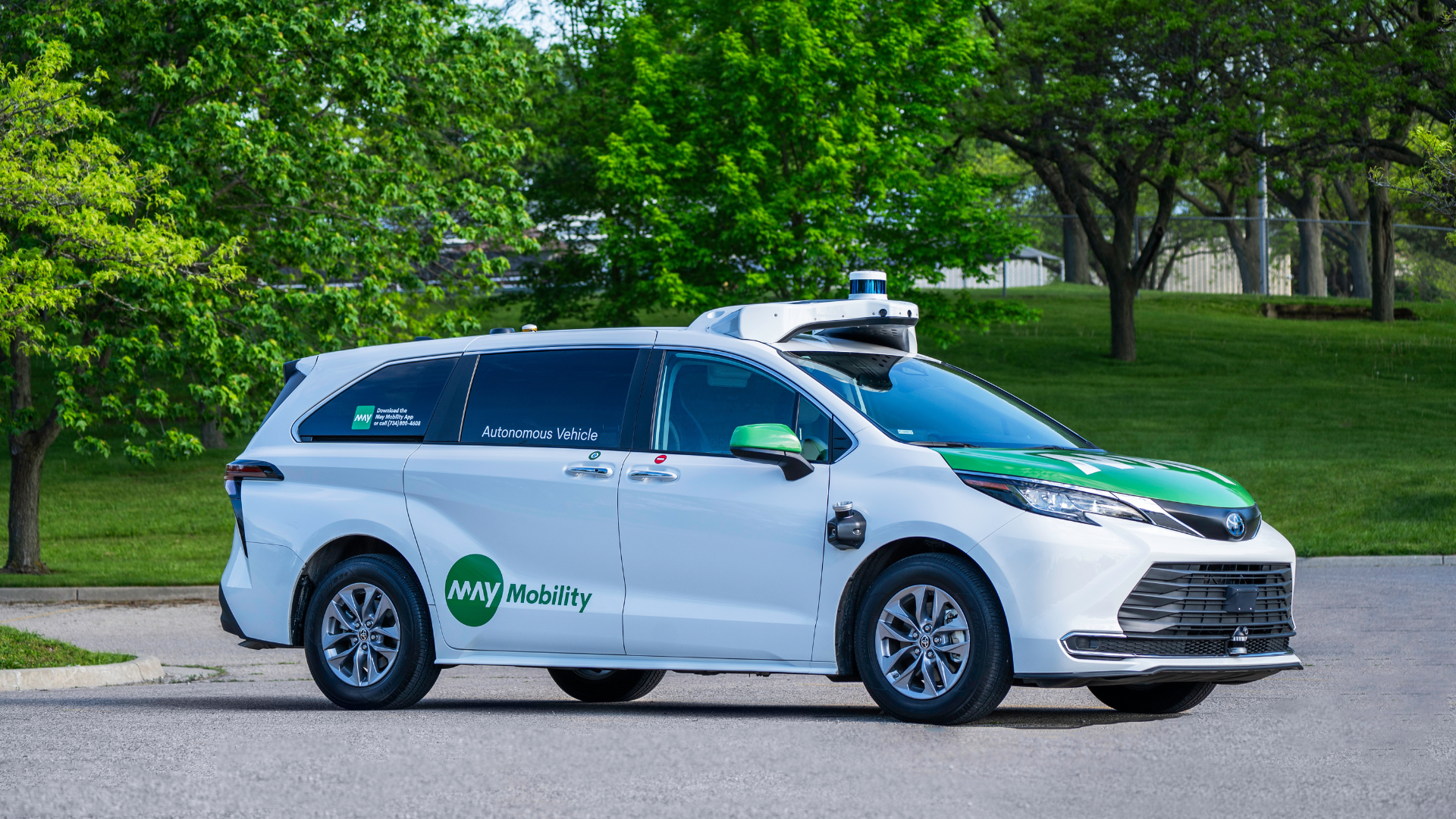
May Mobility robotaxi in Ann Arbor, Michigan. Photo: Courtesy of May Mobility
Self-driving tech startup May Mobility often gets overshadowed by well-funded peers like Alphabet's Waymo or Tesla. But it's quietly gaining traction as a future robotaxi partner for Uber and Lyft to complement its public transit niche.
I rode along with CEO and co-founder Edwin Olson the other day in Ann Arbor, Michigan, to see how its technology has progressed.
It's the first time I was a passenger in a May Mobility van without a backup safety driver in the front seat.
We cruised around the southern end of Ann Arbor, encountering fairly light traffic through business areas and residential neighborhoods.
You have to scan a QR code on the center screen to confirm you're in the right vehicle. But don't worry: if you got in the wrong van at the airport, for example; scanning the QR code will update its destination.
Remote help is critical for AVs.
Our van stopped behind a large landscaping trailer that was partially blocking the road. Unsure whether it was safe to pass, the van automatically raised its hand to remote operators behind the scenes, who then silently gave it permission to pass.
Pedestrians are mystified by robotaxis.
A woman standing by a parked car kept waving for our AV to proceed, but the robotaxi wouldn't pass.
With a puzzled look, she eventually realized no one was behind the wheel and took a step back behind her vehicle. Only then did the robotaxi drive on.
The bottom line: The drive was not as complicated as my L.A. excursion in a Waymo, but I was pleasantly surprised by May Mobility's confident driving ability.