New guidance calls for pain relief during IUD insertion

Add Axios as your preferred source to
see more of our stories on Google.
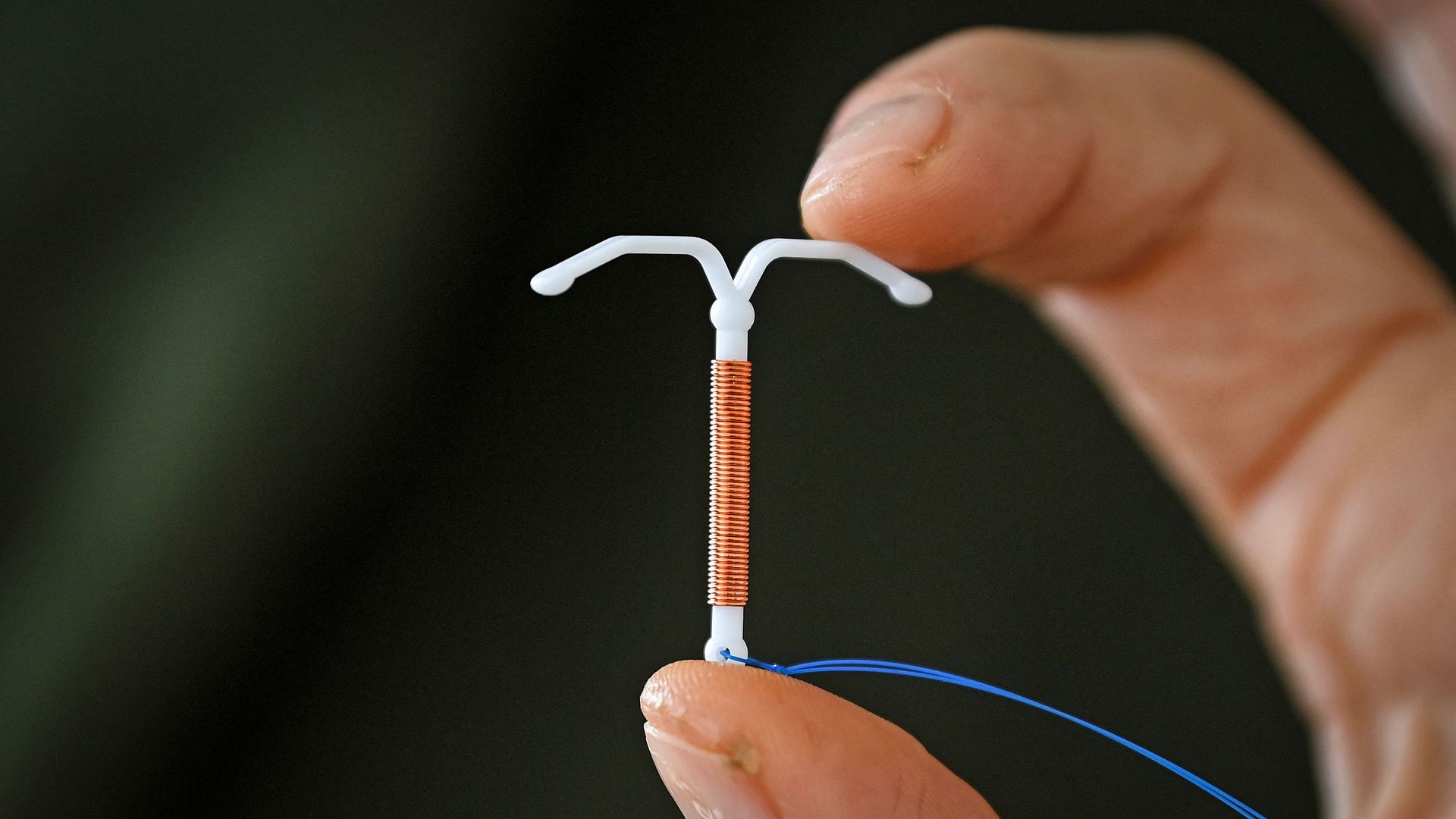
An IUD. Photo: Valentine Chapuis/AFP via Getty Images
Women should be offered pain management before an intrauterine device placement and get counseling on different options for pain control, the American College of Obstetricians and Gynecologists says in new clinical practice guidelines.
Why it matters: Women's pain is often dismissed in medical settings, resulting in lack of pain relief. More patients in recent years have taken to social media, posting videos of their experience with IUD insertions and bringing attention to unmanaged pain around the procedures.
- Pain medication for an in-office IUD insertion is still rare: A review of 2.4 million outpatient IUD insertions between 2017 and 2024 found that only about 5% of procedures involved pain or anxiety medication.
State of play: The new clinical guidance says local anesthetic creams and sprays may reduce pain associated with IUD insertion.
- Scientific studies available don't offer a clear best practice on pain management protocol for IUD insertion, but systemic reviews do support the use of lidocaine, the guidance says.
- There's an "urgent need" for patients to have more autonomy over how to manage their pain during in-office gynecological procedures like IUD insertion, per the document.
- "Shared decision making with the patient should be practiced when discussing pain-management options because options that work for one patient may not work for another," the guidance notes.
- Additional research on pain management also needs to be more racially and ethnically diverse, it says.
Of note: The guidance doesn't include recommendations for mitigating pain during IUD removal, because there's insufficient data.
Between the lines: The Centers for Disease Control and Prevention last year updated its own clinical guidelines on contraception, which suggested counseling patients on pain management options. It also said lidocaine might be useful for pain reduction.
- The entire team who wrote the CDC guidelines has been laid off in Health and Human Services Secretary Robert F. Kennedy Jr.'s bid to reorganize and downsize the agency.
The bottom line: "What I hope clinicians will take away from this guidance is the absolute importance of comprehensive pain management counseling — not just for mitigating pain in the moment but also for improving trust with our patients and ensuring better access to gynecologic health care for every person," Christopher Zahn, ACOG's chief of clinical practice and health equity and quality, said in a statement.
Go deeper: Doctors start to take women's pain more seriously
