Katie Couric on NIH cuts: "unfathomable and unbelievable"

Add Axios as your preferred source to
see more of our stories on Google.
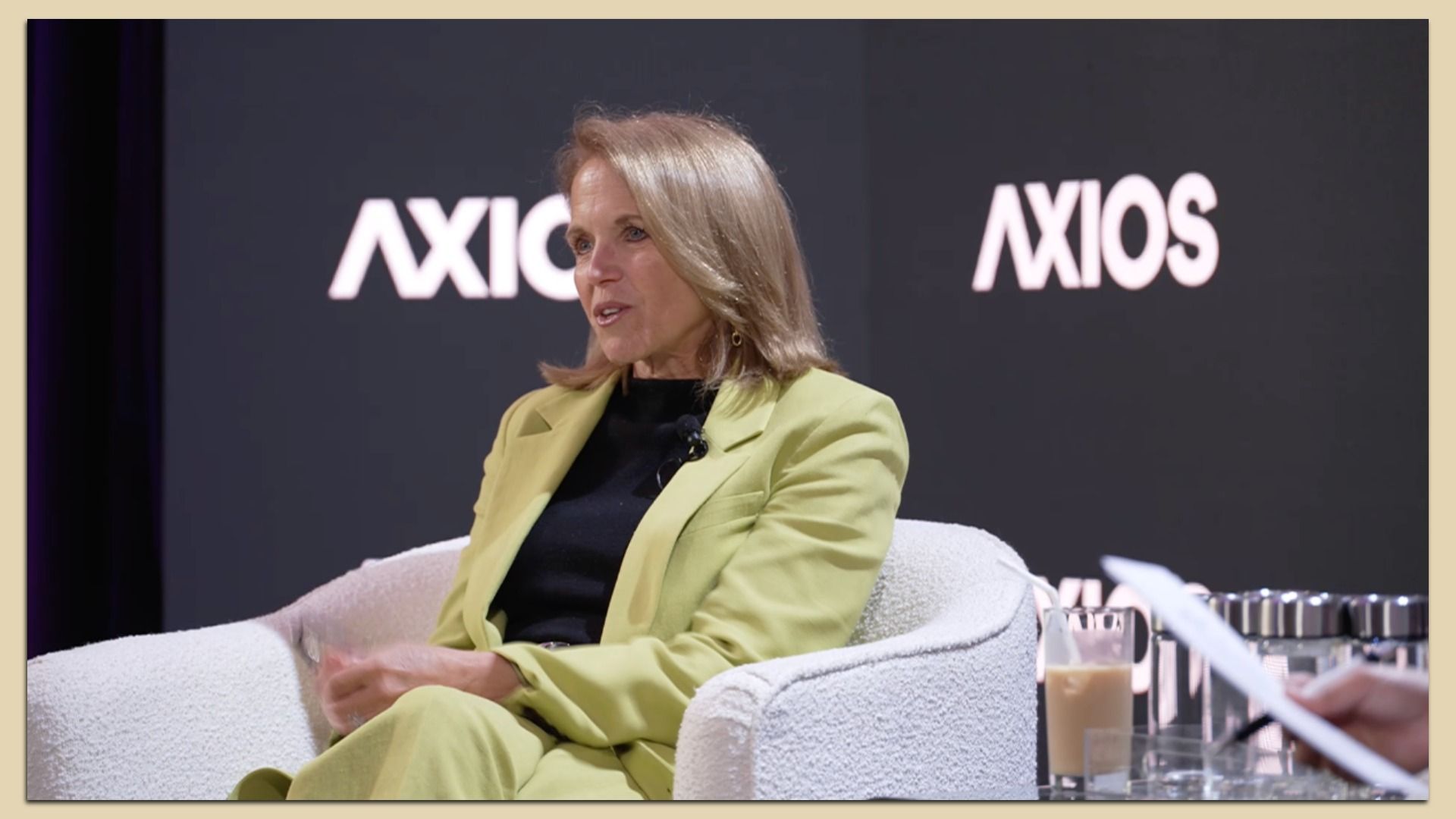
Katie Couric at the Axios Future of Health Summit in D.C. Photo: Axios
Award-winning journalist Katie Couric said it's "chilling" what's happening to scientific research under the Trump administration.
Why it matters: Couric, who encouraged health screenings well before wellness influencers rose to fame on social media, spoke about what changes could mean for the future of medical advancements at Axios' Future of Health Summit in D.C. on Wednesday.
What she's saying: Almost all new therapeutics approved by the FDA from 2010 to 2019 "were the result of at least partial research by the NIH," Couric said, appearing to cite JAMA research. "I think that encapsulates how devastating these cuts are."
Catch up quick: Couric, a lifelong advocate for cancer screenings, speaks from personal experience on why funding medical research is crucial.
- Her first husband, Jay Monahan, died from colon cancer in 1998, and her sister, Emily, died from pancreatic cancer in 2001.
- Couric co-founded Stand Up To Cancer, an organization that raises money for cancer research, in 2008.
- Following her on-air colonoscopy in 2000, there was a 20% increase in the rate of colon cancer screenings in the U.S., studies found. And she revealed her own early-stage breast cancer diagnosis in 2022 after documenting her routine mammogram on social media.
Couric called the Trump administration's scientific funding cuts "terrible," "chilling," "unfathomable and unbelievable."
State of play: President Trump's 2026 budget recommends nearly $18 billion in cuts to NIH, and more than $3.5 billion in cuts to the CDC, as well as other health care programs within the HHS, Axios' Victoria Knight reports.
- And it proposes a $1.7 billion cut to the Department of Commerce, a 16.5% decrease, and a $4.9 billion cut for the National Science Foundation, a 55.8% decrease, Axios' Ashley Gold and Mackenzie Weinger report.
"We're talking about thousands of people losing their jobs," Couric said. "We're talking about PhD programs stalling or getting rid of them all together."
Editor's note: This story has been updated with additional details.
