GLAAD: Social media's hate policy rollbacks are "appalling"

Add Axios as your preferred source to
see more of our stories on Google.
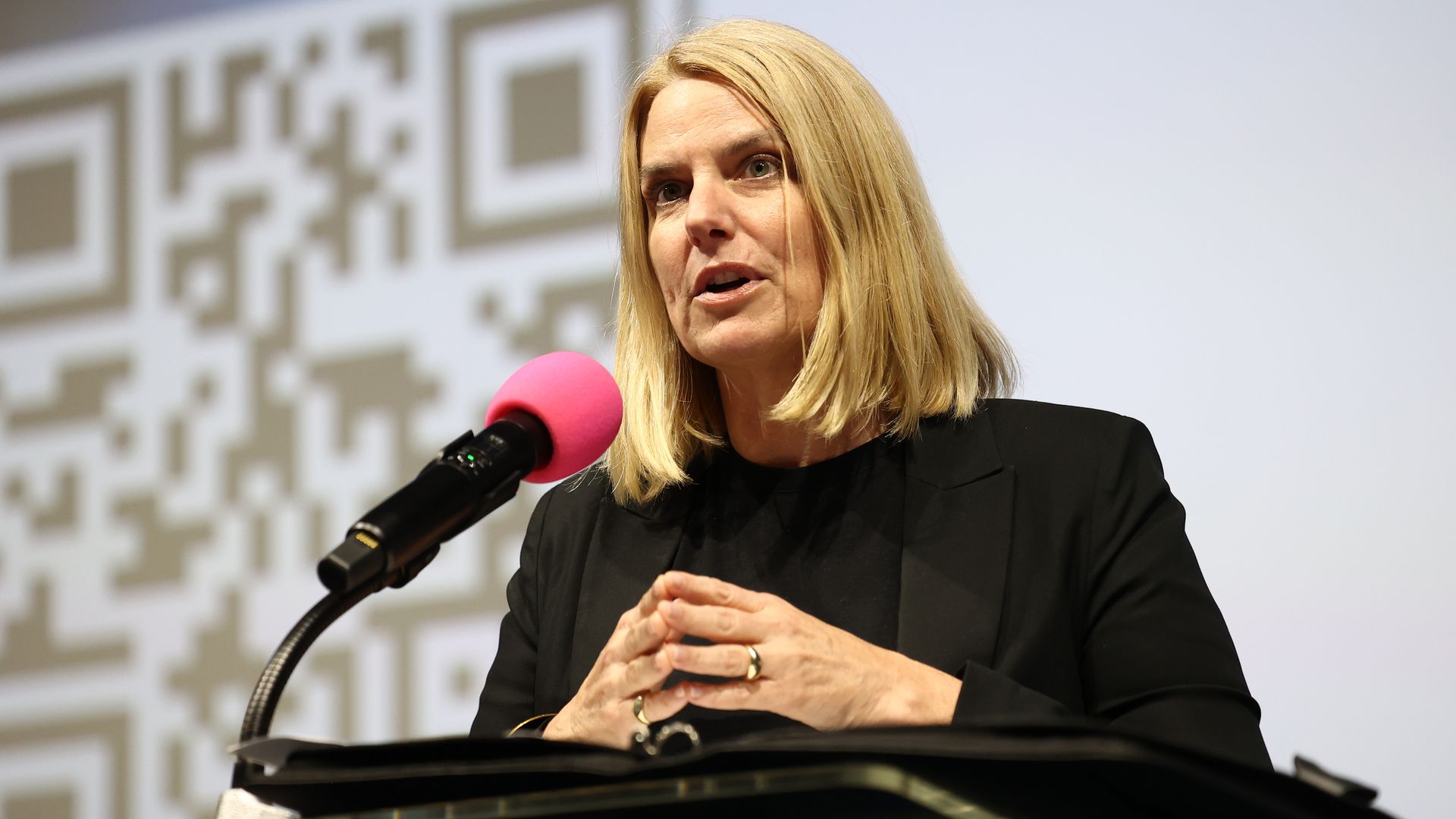
Sarah Kate Ellis. Photo: Tommaso Boddi/Getty Images for GLAAD
Meta's and YouTube's updated moderation policies are threatening the safety of and harming LBGTQ people, according to a new report from GLAAD.
The big picture: "Recent years undeniably illustrate how online hate speech and misinformation negatively influence public opinion, legislation, and the real-world safety and health of lesbian, gay, bisexual, transgender, and queer (LGBTQ) people," GLAAD president and CEO Sarah Kate Ellis said.
- "It's just appalling to see such extreme shifts away from best practices in trust and safety," Jenni Olson, senior director of GLAAD's Social Media Safety Program, told Axios.
- "Execs and employees at these companies owe the LGBTQ community answers about what their next steps are going to be to address these issues and stand up for the safety of their LGBTQ users," she said.
Driving the news: In its annual Social Media Safety Index, GLAAD gave failing scores (out of 100) to all six of the platforms it tracks with TikTok at 56, Facebook and Instagram both at 45, YouTube at 41, Threads at 40 and X at 30.
- GLAAD's report analyzed 14 indicators, including having public policies that protect LGBTQ people from hate, harassment and violence, and that prohibit content promoting so-called conversion therapy.
- While all six platforms received failing scores, TikTok received the highest as it prohibits misgendering and deadnaming along with "conversion therapy" content, the report said. But the report criticized TikTok's transparency.
- "Major ideological shifts from Meta have been particularly extreme," Ellis said. The study suggested Meta remove "harmful exceptions" in its policy, such as their decision to now allow debunked "allegations of mental illness or abnormality" when it comes to gender and sexual orientation.
Catch up quick: Meta relaxed its moderation policies in January, which immediately raised concerns about leading to more real-world violence. Meta's Oversight Board called on the company to investigate the impact on human rights.
- YouTube also removed "gender identity and expression" from its protected characteristic groups on its site. The company said its policies have not changed, but GLAAD noted "it is an objective fact that the gender identity protection is no longer expressly present in its public-facing policy."
Between the lines: GLAAD changed its scorecard methodology, which negates year-to-year comparisons.
- The report has been released annually since 2021, as Axios' Ina Fried was first to report.
The other side: TikTok, Meta and X did not respond to requests for comment.
- YouTube: "We confirmed earlier this year our hate speech policy hasn't changed. We have strict policies against content that promotes hatred or violence against members of the LGBTQ+ community and we continue to be vigilant in our efforts to quickly detect and remove this content," Boot Bullwinkle, a YouTube spokesperson, said in a statement to Axios.
What we're watching: GLAAD offered five key recommendations in its report for the social media platforms.
- One suggestion is working with independent researchers to provide transparency about content moderation, community guidelines, development and use of AI and algorithms, and enforcement reports.
