Scoop: HHS to reinstate some specialized workers hit by layoffs

Add Axios as your preferred source to
see more of our stories on Google.
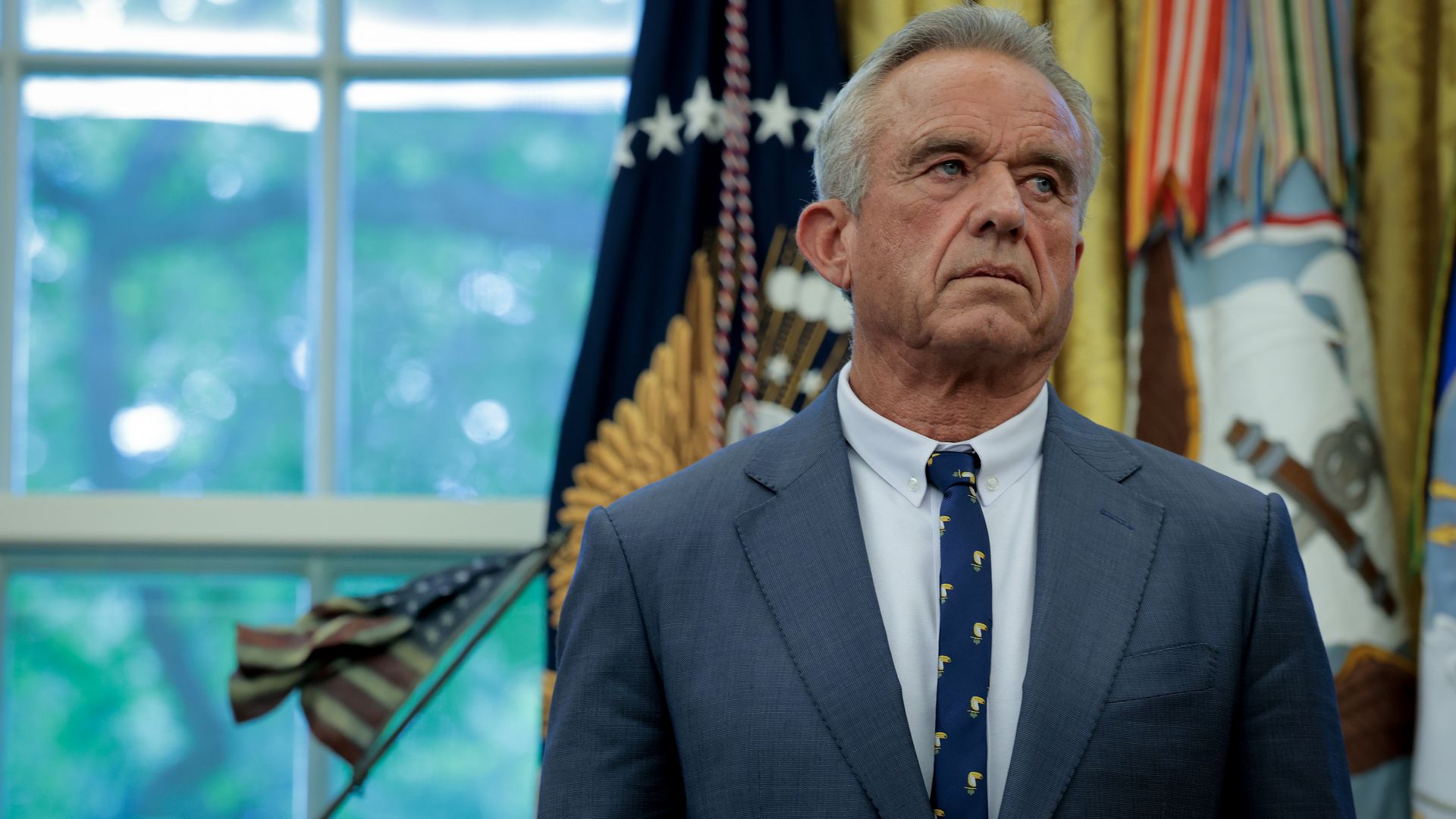
Kennedy in the Oval Office on May 5. Photo: Anna Moneymaker/Getty Images
HHS Secretary Robert F. Kennedy Jr. is bringing back a small fraction of the 10,000 federal health workers he dismissed last month as part of a sweeping reorganization, in order to carry out specialized tasks including NIH research, an agency official told Axios.
Why it matters: The agency is laying off additional employees as some are reinstated, in order to maintain the legality of the reduction in force, the official said.
- About 250 more employees were notified on May 2 that they'd been laid off, an HHS spokesperson said.
Zoom in: Fewer than 1% of the previously laid-off employees got notice on Friday that they'd been reinstated to work in specialized areas, including those key to research operations at the NIH whose functions can't be carried out by other staff, the HHS official said.
- That figure does not include FDA employees who had already been called back to work after initially being put on leave, the official said.
- Staff at food safety labs in Chicago and San Francisco and some World Trade Center Health Program employees also had their layoffs rescinded, CBS News reported.
What they're saying: "Work continues at HHS to fine-tune the agency, identifying areas where additional staff can bolster our critical programs and services, and others where further streamlining is required," an HHS spokesperson said in an email.
- "The May 2 action will have no negative impact on HHS functions or programs. HHS work serving the American people will continue without disruption."
Between the lines: 19 state attorneys general filed a lawsuit against HHS Secretary Robert F. Kennedy Jr. on Monday, arguing that the layoffs are unconstitutional and asking a judge to stop them.
- The attorneys general said in their complaint that core operations have been disrupted as a result of the initial reductions in force. Researchers and health advocates have echoed similar concerns.
