How tariffs can cause a recession

Add Axios as your preferred source to
see more of our stories on Google.
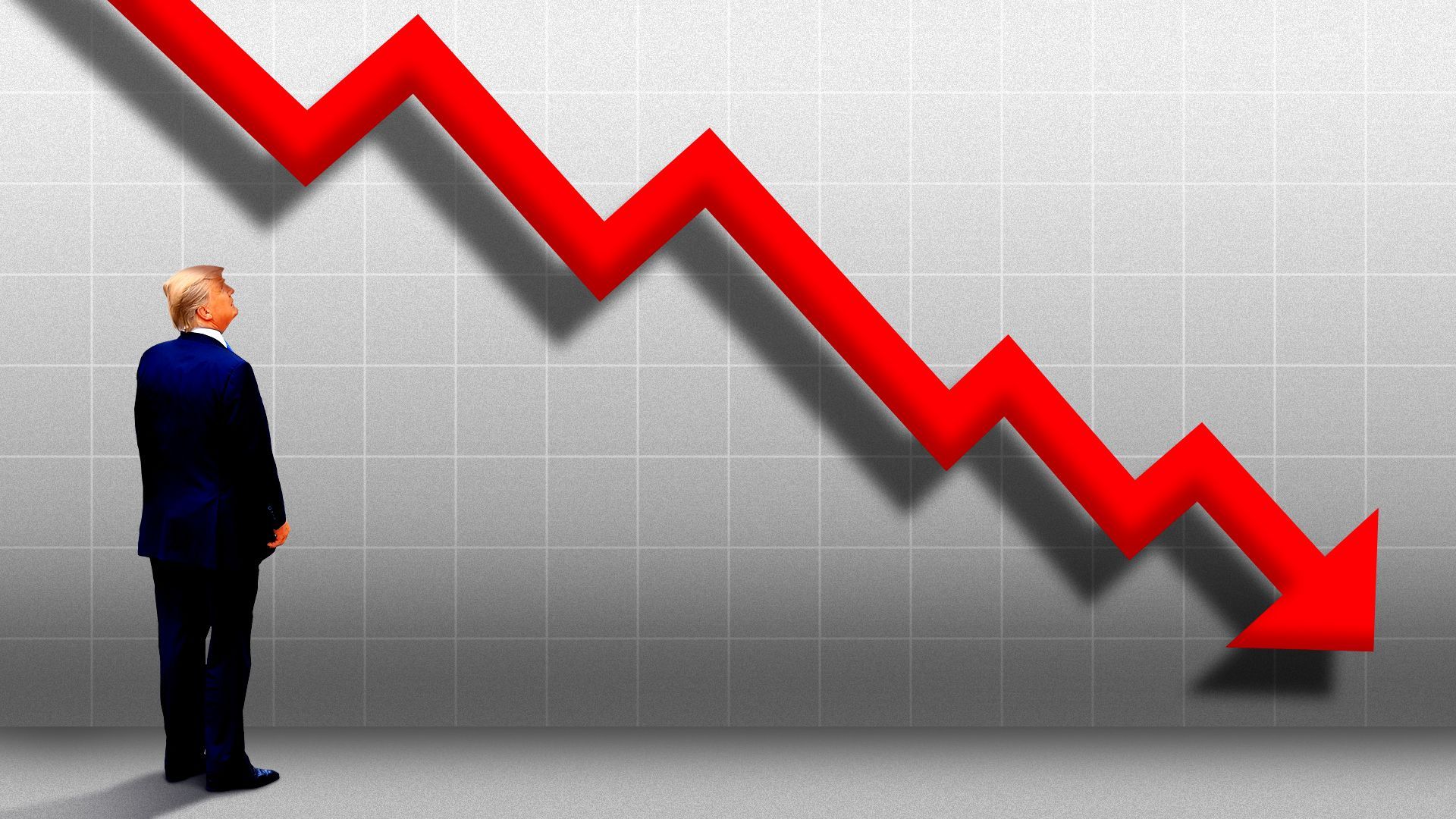
Illustration: Sarah Grillo/Axios. Photo: Saul Loeb/Getty Images
If you were president of the United States and wanted to engineer a recession by summer, at least one economist says a very effective way of doing that would be to announce sweeping "Liberation Day" tariffs in April.
Why it matters: That's the message of a new 40-page slide deck from Apollo chief economist Torsten Slok, entitled "The Voluntary Trade Reset Recession," the probability of which he now puts at 90%.
- Slok was correctly bullish in 2022, when many other analysts were forecasting a recession, giving extra weight to his bearishness now.
The big picture: The flow of container ships from China to the U.S. is likely to "come to a stop" in the next few weeks, by the middle of May, Slok says, thanks to the punitive tariffs President Trump placed on Chinese imports.
- By the end of May, trucking demand will have come to a halt, he writes, with layoffs in both trucking and retail coming in late May or early June.
- A recession then follows. "Expect well-run generational retailers to file for bankruptcy," he writes.
Where it stands: U.S. firms are revising down their expected profits, placing fewer new orders, and investing less money in new equipment.
- Heavy truck sales in March were at the lowest level since the pandemic, and CEO confidence is now at the lowest level since the global financial crisis of 2009.
- Consumer confidence is also hitting new lows, along with international tourism. Americans are "very worried" about losing their jobs, Slok writes.
- Americans now expect higher unemployment exceeding even pandemic levels, and a record-high number expect economic conditions to worsen over the coming year, Slok adds.
The bottom line: "A trade war is a stagflation shock," according to Slok.
- So long as the trade war is being waged, stagflation seems highly likely.
