Former Obama press secretary calls new media's White House access "admirable"

Add Axios as your preferred source to
see more of our stories on Google.
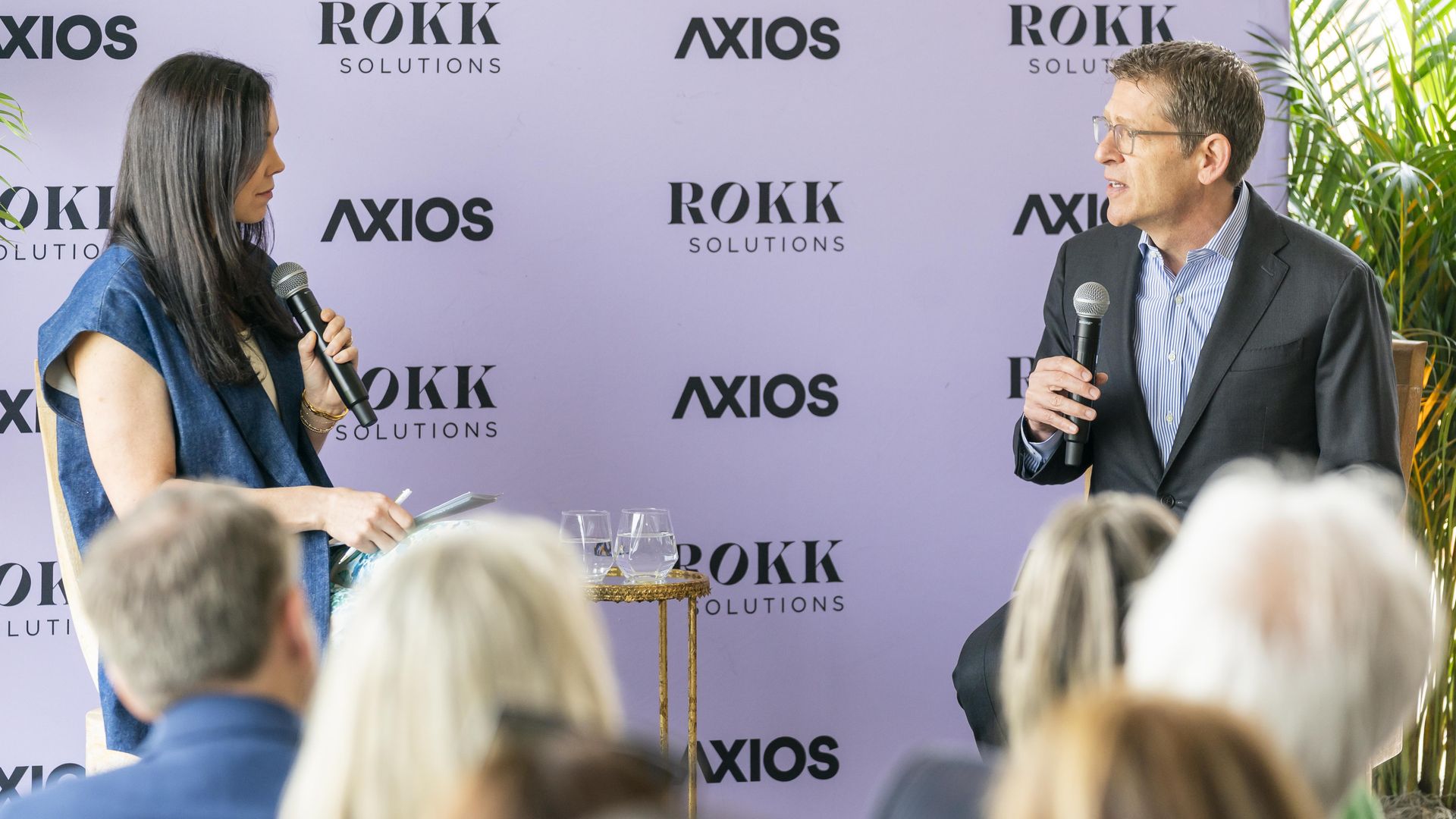
Axios' Eleanor Hawkins and Jay Carney, Airbnb global head of policy & communications and former Obama press secretary, at an Axios Communicators event on April 25, 2025. Photo: Cameron Smith on behalf of Axios
The White House's decision to expand its briefing room access to new media, including social media influencers, is "admirable," former Obama press secretary Jay Carney said at an Axios event on Friday.
Yes, but: Carney went on to defend the Associated Press and warned that the administration won't be able to control the narrative forever.
Why it matters: The communications strategies coming out of the White House are influencing how corporate leaders engage with the media.
What they're saying: "I think it's important to recognize the media landscape has changed, to bring in new voices, to shake things up. I think that's admirable, and I think, you know, everybody can learn from that," said Carney, who currently serves as global head of policy and communications at Airbnb.
- "There are people in the briefing room today —which was true back then, but I think there are more now — who are advocates. They're not necessarily truth seekers, they're message deliverers, and I think, you know, that's a choice they've made, and I guess it's working for them."
- Carney said when he was press secretary, there were reporters who "asked incredibly hard questions and would challenge me ... They weren't advocates, they certainly weren't advocates for us. They were doing their jobs."
- "And I think the AP is an incredibly important source of news and provider of news for people around the country and the world and we need to recognize that," he added.
Catch up quick: The White House barred the AP from several press briefings and official events after the wire service refused to change its style guide to align with the president's executive order on the Gulf of America.
- The AP was granted access to a White House event earlier this month after a legal battle, but the Trump administration has since eliminated the permanent spot for wire services in its press pool.
Zoom in: Concerns about press freedom remain amid Trump administration efforts to exert greater control over its coverage.
- Seven-in-ten Americans are at least somewhat concerned about potential restrictions on press freedom, according to a new Pew Research study.
- Nearly half of those surveyed (43%) say they are extremely or very concerned.
The big picture: The speed of the news cycle, audience fragmentation and shifting spheres of influence are changing how companies and brands tell their story.
- "In my jobs now, post-White House, with Amazon and now Airbnb, we care about traditional media ... but we spend a lot of time thinking about how we can flood the zone with our narrative, the stories we want to tell about our values as a company," Carney said.
- "We do that through our own vertical channels or we do it through influencers or other means. We're lucky our CEO, Brian Chesky, is a great communicator, so we leverage the hell out of him. He gives a lot of interviews and he does a lot of podcasts ... we try to take advantage of every outlet available."
What to watch: As Trump's second term nears the 100 day mark, the public will likely start looking for tangible policy implications, not just messaging strategies.
- "Eventually, in politics and in policy, the substantive material catches up. Like, how's the economy doing? How's inflation? How's employment? How are companies doing? How's your 401k? Those things are going to overwhelm any media strategy eventually. If they're doing well, you're gonna look like a genius. If they're not, you are going suffer," Carney added.
More on Axios:
Editor's note: This story and headline were corrected to reflect that what Jay Carney called admirable was the expansion of access to the briefing room (not briefing room shakeups).
