Bessent says China status quo unsustainable, as Trump hedges on cuts


Add Axios as your preferred source to
see more of our stories on Google.
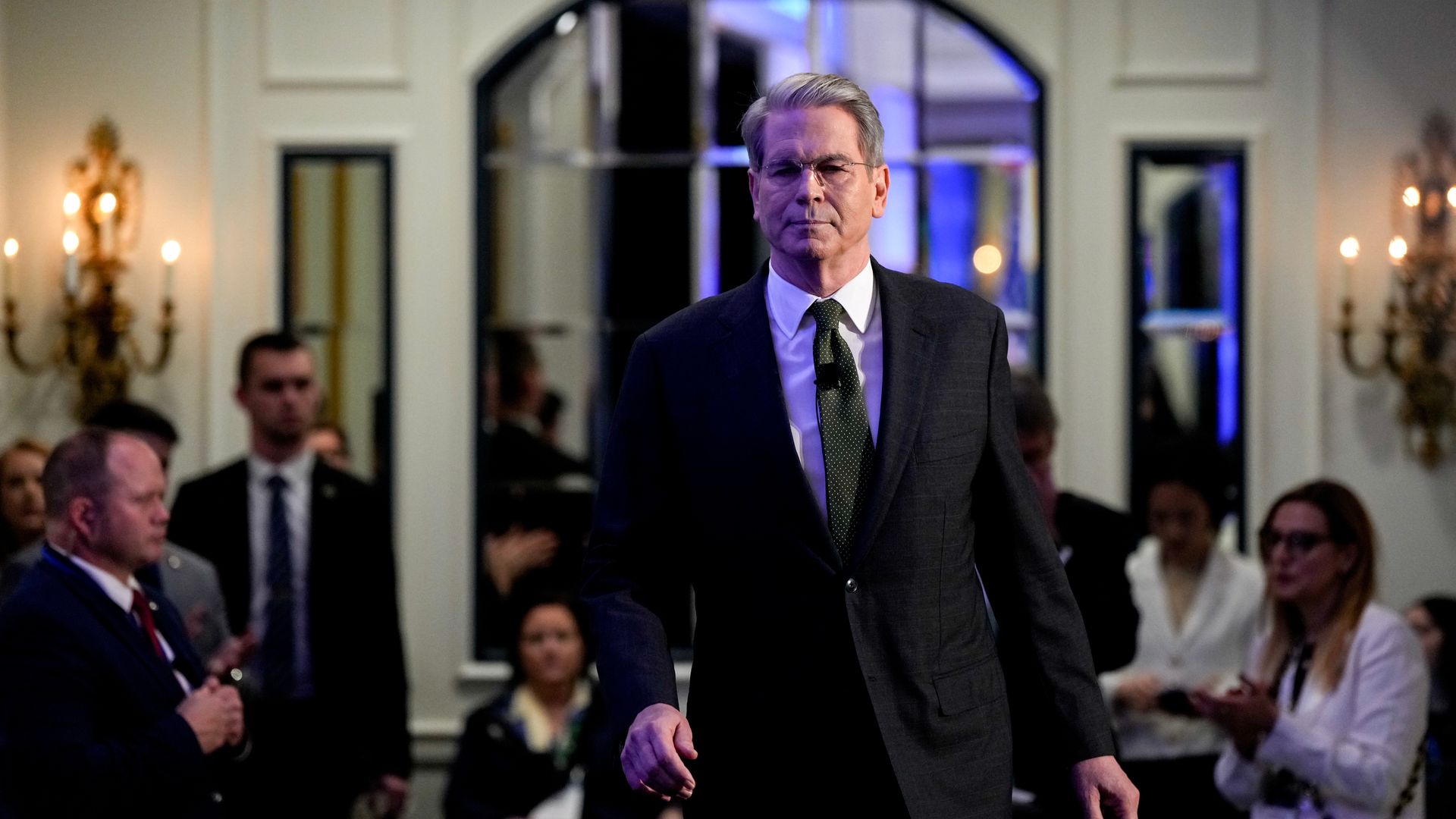
Treasury Secretary Scott Bsssent. Photo: Kent Nishimura/Bloomberg via Getty Images
The trade war with China is "unsustainable" in its current form, Treasury Secretary Scott Bessent said Wednesday, though there were mixed messages from the administration about whether the U.S. would move unilaterally to reduce tariffs.
Why it matters: As recession worries grow, the Trump administration is signaling intentions to tamp down trade tensions with China, which have threatened to all but shutter commerce between the world's two largest economies.
What they're saying: "I think both sides believe that the current status quo is unsustainable," Bessent told reporters following a speech at the Institute of International Finance in Washington. The U.S. currently imposes 145% tariffs on Chinese imports, and China has retaliated with 125% tariffs on the U.S.
- "I think both sides are waiting to speak to the other," he said.
- "I think at this point there would have to be a de-escalation by both sides," he added, saying that "I would not be surprised if they went down in a mutual way," and that there is "no unilateral offer from the president to just de-escalate."
Yes, but: Speaking to reporters in the Oval Office, President Trump suggested the U.S. could eventually bring down tariff rates even if China did not.
- "I get along very well with president XI and I hope we can make a deal," Trump said. "Otherwise we'll set a price and hopefully they'll come here and they'll contribute. And if they don't, that's okay," he added, referring to tariffs.
Of note: Trump acknowledged that the high, triple-digit tariffs effectively shut trade between the two nations.
- "It basically means China is not doing any business with us, essentially, because it's a very high number. So when you add that to the price of a product, a lot of those products aren't going to sell," Trump said.
State of play: Markets have soared in the last two sessions as administration officials have signaled the potential to back off the current 145% tariff on Chinese imports.
- Trump himself said yesterday afternoon that China tariffs will "come down substantially" and that he won't play "hardball" with the nation.
The bottom line: Trump paused so-called "reciprocal" tariffs on most global trading partners April 9, creating a 90-day window to strike broad new deals. Bessent shed some light on what those talks may look like Wednesday.
- "A satisfactory arrangement does not necessarily mean the actual trade document," he said. "It means that we have reached agreement in principle, and then we will start implementing those."
Editor's note: This story has been updated with Oval Office comments from President Trump.
