Trump's Fed independence paradox

Add Axios as your preferred source to
see more of our stories on Google.
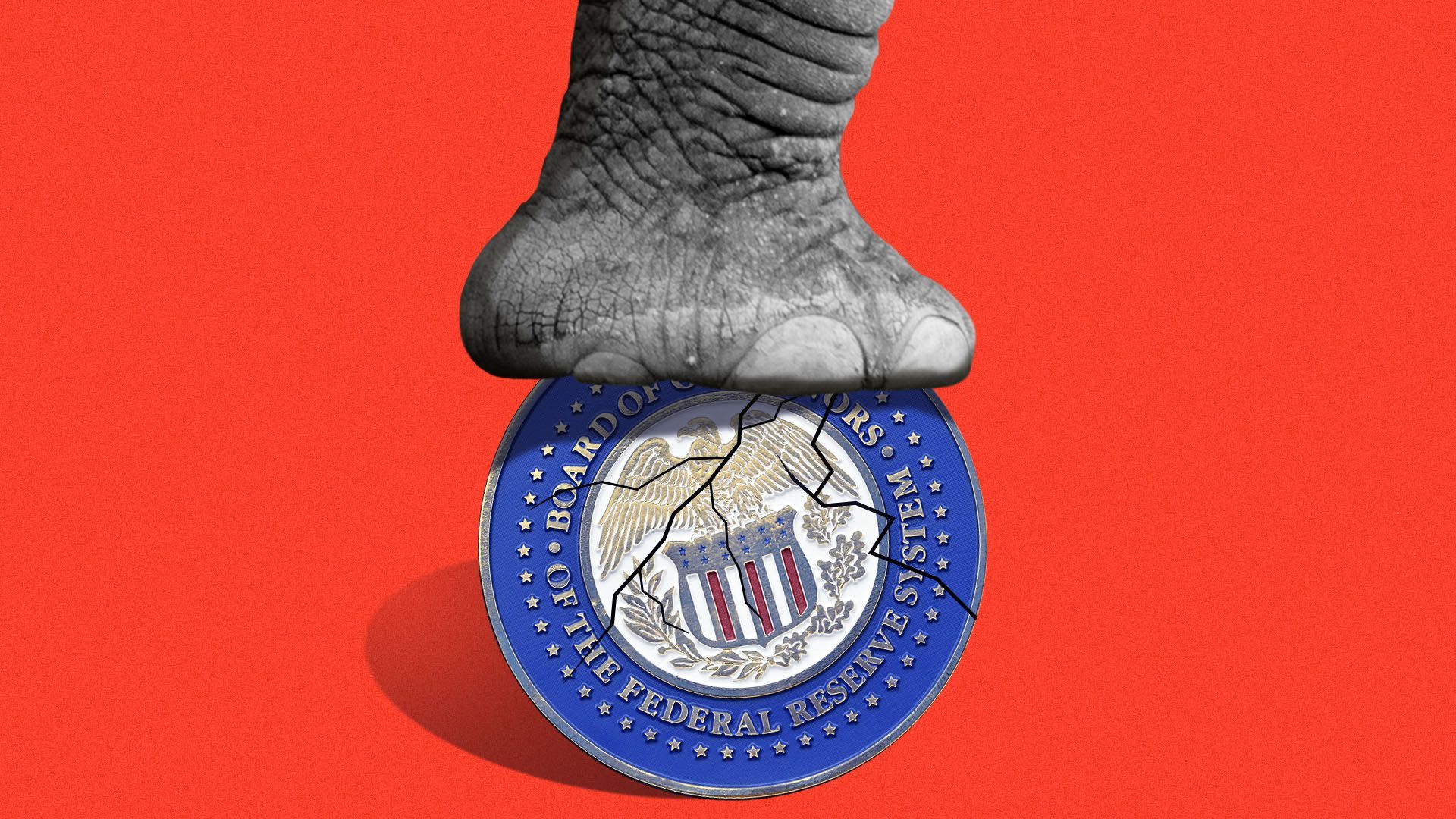
Illustration: Sarah Grillo/Axios
President Trump's efforts to more directly control the Fed are coming at a perilous time, given the details of this economic moment.
The big picture: Trump wants the Fed to cut rates, but paradoxically, the more he succeeds at limiting its independence, the greater the risk of inflation expectations and long-term interest rates shooting higher.
- The central policy question right now is whether the Fed should view inflation spurred by tariffs as a one-time shock or one that fuels longer-lasting price pressures.
- If it's a one-time adjustment, the Fed can feel confident cutting interest rates to combat economic weakness — if the central bank maintains its credibility that it will do whatever it takes to keep inflation low in the long run.
- This month, Treasury bonds have sold off amid doubts about the U.S. government's volatile trade policies. If Fed independence came into serious question, it would likely fuel further selling, causing long-term interest rates to rise — contrary to Trump's stated goals.
State of play: Besides Trump's latest social media posts, the Supreme Court is weighing a case that questions the constitutionality of independent agencies like the Fed.
- The Federal Reserve Act states that Fed chair Jerome Powell and other governors cannot be fired except for cause — not over mere policy disagreements.
- The Trump administration is arguing that the president has the authority to fire leaders of similarly structured agencies, including the National Labor Relations Board and Federal Trade Commission.
- Administration lawyers are asking the Supreme Court to overturn a 90-year-old precedent that found the FTC's structure to be constitutional and that the president could not fire an FTC commissioner.
Yes, but: There are some reasons to think that, even if the Supreme Court rules in Trump's favor on the core constitutional question, it could find a way to carve out protection for Fed independence.
- In a case about agency funding last year, for example, Justice Samuel Alito called the Fed "a unique institution with a unique historical background" and that its funding mechanism should be seen as "a special arrangement sanctioned by history."
Flashback: The Fed, created in 1914, was the culmination of America's long wrestling with whether to have a central bank.
- A seminal early Supreme Court case, McCulloch v. Maryland in 1819, was over whether Congress could create a national bank.
- The core domestic issue of Andrew Jackson's populist presidency was a fight over whether to shutter the Second Bank of the United States.
- The Fed's unwieldy structure — with presidentially appointed governors in Washington and 12 countrywide reserve banks with their own boards of directors — was the result of an elaborate compromise balancing many interests: big banks and small banks, agriculture and manufacturing, democratic accountability and dispersed power.
The bottom line: "Fed independence is more important than ever at a time when there is risk to underlying inflation and inflation expectations ... and global portfolio reallocation out of the U.S.," wrote Evercore ISI analysts.
