What can trade where

Add Axios as your preferred source to
see more of our stories on Google.
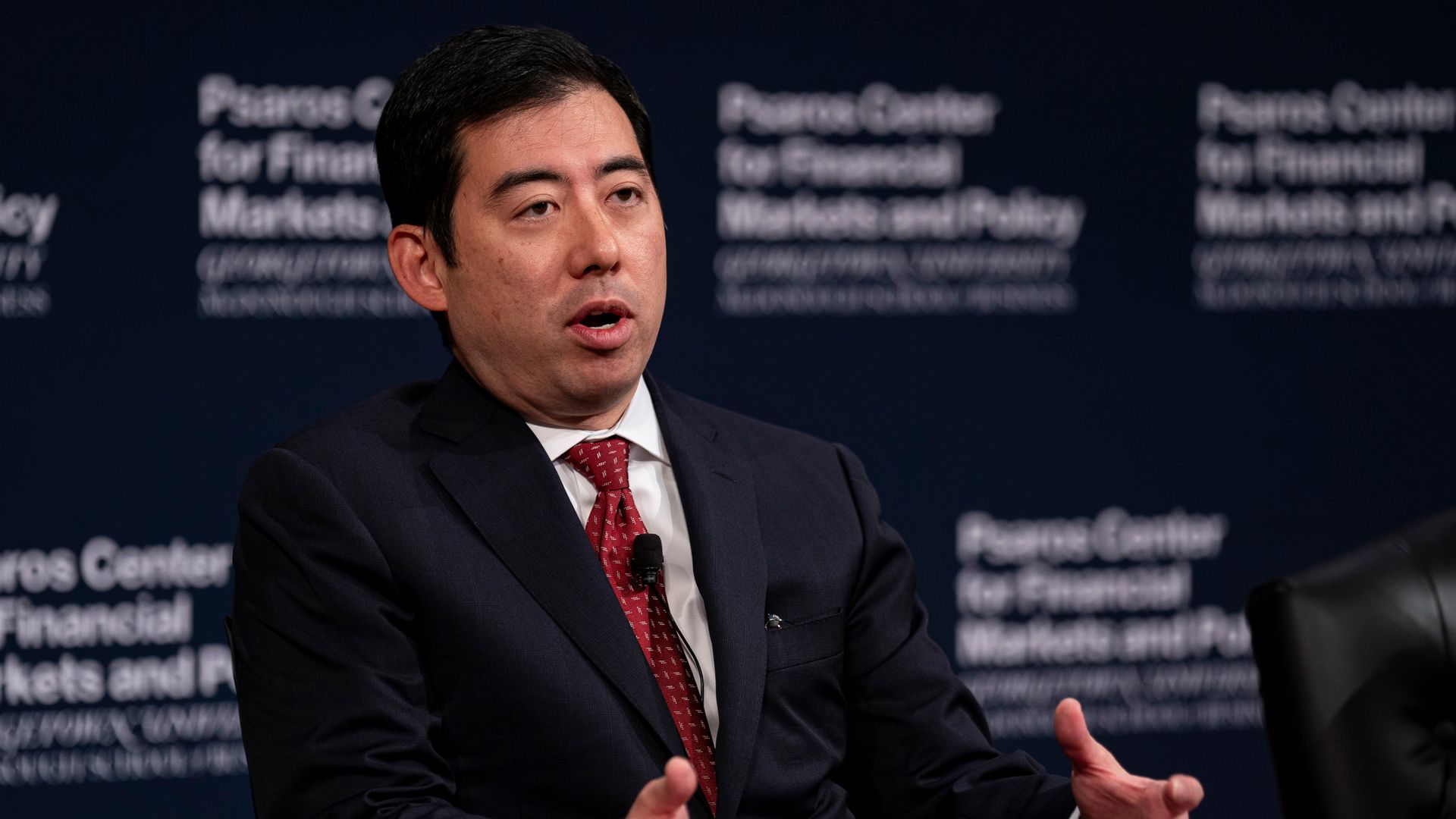
The SEC's crypto task force had a session Friday, with various experts, on how to regulate exchanges of digital assets.
- Why it matters: The main use case for crypto assets (though not the only one) has been trading, as investors make long-term bets on which coins and tokens have the brightest future and short-term bets on which ones will snag the most attention now.
Context: The new SEC has made it clear that it's full speed ahead on writing rules for the crypto industry, but a government agency steaming ahead still does so in a fairly deliberative way.
- Less than a month ago, the SEC's crypto task force had its first roundtable on crypto regulation, focusing on which assets are under its purview and which are not.
- Friday's roundtable concerned which venues and third parties involved in trading the SEC should concern itself with, and how.
How it works: These roundtables aren't deliberative sessions — the commissioners only participate as speakers at the start of the sessions. Instead they are a way of gathering some of the strongest experts on the topic to have a conversation that will inform rulemaking.
What they said: In short, participants agreed that it's a complicated question, complicated further by the fact that the U.S. has broken regulation of securities and commodities into separate buckets that digital assets easily bridge.
- As a starting point, Christine Parlour, chair of finance and accounting at the University of California at Berkeley, said the SEC could just make sure that the exchanges where traders meet aren't in danger of blowing up (as we've seen).
- Several speakers agreed that the right place to start is with brokers, by requiring that they guarantee the best price for a given trade.
As far as what not to include, Katherine Minarik, from Uniswap Labs, urged the commission to set aside peer-to-peer transactions and the infrastructure traders use to make them (such as decentralized exchanges), since, she contends, many of the risks present in other kinds of exchanges are not present there.
In the weeds: Several references to late '90s alternative-trading system regulations came out, another moment when the SEC adapted itself to business models that didn't neatly fit its way of doing business.
The big picture: Dave Lauer, of Urvin Finance and We The Investors, suggested that a strong end state for the commission might be to get as much trading as possible onto exchanges.
- And Austin Reid, head of revenue of FalconX, zoomed out even further, saying that at a minimum it should aim to take a bite out of the 85% of crypto trading that takes place overseas.
